Cellier Clinic — Personalized Anti-Aging & Lifting Specialist Design Clinic in Gangnam, Seoul

Specialty Overview
Skin Care & Facial Treatments
Physician-supervised facial treatments in Seoul at Cellier Clinic for hydration, texture, pores and acne-prone skin, with skin analysis before every plan.
Schedule a ConsultationSkin Care and Facial Treatments in Seoul
Medically reviewed by Dr. Youm Junghyun, General Surgery Specialist
Skin care and facial treatments are in-clinic skin-quality treatments carried out under physician supervision, aimed at hydration, texture, pores, radiance and clarity rather than at structural change. Facial treatments in Seoul at Cellier Clinic are organised as three routes: basic skin management, peeling treatments, and acne care. They suit routine skin maintenance, preparation before or recovery after a more intensive procedure, and management of dull, congested or acne-prone skin in between.
What Is Skin Care & Facial Treatments?
Skin care and facial treatments at Cellier Clinic are customised, physician-supervised treatments of the skin surface and near-surface layers, selected after a skin analysis rather than chosen from a menu.
- The concerns the category addresses are hydration, skin texture, pores, radiance, fine lines, elasticity, pigmentation and skin firmness.
- Cellier lists skin analysis, professional exfoliation, hydration therapy and targeted rejuvenation techniques among the methods used, selected according to individual skin needs.
- A standard session takes about 30 to 60 minutes.
- This is the most accessible part of the clinic's range for patients with sensitive or reactive skin, and the part with the least downtime.
- Unlike products used at home, treatments in this category use clinical-grade actives and device technologies intended to reach deeper skin layers.
Cellier Clinic works from a philosophy it calls Skin Architecture and Time Design, treating each skin layer and facial structure according to the individual patient rather than applying one-size-fits-all procedures, and aiming for natural, long-lasting results rather than overcorrection. In this category that mostly means sequencing. Skin-quality treatment is presented as what maintains the result of more intensive work rather than as a substitute for it, which is why it is often booked around other treatment rather than instead of it.
The concerns patients bring to this category are specific, and Cellier records them for this market:
- skin that feels dry or lacks moisture, where hydration is the main goal;
- rough or uneven texture, where the aim is a smoother, more refined surface;
- enlarged pores that have become more noticeable;
- a dull complexion, where skin looks tired rather than radiant;
- active or acne-prone skin needing management rather than a cosmetic result.
What the clinic publishes as claims for the category is correspondingly modest: hydration and moisture improvement, skin-texture improvement, pore improvement, radiance enhancement, fine-line improvement, elasticity enhancement, and pigmentation or blemish improvement, depending on the treatment used. Realistic expectations are improved hydration, refined texture, reduced pore visibility, clearer tone and an immediate natural glow. Permanent skin perfection cannot be guaranteed, because environmental exposure and intrinsic ageing keep changing the skin after any course of treatment ends.
Who Performs Skin Care & Facial Treatments at Cellier Clinic
Dr. Youm Junghyun is the Director of Cellier Clinic and a General Surgery Specialist, having completed his specialist training and a clinical fellowship in General Surgery at Kyung Hee University Hospital at Gangdong. He is a member of the Korean Surgical Society, the Korean Society of Aesthetic Plastic Surgery and Laser, the Korean Society of Lifting, the Korean Society of Filler, the Korean Society of Obesity and Aesthetic Medicine, and the Korean Society of Dermatology, Obesity, and Plastic Surgery.
Dr. Youm Junghyun oversees all skin care and facial treatments at Cellier Clinic, and every treatment in this category is carried out under physician supervision. His stated focus in this category is personalised skin and facial care based on a detailed assessment of skin structure, texture, elasticity and facial balance. That assessment is what decides which of the three routes applies and how conservative the first session should be. The clinic's position is that a doctor-led assessment matters most in exactly the cases that look simplest, because a facial that suits resilient skin is not automatically the right choice for skin that is reactive.
Skin Care & Facial Treatment Options Available
| Route | What it uses | Best suited to |
|---|---|---|
| Basic Skin Management | LDM ultrasound | general maintenance and hydration |
| Peeling Treatments | Aqua Peel and deeper peels | texture and dullness |
| Acne Care | Gold PTT nanoparticle photothermal therapy with complementary treatments | active or acne-prone skin |
Each route has its own treatment page with its own protocol and aftercare, so what the category page can usefully set out is how the choice between them is made. Basic skin management is the maintenance option and carries no downtime. Peeling treatments range from a light option with immediate recovery to deeper peels with roughly one to three days of settling. Acne care is directed at active breakouts and acne-prone skin, with generally minimal downtime. The right combination is confirmed at consultation, not booked in advance from a description.
Where none of the three is the right answer, the clinic's alternatives depend on the concern: topical dermatological skin care, chemical peels, microneedling, laser and light treatment, radiofrequency or focused-ultrasound skin tightening, dermal fillers, neuromodulators, or conventional medical treatment of an underlying skin condition.
Who Is a Good Candidate for Skin Care & Facial Treatments?
- Adults wanting routine skin maintenance rather than a structural change.
- Patients preparing skin before a more intensive procedure, or maintaining it afterwards.
- Patients with dull, congested or acne-prone skin between other treatments.
- Patients concerned about hydration, rough texture, enlarged pores or radiance.
- Patients with fine lines, pigmentation, reduced elasticity or reduced facial firmness, depending on the route selected.
- Patients with sensitive or reactive skin, for whom this is the most accessible part of the clinic's range.
Who may need to postpone or be treated differently
- Active skin infection or inflammation in the treatment area is a reason to postpone.
- Untreated skin disease in the area needs to be addressed first.
- Severe open wounds on the skin rule out treatment until healed.
- Acute sunburn, or active tanning before some laser procedures, means waiting.
- Known hypersensitivity to topical peeling agents rules out that route.
- Significant uncontrolled medical problems, certain medications, and pregnancy or breastfeeding where applicable all require assessment first.
- Unrealistic expectations are listed by the clinic as a reason not to proceed, which is a candour worth noting.
What to Expect: Procedure, Recovery, and Results Timeline
Consultation comes first, and Cellier is specific about what it should cover: the indications, the risks, the benefits, the alternatives, the number of treatments, and the recovery involved, all before any cosmetic treatment is agreed. Preparation is treatment-specific, and the clinic asks patients to report all medications and supplements, previous cosmetic procedures, any history of cold sores, any tendency to scar or form keloids, and relevant medical conditions. Arrive with clean skin and avoid heavy sun exposure beforehand. Harsh chemical exfoliants, retinoids, waxing and tanning should be avoided for three to five days before a facial session.
| Route | Downtime Cellier describes |
|---|---|
| Basic Skin Management | none |
| Aqua Peel | immediate return to normal activity |
| Deeper peels | approximately 1–3 days |
| Acne Care | generally minimal |
Most patients experience minimal downtime and can resume daily activities shortly after treatment. Temporary redness or mild swelling may occur, and typically resolves within 24 to 48 hours. Mild flushing often subsides within a few hours of the session. The temporary effects the clinic lists are mild redness, minor post-extraction sensitivity and slight localised dryness. Rarer effects include minor breakouts and mild irritation, which the clinic associates in particular with post-care instructions not being followed. Risks in this category vary substantially by the procedure chosen rather than applying uniformly across it.
Aftercare is where results in this category are usually won or lost. Keep skin care gentle and avoid unnecessary irritation. Protect treated skin from UV exposure, and follow the clinic's product-specific and device-specific instructions. After any procedure that disrupts the skin barrier, sunscreen and avoidance of excessive sun exposure matter especially. For the first 24 to 48 hours, avoid direct sunlight, strenuous exercise, saunas and harsh exfoliating actives.
Results arrive on two different timescales. Improved hydration, smoothness and radiance are often noticeable immediately after a session. Initial improvements in the underlying concern may be visible within a few weeks, with optimal results typically developing over two to three months as the skin's own regenerative process takes effect. Cumulative benefit is described as peaking when monthly sessions are maintained over several cycles. Some facial treatments are completed in a single outpatient visit, while collagen-induction, booster or resurfacing programmes involve multiple sessions, and the number and spacing should be individualised. Typically one to three follow-up visits may be recommended, to assess results, manage recovery and decide whether further treatment is needed. The clinic's before-and-after gallery indicates the kind of change it documents.
Because downtime here is minimal, a minimal stay in Korea is usually sufficient, and patients can board a flight immediately after a facial session. Deeper peels are the exception worth planning around, at roughly one to three days.
Combining Skin Care & Facial Treatments with Other Treatments
- Skin tightening procedures, where firmness is a concern alongside skin quality.
- Hyperbaric oxygen therapy from the clinic's wellness and recovery category.
- LED light therapy.
- Energy-based lifting or injectable treatment, where facial care is used to maintain skin quality between the more intensive sessions.
- Microneedling combined with radiofrequency, or microneedling combined with a chemical peel, where texture and scarring are being treated.
Combinations in this category are highly individualised, and the clinic plans them around the concern rather than offering them as fixed programmes.
Safety, Precision, and Clinic Standards
A chemical peel, also called chemexfoliation, is used by dermatologists to treat some types of acne, age spots, melasma, discoloration, dull complexion, fine lines, rough skin and sun damage, according to the American Academy of Dermatology. That list is worth reading against your own concern, because it is broader than most patients expect and narrower than most marketing implies.
Healing time for chemical peels depends on depth, and the American Academy of Dermatology gives one to seven days for a light peel, seven to fourteen days for a medium peel and fourteen to twenty-one days for a deep peel. At-home wound care is required afterwards. The side effects it lists run from persistent redness to rare scarring. It also states that patients with skin of colour need a dermatologist experienced in treating darker skin tones, which is a question worth asking directly at consultation rather than assuming.
Acne treatment is tailored by dermatologists to clear existing acne, stop new breakouts and prevent scarring, the American Academy of Dermatology explains, using topical and oral options as well as in-office procedures. A provider may suggest chemical skin peeling, dermabrasion or photodynamic therapy as adjunct procedures for acne, MedlinePlus notes. Both of those framings place in-clinic acne procedures as one part of a plan rather than as the whole of it, which is how Cellier positions its own acne route alongside complementary treatments.
Cellier states its own risk-reduction process for this category as careful pre-treatment skin analysis, medical-grade equipment, and active-ingredient selection tailored to the individual. Every treatment in the category is performed under physician supervision. The clinic does not treat a facial as a procedure that needs no assessment.
Cellier Clinic is a Registered Medical Institution for Attracting Foreign Patients, certified by the Ministry of Health and Welfare in compliance with the Medical Overseas Expansion and Foreign Patients Attraction Act.
One piece of general guidance deserves more attention in this category than in any other, precisely because the treatments sound low-risk. The NHS advises checking a practitioner's training, qualifications, register entry, experience and insurance before agreeing to any procedure. It advises avoiding group treatments, voucher deals, mobile services and practitioners who exist only on social media. A facial is where those shortcuts are most commonly taken, and a physician-supervised setting is the answer to all four of them at once.
The Bottom Line
- Skin care and facial treatments at Cellier Clinic are three routes — basic skin management, peeling treatments and acne care — chosen after a skin analysis.
- The category is aimed at skin quality: hydration, texture, pores, radiance and clarity, not structural change.
- Downtime is minimal across the category, with deeper peels the one route that needs planning around at roughly one to three days.
- Some results are immediate, but the underlying improvement typically develops over two to three months and depends on repeated sessions.
- Aftercare, and sun protection in particular, does more for the outcome here than the choice of route does.
Frequently Asked Questions
Which of the three routes is right for me?
That is what the consultation decides. Basic skin management suits general maintenance and hydration, peeling treatments suit texture and dullness, and acne care suits active or acne-prone skin. Cellier assesses skin structure, texture, elasticity and facial balance first, and the right combination is confirmed from that rather than booked from a description.
How long is an appointment?
A standard session runs about 30 to 60 minutes. Some treatments in this category are completed in a single outpatient visit, while booster, collagen-induction or resurfacing programmes involve several sessions spaced out over time. Typically one to three follow-up visits may be recommended to assess results and decide whether more treatment is needed.
How much downtime will I have?
Basic skin management has none, and a light peel allows an immediate return to normal activity. Deeper peels involve roughly one to three days, and acne care is generally minimal. Temporary redness or mild swelling usually resolves within 24 to 48 hours, and mild flushing often settles within a few hours.
Who should not have these treatments yet?
Anyone with an active facial infection or inflammation, untreated skin disease in the area, a severe open wound, or acute sunburn should be treated only after that has resolved. Known hypersensitivity to topical peeling agents rules out that route specifically. Significant uncontrolled medical problems, certain medications, and pregnancy or breastfeeding where applicable all need assessment first.
What should I do — and avoid — in the days before my appointment?
Arrive with clean skin and avoid heavy sun exposure beforehand. Stop harsh chemical exfoliants and retinoids, and avoid waxing and tanning, for three to five days before the session. Tell the team about all current topical medications, any history of cold sores, and any tendency to scar or form keloids.
When will I see a result, and how long will it last?
Hydration, smoothness and radiance are often noticeable immediately after a session. The underlying improvement usually appears within a few weeks and develops over two to three months as the skin's regenerative process works through. Benefit is cumulative, and the clinic describes it peaking where monthly sessions are maintained over several cycles.
Can I fly home the same day?
Yes, for the routes with no meaningful downtime — patients can board a flight immediately after a facial session. A minimal stay in Korea is generally sufficient for this category. If a deeper peel is part of the plan, allow for the one to three days of settling before a long flight.
What does it cost, and what if I have a question once I am home?
Cellier Clinic does not publish treatment prices; a quotation is given after an individual consultation. After returning home, patients are able to contact the clinic's international coordination team with any questions or concerns. Photo-based remote assessment is available for minor post-treatment queries. For more complex concerns, the clinic advises patients to seek evaluation from a local practitioner and will support with medical documentation if needed. The clinic can also be reached by telephone or through its website.
Book a Consultation at Cellier Clinic
Skin care and facial treatments in Seoul are worth booking the way the clinic plans them: assessment first, then the route. Enquiries go through the clinic's contact page, and online consultation is available before you travel — clear close-up photographs of the areas that concern you, together with your medical history and details of the products you currently use, are what the practitioner needs to plan from. An English-speaking team supports international patients at Cellier Clinic, and English-language assistance is available for both online enquiries and in-person consultations.
Cellier Clinic is located on the 5th floor of Rex Tower, 108 Dosan-daero, Gangnam-gu, Seoul, South Korea. The wider treatment range, including the lifting, booster and pigmentation categories this one is often scheduled around, is set out on the Cellier Clinic website.
Disclaimer
This page is for general information only and is not medical advice. Individual results vary, and suitability for any treatment must be determined by a qualified physician during consultation.
Sources & Further Reading
- Chemical peels: Overview — AAD
- Chemical peels: FAQs — AAD
- Acne: Diagnosis and treatment — AAD
- Acne: MedlinePlus Medical Encyclopedia — MedlinePlus
- Choosing who will do your cosmetic procedure - NHS — NHS
Related Services
Customized anti-aging, lifting, and skin booster procedures available at Cellier Clinic.
Pore & Scar Treatment
Potenza in Seoul is RF microneedling for pores, scars and texture. Cellier Clinic's two modes, candidacy, three-day downtime and session course explained.
Learn More
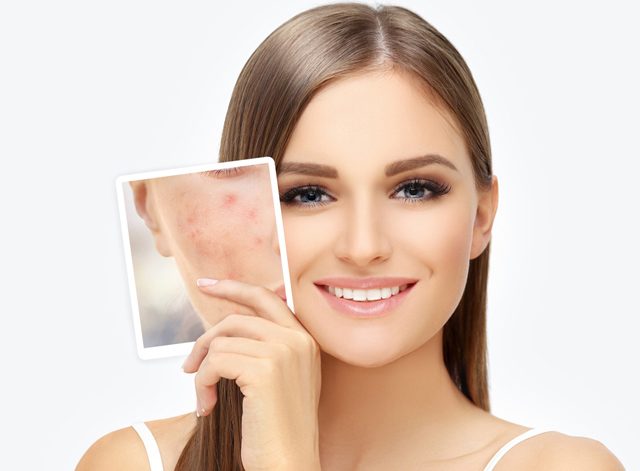
Redness & Pigmentation Laser Care
Redness laser treatment in Seoul: diagnosis first, then the laser. Cellier Clinic on candidacy, session length, recovery by laser type and aftercare.
Learn More

Basic Skin Management
Basic skin management in Seoul at Cellier Clinic uses LDM ultrasound for hydration and texture, with no downtime and a skin assessment before every session.
Learn More