Cellier Clinic — Personalized Anti-Aging & Lifting Specialist Design Clinic in Gangnam, Seoul

Facial Lifting & Skin Tightening · Consultation Required
Titanium Lifting
Titanium Lifting in Seoul at Cellier Clinic: how the triple-wavelength laser lifting session works, who it suits, recovery timeline and realistic results.
Schedule a ConsultationTitanium Lifting
Medically reviewed by Dr. Youm Junghyun, General Surgery Specialist
Titanium Lifting in Seoul is a non-surgical facial lifting and skin-tightening treatment that uses controlled energy to firm skin from within, without incisions or surgical recovery. At Cellier Clinic in Gangnam it is performed with the Soprano Titanium platform, which brings radiofrequency, ultrasound and a triple-wavelength diode laser together in one applicator. The treatment is used to improve skin firmness, elasticity, facial contour and the appearance of fine lines and wrinkles.
What Is Titanium Lifting?
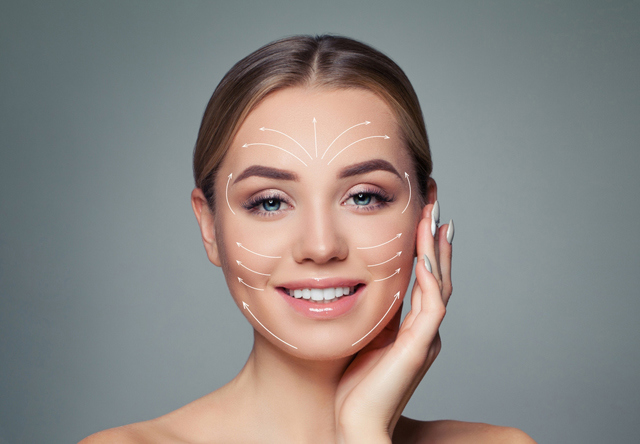
Titanium Lifting is a non-surgical treatment that delivers combined laser, radiofrequency and ultrasound energy into the skin to stimulate tightening within the tissue, rather than removing or repositioning tissue surgically. At Cellier Clinic the treatment is planned per area, and the clinic lists the forehead, eye area, cheeks, neck, contour line and double chin among the zones it treats.
- Energy source. The Soprano Titanium applicator carries radiofrequency, ultrasound and a triple-wavelength diode laser system working at 755 nm alexandrite, 810 nm diode and 1064 nm Nd:YAG.
- Delivery style. The applicator is kept in continuous motion during treatment so that heat is spread evenly across the area instead of arriving as high-peak pulses.
- Depth of action. Most modes are aimed at dermal targets for overall elasticity, while the clinic also describes a periosteal-targeting mode used for deep contour lifting.
- Anaesthesia. Anaesthetic cream is applied to the treatment area before energy delivery, and no injected or general anaesthesia is involved.
- Session size. One session takes approximately 20 minutes and delivers approximately 40 kJ of energy.
Who Performs Titanium Lifting at Cellier Clinic
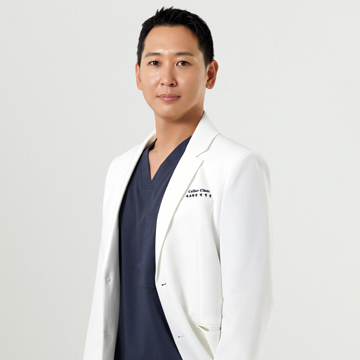
Dr. Youm Junghyun is the Director of Cellier Clinic and a General Surgery Specialist, having completed his specialist training and a clinical fellowship in General Surgery at Kyung Hee University Hospital at Gangdong. He is a member of the Korean Surgical Society, the Korean Society of Aesthetic Plastic Surgery and Laser, the Korean Society of Lifting, the Korean Society of Filler, the Korean Society of Obesity and Aesthetic Medicine, and the Korean Society of Dermatology, Obesity, and Plastic Surgery.
Cellier Clinic is an official certification clinic for Ultherapy, Thermage, Onda, Titanium, Sofwave, Sculptra, Re2O and Rejuran.
Dr. Youm assesses facial contour, skin elasticity and skin condition before selecting the treatment mode and the energy level for each zone. That assessment carries particular weight with a multi-wavelength platform, because the same applicator can be set up differently for the thin skin of the eye area than for the double chin. He also decides whether a patient's laxity is better answered by a different platform in the clinic's lifting programme, since Titanium Lifting is one option among several rather than a default.
Titanium Lifting Options Available at Cellier Clinic
The clinic describes two modes of use for the same platform, chosen at consultation rather than combined as a package. Where neither is the right answer for a particular face, the alternatives the clinic names are ultrasound-based lifting, other radiofrequency treatments, or a surgical lifting procedure, depending on the patient's condition and goals.
| Mode of use | What it addresses | Areas the clinic names |
|---|---|---|
| Dermal-target lifting modes | Overall skin elasticity, skin texture and fine lines | Double chin, cheeks, forehead, eye area |
| Periosteal-targeting mode | Deep contour lifting along the facial framework | Contour line, jaw and chin area |
Who Is a Good Candidate for Titanium Lifting?
- People in their 30s or older who are concerned about loss of skin elasticity.
- People with little cheek fat and a thin face, where volume-adding approaches are not the goal.
- People with thin skin who are concerned about irritation from treatment.
- People concerned about wrinkles around the eyes or reduced elasticity in that area.
- People who want a lifting effect that lasts rather than a single-day change.
- People who want a brighter, more even skin tone alongside firming.
- People with an event coming up who want a visible change without surgical downtime.
- People wanting improvement along the forehead, eyes, cheeks, neck, contour line or double chin.
Who should postpone or avoid Titanium Lifting
- Active skin infection or inflammation in the treatment area should be resolved first.
- Certain implanted electronic devices may interfere with energy-based treatment.
- Metal implants in or near the treatment area require assessment before any energy is delivered.
- Some medical conditions make energy-based procedures unsuitable, and treatment is deferred until a physician has reviewed them.
- Laser and energy-based treatment is postponed until a patient is medically cleared where any of the above applies.
What to Expect: Procedure, Recovery, and Results Timeline
A session begins with assessment rather than with the device. The clinician reviews skin condition, treatment goals and target areas at consultation. Anaesthetic cream is then applied. Energy delivery itself takes about 20 minutes.
- Consultation and assessment of skin condition, treatment goals and target areas.
- Cleansing and preparation of the treatment area.
- Application of anaesthetic cream, as stated by the clinic.
- Delivery of treatment energy with the Soprano Titanium applicator across the selected zones.
- Customisation of the pass pattern for areas such as the forehead, eye area, cheeks, neck, contour line and double chin.
- Post-treatment skin care, followed by aftercare instructions.
Daily activities can be resumed immediately after the procedure. Temporary redness, swelling and a tingling sensation may occur, and these generally subside naturally. Avoid saunas, alcohol and strenuous exercise for one week after treatment. Keep the treated area clean and use sunscreen consistently. Washing the face and applying makeup can resume from the following day.
The clinic describes the maximum effect of a single session at approximately one week. Its recommended course is three sessions at three-to-four-week intervals. The stated duration of effect is approximately three to six months, varying with individual skin condition.
| Point in time | What the clinic describes |
|---|---|
| Immediately after the session | Return to daily activities, with possible redness, swelling or tingling |
| The following day | Face washing and makeup may resume |
| Within the first week | Temporary reactions settle; maximum effect of the session at about one week |
| Three to four weeks | Interval before the next session in the three-session course |
| Three to six months | Stated duration of effect, depending on skin condition |
Photographic records from previous patients are kept in the clinic's before-and-after gallery, which is a more useful guide to the scale of change than a written description.
Combining Titanium Lifting with Other Treatments
The clinic names two treatments it considers to go well alongside this one:
- Skin Booster — injected hydration and skin-quality treatment, used where texture and moisture are concerns as well as firmness.
- Collagen Booster — a skin-quality treatment used where the goal includes supporting the skin's own structural proteins.
Whether either is appropriate at the same visit, or better spaced out, is decided at consultation rather than in advance.
Safety, Precision, and Clinic Standards

Firming sagging skin without an operation produces a modest change rather than a dramatic one, and the American Academy of Dermatology places it across roughly two to six months while noting that candidacy has limits. Where tightening is achieved with energy instead of surgery, the American Society for Dermatologic Surgery puts a visible result three to six months out, and names burns, infection and altered contour among the risks it carries. Cosmetic treatment obtained abroad is the subject of NHS guidance that tells patients to ask how clinics and practitioners are regulated in the destination country and to have a plan for complications before travelling.
At this clinic, the reported reactions to this treatment are temporary redness, swelling and a tingling sensation. These generally subside naturally. The applicator uses a specialised titanium head intended to carry energy to deeper layers with less burden on the skin surface. Treatment modes are set per facial area rather than applied uniformly across the face. Medical consultation before treatment is used to assess the skin and the treatment area. Patients are asked to disclose medications, medical conditions, implants and previous cosmetic procedures at that consultation. Aesthetic procedures carry a range of possible risks that vary depending on the type and depth of treatment. More common risks include temporary irritation, swelling or bruising. Less common outcomes may include prolonged sensitivity or uneven response. Discussing individual risk factors with the treating doctor before proceeding supports informed decision-making. A specific degree of lifting, wrinkle improvement, contour change, skin-tone improvement or duration of results cannot be guaranteed.
Cellier Clinic is a Registered Medical Institution for Attracting Foreign Patients, certified by the Ministry of Health and Welfare in compliance with the Medical Overseas Expansion and Foreign Patients Attraction Act.
An English-speaking team supports international patients at Cellier Clinic, and English-language assistance is available for both online enquiries and in-person consultations.
The Bottom Line
- Titanium Lifting is a non-surgical option for skin laxity, reduced firmness, fine lines and facial contour, and it is not a substitute for surgery where laxity is advanced.
- The Soprano Titanium platform combines radiofrequency, ultrasound and a triple-wavelength diode laser in one moving applicator, with anaesthetic cream and no injections.
- A session runs about 20 minutes, and daily activities resume the same day.
- The clinic's protocol is three sessions at three-to-four-week intervals, with the effect of a session peaking at about one week and lasting roughly three to six months.
- Suitability, mode and energy are decided by Dr. Youm at consultation, and patients with implants, active skin infection or conditions affected by energy-based treatment need clearance first.
Frequently Asked Questions
Is Titanium Lifting a reasonable choice for my skin?
It tends to suit people from their thirties onward who notice their skin has lost firmness, and it is often chosen by patients with a thinner face and less cheek fat. The clinic also points to it for concerns around the eyes and along the contour line and double chin. If skin tone is a concern as well as slackness, that combination is one reason this platform is selected over a purely radiofrequency or ultrasound device.
What actually happens during the appointment?
After the assessment, your skin is cleansed and anaesthetic cream is applied. The clinician then works the Soprano Titanium applicator across the agreed zones, keeping it moving so heat builds evenly rather than in spikes. Energy delivery lasts roughly 20 minutes and totals about 40 kJ. Skin care is applied afterwards and you are given written aftercare instructions before you leave.
Does it hurt, and what numbing is used?
The clinic describes this as a low-pain treatment, though a warm or vibrating sensation is normal while energy is being delivered. Topical anaesthetic cream is the only anaesthesia used, so there is no injection and no sedation. Sensation varies between people and between areas, and the energy level can be adjusted during the session.
How much downtime should I plan, and when can I fly?
There is no surgical recovery, so your usual day can carry on uninterrupted. One to two days in Seoul is generally enough for the treatment itself. There is no surgical restriction on flying, and most patients travel the day after treatment. The aftercare restrictions set out above, rather than the recovery, are what shape the week that follows.
Who should not have this treatment?
Anyone with an active skin infection or inflammation where the applicator would pass needs that treated first. Implanted electronic devices and metal implants in the area are a reason for careful assessment, because they can interfere with energy delivery. Some medical conditions make energy-based treatment unsuitable altogether. In each of those situations the treatment waits until a doctor has reviewed the case and cleared it.
How many sessions are needed, and how long does the result last?
The clinic recommends three sessions spaced three to four weeks apart. The effect of an individual session is described as reaching its maximum at about one week. The stated duration of effect is approximately three to six months, and where it falls in that range depends on individual skin condition. Maintaining the result means repeating the course rather than relying on the first one.
How are treatment prices handled?
Cellier Clinic does not publish treatment prices; a quotation is given after an individual consultation. Because the plan depends on how many zones are treated and whether a booster treatment is added, a figure given before assessment would not mean much. An online enquiry with photographs is the usual way to start that conversation from overseas.
What if something concerns me after I get home?
After returning home, patients are able to contact the clinic's international coordination team with any questions or concerns. Photo-based remote assessment is available for minor post-treatment queries. For more complex concerns, the clinic advises patients to seek evaluation from a local practitioner and will support with medical documentation if needed. The clinic can also be reached by telephone or through its website.
Book a Consultation at Cellier Clinic
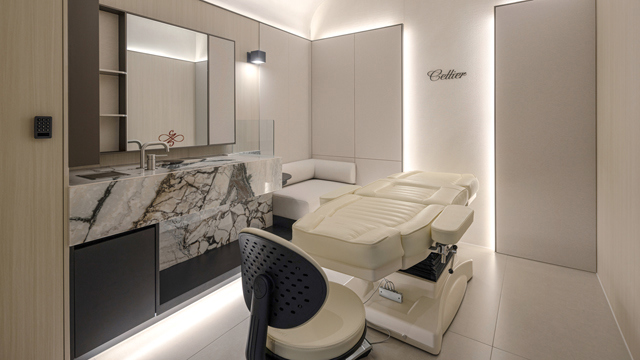
Titanium Lifting in Seoul is offered at Cellier Clinic in Gangnam, where suitability, treatment mode and energy level are decided in person by Dr. Youm Junghyun. Cellier Clinic is located on the 5th floor of Rex Tower, 108 Dosan-daero, Gangnam-gu, Seoul, South Korea. Online consultation is available, so the first conversation does not have to wait until you are in Korea, and photographs sent in advance let the clinic form an initial view of the areas you are asking about. Use the clinic's consultation and contact page to open that enquiry.
Disclaimer
This page is for general information only and is not medical advice. Individual results vary, and suitability for any treatment must be determined by a qualified physician during consultation.
Sources & Further Reading
Other Services
Explore additional non-surgical lifting and skin rejuvenation treatments at Cellier Clinic.
Pore & Scar Treatment
Potenza in Seoul is RF microneedling for pores, scars and texture. Cellier Clinic's two modes, candidacy, three-day downtime and session course explained.
Learn More
Redness & Pigmentation Laser Care
Redness laser treatment in Seoul: diagnosis first, then the laser. Cellier Clinic on candidacy, session length, recovery by laser type and aftercare.
Learn More

Basic Skin Management
Basic skin management in Seoul at Cellier Clinic uses LDM ultrasound for hydration and texture, with no downtime and a skin assessment before every session.
Learn More