Cellier Clinic — Personalized Anti-Aging & Lifting Specialist Design Clinic in Gangnam, Seoul

Wellness & Recovery · Consultation Required
Stem Cell Therapy
Stem cell therapy in Seoul at Cellier Clinic: the two administration routes, screening criteria, downtime, and what the evidence base does and does not show.
Schedule a ConsultationStem Cell Therapy in Seoul
Medically reviewed by Dr. Youm Junghyun, General Surgery Specialist
Stem cell therapy in Seoul is offered at Cellier Clinic as a programme with two administration routes: a localised injection into a chosen area, and a whole-body intravenous infusion. Which of the two applies is decided at consultation from the patient's overall health, stated goals and individual condition. This page sets out what the appointment involves, who the clinic screens out, and what is and is not established about stem cell treatments as a field.
What Is Stem Cell Therapy?
Stem cell therapy is the administration of stem cells or stem-cell-derived material into the body as a treatment, and outside a small number of established uses it is an experimental field rather than a settled one.
- Two routes exist here. Cellier divides its programme into a localised stem cell injection and a systemic stem cell infusion, and the clinic names that division as its own distinguishing approach.
- The route is chosen, not requested. The consultation evaluates overall health, treatment goals and individual condition in order to determine which of the two is the more appropriate option.
- The assessment is broader than the skin. Factors such as fatigue, sleep, hormone status and inflammation markers may be taken into account before an approach is selected.
- Comfort provision differs by route. Anaesthetic cream or a nerve block may be used for the injection route, while no anaesthesia is used for the infusion route.
- The technical detail is deliberately absent. The clinic's own profile states that the cell material, its concentration, its laboratory preparation and its administration protocol must be identified from clinic medical records before any technical claim is made, so no such claim is made on this page.
Stem cell treatments have a narrow proven base. Very few are proven safe and effective, and all other applications are highly experimental, according to the International Society for Stem Cell Research. The same patient orientation states that a stem cell treatment using a person's own cells is not automatically safe, and it advises caution towards any clinic offering a single cell treatment for many unrelated conditions. Those statements describe the field rather than any one provider, and they are the honest starting point for reading anything on this subject, this page included.
That is also why this page carries no outcome claim. No case figures and no outcome data for this programme appear in the clinic's published material, and nothing in the verified source pool supports an aesthetic or anti-ageing claim for a cell-based treatment. What can be described accurately is the process: the screening, the appointment, the recovery and the limits.
Who Performs Stem Cell Therapy at Cellier Clinic
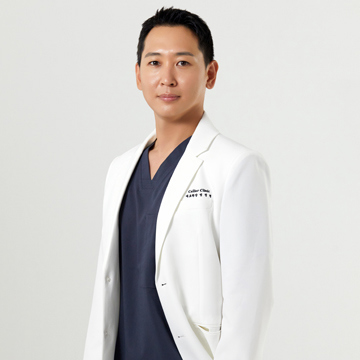
Dr. Youm Junghyun is the Director of Cellier Clinic and a General Surgery Specialist, having completed his specialist training and a clinical fellowship in General Surgery at Kyung Hee University Hospital at Gangdong. He is a member of the Korean Surgical Society, the Korean Society of Aesthetic Plastic Surgery and Laser, the Korean Society of Lifting, the Korean Society of Filler, the Korean Society of Obesity and Aesthetic Medicine, and the Korean Society of Dermatology, Obesity, and Plastic Surgery.
He is the clinic's only treating physician, so the doctor who decides the route is the doctor who carries it out. The reason the clinic gives for his suitability to this particular service is the assessment rather than the technique: overall health, treatment goals, tissue condition and individual medical history are what determine whether a localised injection or a systemic approach is appropriate for a given patient. Cellier Clinic applies a Skin Architecture philosophy for individualised treatment. Physician oversight is a real safeguard on screening and technique, and it is not a substitute for the evidence this field does not yet have.
Stem Cell Therapy Options Available
Cellier runs two distinct formats. They differ in how the material is given, in how long the visit takes and, most importantly for anyone travelling, in downtime.
| Route | How it is given | Time the clinic states | Anaesthesia | Downtime the clinic states |
|---|---|---|---|---|
| Stem Cell Injection | Locally, into the selected area | Approximately 20 minutes for blood collection, then approximately 10 minutes of treatment | Anaesthetic cream or a nerve block may be used | Approximately 1–2 weeks |
| Stem Cell Infusion | Intravenously, as a whole-body infusion | Approximately 20 minutes for blood extraction, then a 20–30 minute infusion | None used | Daily activities resumed immediately |
The areas the clinic lists for the localised route are the crown of the scalp, the face, the neck, the full body, or another area the patient identifies. The table describes the two formats; it is not a recommendation between them, and the choice is a clinical one made at consultation. The practical gap between them is large: one route takes a fortnight out of a trip and the other takes an afternoon.
Who Is a Good Candidate for Stem Cell Therapy?
The concerns patients bring when they enquire about this programme, as the clinic records them, are:
- Reduced skin elasticity
- Wrinkles
- Rough skin texture
- Acne scars or other skin damage
- Persistent melasma or other pigmentation concerns
- Scalp health and hair-loss concerns
- A preference for a non-surgical approach over a surgical one
- Patients seeking treatment for a condition for which a cell-based treatment is medically appropriate — the clinic's own phrasing, in which the qualification carries the weight
Appearing on that list is not the same as being a candidate. Suitability depends on the patient's health, the treatment indication and the type of cell-based therapy involved, and this page makes no claim that the programme improves any of the concerns above.
Stem cell therapy is not suitable, or should be postponed, for:
- Anyone with an acute systemic infection
- Anyone with an active bleeding disorder
- Anyone with a severe unmanaged medical condition
- Anyone with a known sensitivity to injection procedures
- Anyone with uncontrolled systemic illness
- Anyone with certain blood or immune disorders
- Anyone with another condition that could raise the risk of the procedure itself
Eligibility is settled by an individual medical assessment rather than read off a list, and the clinic states that directly.
What to Expect: Procedure, Recovery, and Results Timeline

Preparation begins before the visit. Give the clinic your medical history, your current medications, your allergies and your previous procedures. If the enquiry concerns pigmentation, scarring or the scalp, name the primary goal clearly at consultation, because the clinic uses it to select the approach. Do not stop a prescription medicine without medical advice. Tell the treating clinician about anticoagulants, antiplatelet medicines, supplements, allergies, recent procedures and any current infection or illness.
The appointment itself begins with a blood draw. For the injection route the clinic states approximately 20 minutes for collection followed by approximately 10 minutes of treatment. For the infusion route it states approximately 20 minutes for extraction followed by an infusion of 20 to 30 minutes. Anaesthetic cream or a nerve block may be used for the injection route. The infusion route uses no anaesthesia.
Discomfort differs by route. Injection-based treatment can involve brief needle discomfort, pressure or soreness. Intravenous treatment generally involves a short sting on insertion and possible soreness at the site afterwards. How much either is felt varies between patients.
Temporary redness or swelling may follow the procedure and usually settles on its own within one to two days. Avoid saunas, alcohol and strenuous exercise for one week after treatment. Keep the treated area clean and use sunscreen consistently. Washing the face and applying makeup can resume from the following day.
| Stage | What the clinic describes |
|---|---|
| Blood draw | Approximately 20 minutes, both routes |
| Treatment, injection route | Approximately 10 minutes |
| Treatment, infusion route | A 20–30 minute intravenous infusion |
| Next day | Facial cleansing and makeup can resume |
| First 1–2 days | Temporary redness or swelling settles |
| First week | Saunas, alcohol and strenuous exercise avoided |
| Downtime, injection route | Approximately 1–2 weeks |
| Downtime, infusion route | None; daily activities resumed immediately |
On results, the clinic's own profile is the most cautious document in the file, and it is worth quoting its logic rather than its figures. It states that outcomes depend on the treatment indication, the cell or cell-derived product, the administration method, the baseline condition and the individual response. It states that improvement should not be assumed to arrive on a fixed schedule or to last for a fixed period. And it states that the exact degree of change in skin quality, wrinkling, elasticity, scarring, pigmentation or tissue recovery cannot be guaranteed. Those three statements are the honest answer to "what will this do", and no figure on this page should be read as overriding them.
Combining Stem Cell Therapy with Other Treatments
- Hyperbaric oxygen therapy is the one treatment Cellier specifically names as a recommended combination with its stem cell programme.
- Hyperbaric oxygen therapy is described by MedlinePlus as breathing oxygen inside a chamber pressurised to roughly two and a half times normal atmospheric pressure. The conditions it lists as uses for that therapy are specific medical ones, among them carbon monoxide poisoning, decompression sickness, crush injury, burns, radiation injury and non-healing wounds.
- Sequencing the two is a consultation matter, since the injection route carries one to two weeks of downtime and the infusion route carries none.
- Where a different mechanism suits the objective better, the clinic lists skin boosters, collagen or biostimulator treatments, laser and energy-based skin treatments, and scalp-specific treatments as alternatives. Those work in different ways and are not direct equivalents of a cell-based treatment.
Safety, Precision, and Clinic Standards

Screening is the part of this service that is documented in detail. The clinic reviews medical history, medications, allergies, current health conditions, treatment goals and the proposed administration route before treatment. It names sterile technique, appropriate product handling and observation as components of safe delivery. Acute systemic infection, active bleeding disorders and severe unmanaged conditions are stated exclusions rather than matters of judgement on the day. Cellier Clinic does not publish a formal quality-control document.
Procedural risk is separate from the uncertainty about benefit, and both apply here. Injection sites can develop temporary pain, redness, swelling, tenderness or bruising. An intravenous route can cause temporary discomfort or bruising around the insertion site. Infection, bleeding, and allergic or inflammatory reactions are possible with any injected or infused material. Further risks depend on the specific product and the route by which it is given, which is the clinic's own framing and is the reason screening matters more here than on a device treatment page.
All cosmetic procedures carry risk, whether surgical or not, the NHS states, and it sets out what to establish first: your reasons, a proper consultation, real research into the procedure, and confirmation that the practitioner is suitably qualified. It also describes a cooling-off period as something a patient should expect rather than negotiate for. For an experimental treatment that advice is not boilerplate but the operative instruction.
Treatment obtained abroad carries its own set of questions, and the NHS sets them out plainly: safety standards and follow-up arrangements may differ between countries, you should ask how practitioners and clinics are regulated in the destination country, you should never pay for a practitioner you have not met, and you should check insurance and repatriation before travelling. Care quality and infection control vary significantly outside the United States, the CDC records for travellers, which names infection as the most common complication of treatment abroad. That guidance adds that accreditation does not by itself assure a good outcome, that travellers may have limited legal recourse, and that a sensible traveller arranges a pre-travel discussion, a plan for complications and records in English.
The Bottom Line
- Cellier offers two formats of this programme: a localised injection and a whole-body intravenous infusion, selected at consultation rather than requested.
- The difference that matters to a visitor is downtime: approximately one to two weeks for the injection route, and none for the infusion route.
- Stem cell applications outside a small number of established uses are described as highly experimental by the field's own international society, and this page makes no efficacy claim.
- Screening is specific and exclusionary: acute infection, active bleeding disorders, severe unmanaged illness and known sensitivity to injection procedures all rule the treatment out.
- Hyperbaric oxygen therapy is the single combination the clinic names, and sequencing depends on which route is used.
Frequently Asked Questions
Which of the two routes would I be having?
That is decided at consultation, not in advance. The clinic evaluates overall health, treatment goals and individual condition, and may take in factors such as fatigue, sleep, hormone status and inflammation markers before choosing between the localised injection and the whole-body infusion. The two are different propositions in practical terms, because only one of them takes a fortnight of downtime.
What actually happens at the appointment?
It starts with a blood draw, which the clinic puts at approximately 20 minutes for either route. The injection route then takes about 10 minutes of treatment, with anaesthetic cream or a nerve block used if needed. The infusion route runs for 20 to 30 minutes intravenously and uses no anaesthesia. You are given aftercare instructions before you leave.
How much downtime should I plan for?
Approximately one to two weeks if you have the localised injection, and none if you have the infusion — the clinic states that daily activities can resume immediately after the latter. Temporary redness or swelling settles within one to two days. Facial washing and makeup resume the day after treatment, and saunas, alcohol and strenuous exercise are out for a week.
Might I be told this is not for me?
Yes, and the exclusions are firm ones. An acute systemic infection, an active bleeding disorder, a severe unmanaged medical condition or a known sensitivity to injection procedures are all reasons not to proceed, as are uncontrolled systemic illness and certain blood or immune disorders. Bring a complete medication and supplement list, because the screening conversation happens before anything is scheduled.
Is this an established treatment?
Not in the sense most patients mean by the question. The International Society for Stem Cell Research states that very few stem cell treatments are proven safe and effective and that all other applications are highly experimental. It also notes that using a person's own cells does not make a treatment automatically safe. Anyone considering this should weigh that alongside anything a provider says.
When would I see a result, and how long would it last?
The clinic's own answer is that neither can be assumed. Outcomes depend on the indication, the product, the administration route, the starting condition and the individual response, and the profile states that improvement should not be assumed to arrive on a fixed schedule or to persist for a fixed period. The exact degree of any change cannot be guaranteed.
How long do I need to be in Korea, and when can I fly?
There is no standard answer for this service, and the clinic says so. The required stay depends on which route is used, on whether other procedures or follow-up assessment are involved, and on the one-to-two-week downtime if the injection route is chosen. There is no universal flight interval either, so ask for individualised travel advice before booking a return leg. Cellier Clinic does not publish treatment prices; a quotation is given after an individual consultation.
What happens if something feels wrong once I am home?
After returning home, patients are able to contact the clinic's international coordination team with any questions or concerns. Photo-based remote assessment is available for minor post-treatment queries. For more complex concerns, the clinic advises patients to seek evaluation from a local practitioner and will support with medical documentation if needed. The clinic can also be reached by telephone or through its website. Keep your own treatment and product records, because continuity of care depends on them.
Book a Consultation at Cellier Clinic
Stem cell therapy in Seoul is a service to approach through the assessment rather than the brochure, and at Cellier Clinic in Gangnam the consultation is what determines whether either route is appropriate at all. Enquiries begin at the clinic's contact page, and the rest of the treatment range is set out on the Cellier Clinic website. A remote assessment requires photographs of the treatment area, a current medication list and details of any previous procedures. An English-speaking team supports international patients at Cellier Clinic, and English-language assistance is available for both online enquiries and in-person consultations. Come to that conversation with the questions from the guidance above, and ask them directly.
Cellier Clinic is located on the 5th floor of Rex Tower, 108 Dosan-daero, Gangnam-gu, Seoul, South Korea. Cellier Clinic is a Registered Medical Institution for Attracting Foreign Patients, certified by the Ministry of Health and Welfare in compliance with the Medical Overseas Expansion and Foreign Patients Attraction Act.
Disclaimer
This page is for general information only and is not medical advice. Individual results vary, and suitability for any treatment must be determined by a qualified physician during consultation.
Sources & Further Reading
Other Services
Explore additional non-surgical lifting and skin rejuvenation treatments at Cellier Clinic.

Pore & Scar Treatment
Potenza in Seoul is RF microneedling for pores, scars and texture. Cellier Clinic's two modes, candidacy, three-day downtime and session course explained.
Learn More

Redness & Pigmentation Laser Care
Redness laser treatment in Seoul: diagnosis first, then the laser. Cellier Clinic on candidacy, session length, recovery by laser type and aftercare.
Learn More

Basic Skin Management
Basic skin management in Seoul at Cellier Clinic uses LDM ultrasound for hydration and texture, with no downtime and a skin assessment before every session.
Learn More