Cellier Clinic — Personalized Anti-Aging & Lifting Specialist Design Clinic in Gangnam, Seoul
Skin Rejuvenation & Boosters · Consultation Required
Skin Booster Injections
Skin booster injections in Seoul deliver a customised hydrating cocktail into the skin. Cellier Clinic's candidacy, session, downtime and results detail.
Schedule a ConsultationSkin Booster Injections in Seoul
Medically reviewed by Dr. Youm Junghyun, General Surgery Specialist
Skin booster injections in Seoul are a non-surgical treatment in which a customised mixture of moisturising and skin-supporting ingredients is placed into the skin itself rather than applied to its surface. The intended result is better hydration, smoother texture and more radiance, together with improvement in pores, inflammatory skin concerns and fine lines. At Cellier Clinic in Gangnam, both the formulation and the areas treated are decided for the individual patient, and the injection appointment itself takes about ten minutes.
What Is a Skin Booster Injection?
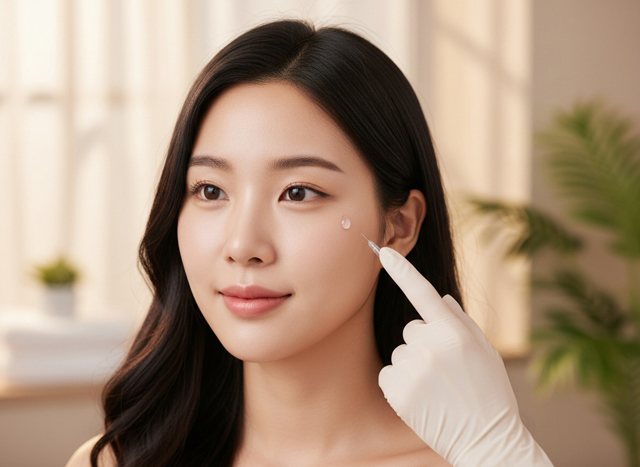
A skin booster injection delivers a customised mixture of moisturising and skin-supporting ingredients into the skin through multiple small injection points, with the goal of improving hydration, texture, radiance, pores, inflammatory skin concerns and fine lines.
- What is injected. Cellier Clinic describes its own Skin Booster Cocktail as a customised combination intended to deliver moisture and nutrients into the skin and to improve overall skin quality.
- How it differs from a filler. A booster spreads fine hyaluronic acid or PDRN through the dermis to work on hydration and texture, whereas a filler builds structural volume at specific points.
- How it is delivered. The skin is cleansed and prepared first, and the formulation is then injected across the targeted area through a series of injection points rather than one deposit.
- Comfort measures. Anaesthetic cream or a nerve block may be used to reduce discomfort during the injections.
- Areas treated. The clinic lists the forehead, the area between the eyebrows, around the eyes, the cheeks and the neck.
The reason for injecting at all is depth. Placing the substance inside the dermis reaches a level that topical skincare does not, and that is the stated basis for treating texture, elasticity and hydration this way. Injectable hyaluronic acid is described by the American Society for Dermatologic Surgery as a substance that occurs naturally in the skin, where it attracts water and keeps the skin hydrated. That is the mechanism a hydrating booster is designed to work with, and it is the reason the clinic frames the outcome as improved moisture retention rather than added volume.
Who Performs Skin Booster Injections at Cellier Clinic

Dr. Youm Junghyun is the Director of Cellier Clinic and a General Surgery Specialist, having completed his specialist training and a clinical fellowship in General Surgery at Kyung Hee University Hospital at Gangdong. He is a member of the Korean Surgical Society, the Korean Society of Aesthetic Plastic Surgery and Laser, the Korean Society of Lifting, the Korean Society of Filler, the Korean Society of Obesity and Aesthetic Medicine, and the Korean Society of Dermatology, Obesity, and Plastic Surgery.
He is the clinic's only treating physician, so the doctor who assesses your skin is the doctor who injects. For this treatment his assessment covers skin hydration, texture, pores, redness and fine lines, and that assessment sets both the treatment areas and the booster formulation. The product is then chosen — a hyaluronic-acid-based cocktail, Rejuran, Juvelook or a collagen-stimulating booster — according to skin condition, hydration needs and treatment goals. Skin boosters require precise selection of the injection areas, depth, and product according to the patient's skin concerns and desired level of improvement. Cellier Clinic is an official certification clinic for Ultherapy, Thermage, Onda, Titanium, Sofwave, Sculptra, Re2O and Rejuran. Cellier Clinic applies a Skin Architecture philosophy for individualised treatment, and its results archive is published in the clinic's before-and-after gallery.
Skin Booster Options Available
The profile does not treat "skin booster" as a single product. Four options are named, and the choice between them is part of the consultation rather than something decided in advance.
| Booster option | What the profile names it for | Certification status at Cellier Clinic |
|---|---|---|
| Hyaluronic-acid-based booster cocktail | Spreading fine hyaluronic acid through the dermis for hydration and texture | Not one of the eight certified treatments |
| Rejuran | One of the booster products chosen per patient for skin rejuvenation | One of the eight treatments the clinic is an official certification clinic for |
| Juvelook | One of the booster products chosen per patient for skin rejuvenation | Not one of the eight certified treatments |
| Collagen-stimulating booster | Selected when collagen stimulation, rather than hydration alone, is the goal | Sculptra and Re2O are among the eight certified treatments |
Who Is a Good Candidate for Skin Booster Injections?
- Skin that is dehydrated or lacks moisture, which the clinic records as the most common reason patients ask about this treatment
- Rough or uneven skin texture that a patient wants smoothed rather than filled
- Visible or enlarged pores
- Fine lines, including early fine lines around the eyes and forehead
- Dull skin that the patient describes as tired or lacking radiance
- Inflammatory skin concerns, which the clinic lists among the conditions the treatment addresses
- A thinning dermis with reduced skin hydration and loss of volume
- Patients who want a natural-looking glow and are not seeking structural volume change
- Patients whose goal is collagen stimulation rather than hydration alone, which changes which booster is selected
- Patients who want deeper and longer-lasting hydration than a topical routine has given them
Skin booster injections are not suitable, or should be postponed, for:
- Anyone with an active skin infection or active inflammation at the intended injection site
- Anyone with a known allergy to the treatment ingredients
- Anyone whose medical condition may make injections unsuitable, until they are medically cleared
- Active inflammatory skin disease, poorly controlled systemic illness, or recent surgical procedures in the treatment area are common reasons for postponement.
- Patients taking blood-thinning medication, who should raise the timing with the clinic before booking
What to Expect: Procedure, Recovery, and Results Timeline
The consultation comes first. The clinician evaluates skin condition, hydration, texture, pores, redness, fine lines and the specific areas of concern. That evaluation determines the treatment areas and the customised booster formulation. You should tell the clinician about relevant medical conditions, allergies, current medications and any previous injectable treatments. The treatment area needs to be clean and free from active irritation or infection on the day. The clinic asks patients to arrive without makeup and to stop active topical ingredients beforehand.
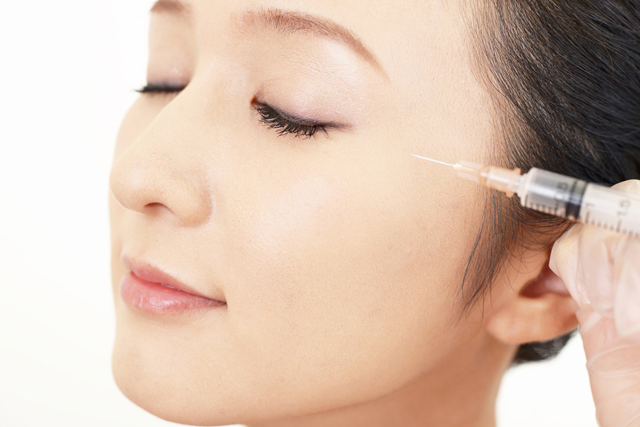
On the day, the skin is cleansed and prepared. Anaesthetic cream or a nerve block is applied when needed. The customised formulation is then injected into the targeted areas through multiple injection points. The injection itself takes about ten minutes.
Bruising, redness and swelling may occur afterwards and generally improve on their own. The clinic's post-treatment information also notes mild stinging. Downtime is approximately one to two weeks, depending on the individual. Avoid saunas, alcohol and strenuous exercise for one week after treatment. Keep the treated area clean and use sunscreen consistently. Washing the face and applying makeup can resume from the following day.
| Stage | What the clinic describes |
|---|---|
| Treatment day | About ten minutes; multiple injection points; anaesthetic cream or nerve block if needed |
| Next day | Washing the face and applying makeup can resume |
| First week | Sauna, alcohol and strenuous exercise avoided |
| One to two weeks | Downtime for bruising, redness and swelling |
| From about two weeks | Changes may begin to be felt |
| About two to four weeks | The point at which the clinic describes the result as peaking |
| Three to six months | Effect duration, varying with individual skin condition |
| Follow-up course | Three sessions at four-week intervals is described as a standard course |
The number and timing of visits still depend on the individual skin condition and treatment plan. The clinic frames the outcome as improvement rather than a fixed endpoint, and states that the treatment is intended to improve:
- Hydration and moisture retention in the skin
- Skin texture, where the concern is roughness or unevenness
- The appearance of enlarged pores
- Inflammatory skin concerns
- Radiance, in skin the patient describes as dull
- Fine lines
- Skin elasticity, alongside the promotion of skin regeneration
How much of that a given patient sees varies with the skin being treated. Lasting hydration is not something the treatment holds in place, because ongoing ageing and lifestyle factors keep changing the condition of the skin.
Combining Skin Booster Injections with Other Treatments
- The clinic describes boosters as complementary to nearly all of its lifting and laser procedures, and they may be combined when this is clinically appropriate for the individual's concerns.
- Within the Skin Rejuvenation & Boosters category the procedures are treated as complementary rather than competing, with device and product selection based on skin type and goals.
- Pore & Scar Treatment is the pairing the clinic names most often alongside boosters, for patients whose texture concern is structural as well as hydration-related.
- Boosters and dermal filler are not interchangeable and can be combined: the booster works on skin quality across an area, the filler on volume at a point.
- If the assessment finds that the real concern is laxity or surface damage rather than skin quality, the clinic's stated alternatives are its other non-surgical rejuvenation, hydration, skin-tightening or resurfacing treatments. A booster is not a substitute for any of them.
Safety, Precision, and Clinic Standards

Dr. Youm Junghyun performs the injections himself. The clinic states that it uses authentic products for its skin booster treatments. It also names verification of genuine products and of proper quantities among its stated differentiators. The booster formulation is selected per patient rather than drawn from a standard single-product protocol.
Non-surgical injectable procedures still carry real risk and can cause serious complications if they are done incorrectly, which is why NHS guidance tells patients to research a procedure thoroughly and to confirm that the person performing it is suitably qualified before going ahead. Cosmetic procedures carried out in another country are addressed separately by the NHS, which notes that safety standards and the availability of follow-up care differ between countries and advises travellers never to commit to a practitioner they have not met. Both points are worth acting on before a trip rather than after arrival.
The specific risks the clinic records for this treatment are bruising, redness and swelling, which generally subside naturally. General injection-related risks include temporary tenderness, swelling, bruising, redness and infection. More serious complications depend on the substance injected and on the technique used, which is why the product selection is made by the treating doctor. Minor swelling, small point bruising or mild localised irritation are more likely if the aftercare instructions are not followed.
The Bottom Line
- Skin booster injections treat skin quality — hydration, texture, pores, radiance and fine lines — rather than facial volume.
- The formulation is customised, and the choice between a hyaluronic-acid cocktail, Rejuran, Juvelook and a collagen-stimulating booster is made after the skin is assessed.
- The appointment is short, at about ten minutes, but the downtime for bruising and redness is longer than most patients expect, at one to two weeks.
- Change is felt from about two weeks, peaks at around two to four weeks and lasts roughly three to six months.
- Three sessions at four-week intervals is the course the clinic describes, so a single visit is a start rather than a finish.
Frequently Asked Questions
Would my skin actually benefit from a booster, or do I need something else?
Boosters are aimed at skin that is dry, dull, rough or showing enlarged pores and fine lines, and at a dermis that has thinned. If your main concern is a hollow or a lost contour, that is a volume problem and a filler addresses it instead. The consultation exists to make that distinction, because the clinic assesses hydration, texture, pores, redness and fine lines before choosing anything.
What actually happens during the appointment?
The skin is cleansed and prepared, anaesthetic cream or a nerve block is used if it is needed, and the customised booster is injected at multiple points across the treatment area. The injecting part takes around ten minutes. Most patients find the sensation tolerable with numbing in place, though a mild sting is noted in the clinic's own post-treatment information.
How long will I look like I have had something done?
Plan for one to two weeks. Bruising, redness and swelling at the injection points are the reason, and they resolve without intervention. You can wash your face and wear makeup from the next day, which covers a good deal of it. If you are travelling, booking this toward the end of a Seoul trip rather than the start avoids showing the marks during the visit.
Is there a reason I might be told to wait?
Yes. An active skin infection or inflammation at the injection site, a known allergy to the ingredients, or a medical condition that makes injections unsuitable will all mean postponing until you are medically cleared. Active inflammatory skin disease, poorly controlled systemic illness, or recent surgical procedures in the treatment area are common reasons for postponement. Tell the clinic about blood-thinning medication so the timing can be discussed.
When will I see something, and how long does it hold?
Changes may begin to be felt at around two weeks, and the clinic puts the peak at roughly two to four weeks. The effect then lasts about three to six months, depending on individual skin condition. This is a treatment that is repeated rather than completed.
How many sessions should I budget time for?
A standard course is described as three sessions at four-week intervals. The number and spacing are still set individually, based on the skin condition and the treatment plan agreed at consultation. For an international patient that usually means one session in Seoul and a conversation about how to schedule the rest.
What if something worries me once I am back in the US?
After returning home, patients are able to contact the clinic's international coordination team with any questions or concerns. Photo-based remote assessment is available for minor post-treatment queries. For more complex concerns, the clinic advises patients to seek evaluation from a local practitioner and will support with medical documentation if needed. The clinic can also be reached by telephone or through its website.
How long do I need to be in Korea, and when can I fly?
One day is enough for the appointment itself, and there is no surgical restriction on flying afterwards. The clinic's own logistical advice is to allow three to four days in Seoul and to treat the one-to-two-week bruising window as the thing that dictates scheduling. Avoid ultraviolet exposure and makeup immediately after the injections, then resume both normally from the following day.
Book a Consultation at Cellier Clinic
Skin booster injections in Seoul are a consultation-led treatment at Cellier Clinic, because the formulation and the injection areas are set from an individual skin assessment. Enquiries can be sent through the clinic's contact page, and the rest of what it offers is listed on the clinic's website. An English-speaking team supports international patients at Cellier Clinic, and English-language assistance is available for both online enquiries and in-person consultations. Online consultation is possible before you travel, and you will be asked to send photographs of the treatment area, a current medication list and details of any previous procedures. Translated documents are available. Cellier Clinic is located on the 5th floor of Rex Tower, 108 Dosan-daero, Gangnam-gu, Seoul, South Korea. Cellier Clinic is a Registered Medical Institution for Attracting Foreign Patients, certified by the Ministry of Health and Welfare in compliance with the Medical Overseas Expansion and Foreign Patients Attraction Act.
Disclaimer
This page is for general information only and is not medical advice. Individual results vary, and suitability for any treatment must be determined by a qualified physician during consultation.
Sources & Further Reading
- Injectable Hyaluronic Acid — ASDS
- Before you have a cosmetic procedure - NHS — NHS
- Cosmetic surgery abroad - NHS — NHS
Clinical Protocol Summary (Dr. Youm Junghyun)
- Juvelook vs Juvelook Volume: Juvelook (PDLLA + HA) targets dermal texture, fine lines, and enlarged pores, whereas Juvelook Volume (LENISNA) uses higher-concentration PDLLA microparticles for deeper volume restoration (
CEL-17). - PDRN / Rejuran Session Schedule: Typically 3–5 sessions spaced 2–4 weeks apart for cumulative dermal regeneration (
CEL-11). - Skin Botox Duration: Approximately 3 months (up to 3–6 months with maintenance,
CEL-09).
Other Services
Explore additional non-surgical lifting and skin rejuvenation treatments at Cellier Clinic.
Pore & Scar Treatment
Potenza in Seoul is RF microneedling for pores, scars and texture. Cellier Clinic's two modes, candidacy, three-day downtime and session course explained.
Learn More
Redness & Pigmentation Laser Care
Redness laser treatment in Seoul: diagnosis first, then the laser. Cellier Clinic on candidacy, session length, recovery by laser type and aftercare.
Learn More

Basic Skin Management
Basic skin management in Seoul at Cellier Clinic uses LDM ultrasound for hydration and texture, with no downtime and a skin assessment before every session.
Learn More