Cellier Clinic — Personalized Anti-Aging & Lifting Specialist Design Clinic in Gangnam, Seoul
Skin Rejuvenation & Boosters · Consultation Required
Pore & Scar Treatment
Potenza in Seoul is RF microneedling for pores, scars and texture. Cellier Clinic's two modes, candidacy, three-day downtime and session course explained.
Schedule a ConsultationPore & Scar Treatment (Potenza) in Seoul
Medically reviewed by Dr. Youm Junghyun, General Surgery Specialist
Potenza in Seoul is a microneedle radiofrequency treatment used to work on enlarged pores, scars, fine lines, skin elasticity, skin tone and overall texture. It is offered as RF microneedling in Gangnam at Cellier Clinic, where the penetration depth and the radiofrequency intensity are both set to the skin being treated rather than fixed in advance. A single session runs about ten minutes, and the clinic describes a course of three or more sessions at intervals of one to two weeks.
What Is Pore & Scar Treatment (Potenza)?
Pore and scar treatment with Potenza is a microneedle radiofrequency procedure that uses fine needles and radiofrequency energy together to stimulate the skin's own regenerative process, with the depth and the energy level adjusted per patient.
- The two components. Potenza combines microneedles with radiofrequency energy, so the treatment has both a mechanical and a thermal element.
- Where the energy goes. Energy can be delivered into the dermis through the microneedles, which is the setting used for structural work on pores and scars.
- A second mode. A non-invasive mode can be used instead, which the clinic applies to skin elasticity.
- What is adjustable. Different tips allow the penetration depth and the radiofrequency intensity to be customised.
- Comfort. Topical numbing cream is applied before the handpiece is used.
Microneedling is defined by the American Society for Dermatologic Surgery as percutaneous collagen induction, in which controlled superficial puncture of the skin prompts it to make new collagen. Radiofrequency microneedling is covered explicitly by the American Academy of Dermatology, which describes heat travelling down the needles as the feature that separates it from microneedling on its own. That is the mechanism the clinic is describing when it says the treatment stimulates collagen production.
Who Performs Pore & Scar Treatment (Potenza) at Cellier Clinic
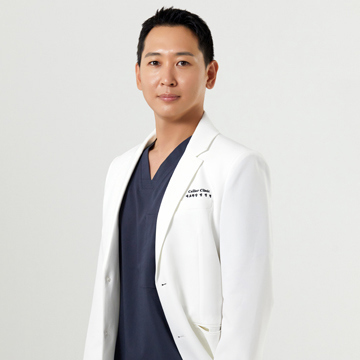
Dr. Youm Junghyun is the Director of Cellier Clinic and a General Surgery Specialist, having completed his specialist training and a clinical fellowship in General Surgery at Kyung Hee University Hospital at Gangdong. He is a member of the Korean Surgical Society, the Korean Society of Aesthetic Plastic Surgery and Laser, the Korean Society of Lifting, the Korean Society of Filler, the Korean Society of Obesity and Aesthetic Medicine, and the Korean Society of Dermatology, Obesity, and Plastic Surgery.
Cellier Clinic runs a physician-led Potenza RF microneedling protocol, and Dr. Youm is the clinic's only treating physician. His assessment before treatment covers the skin condition, the specific concern, the skin type and the areas to be treated, and those findings are what select the settings. The two parameters that change most between patients are tip penetration depth and radiofrequency intensity, and both are chosen per skin condition rather than run at a standard setting. Cellier Clinic applies a Skin Architecture philosophy for individualised treatment. Treatment results from the clinic's device range are published in its before-and-after gallery.
Pore & Scar Treatment (Potenza) Options Available
The device is used in two distinct ways, and which one is chosen follows from the concern being treated.
| Mode | How the energy reaches the skin | What the clinic names it for | What is adjusted |
|---|---|---|---|
| Microneedle RF | Radiofrequency delivered into the dermis through fine needles that penetrate the skin surface | Pores, scars, collagen induction, skin regeneration | Tip type, penetration depth, radiofrequency intensity |
| Non-invasive mode | Radiofrequency applied without needle penetration | Skin elasticity | Radiofrequency intensity |
Both modes can appear in one treatment plan, which is what the clinic means by adjusting the protocol to the skin rather than to the procedure name.
Who Is a Good Candidate for Pore & Scar Treatment (Potenza)?
- Enlarged or visibly open pores, which is the concern the clinic names first
- Acne scarring, or other scarring the patient wants softened
- Uneven or rough skin texture
- Fine lines, where the goal is smoothing rather than volume
- Reduced skin elasticity
- Uneven skin tone
- Patients looking for skin regeneration and a degree of lifting in the same treatment
- Patients who want something more penetrating than topical care but with a short recovery rather than a surgical one
Pore and scar treatment with Potenza is not suitable, or should be postponed, for:
- Anyone with an active skin infection in the treatment area
- Anyone with significant inflammation or an open wound at the site
- Anyone with a medical condition that affects wound healing
- Patients who are pregnant or breastfeeding should postpone all elective aesthetic procedures. Active skin infections, open wounds, or inflammatory skin conditions in the treatment area require resolution before proceeding. Those with autoimmune conditions, a history of keloid scarring, or recent use of isotretinoin within 6 months may require additional assessment. Patients on blood-thinning medications should discuss timing with the clinic.
A consultation is what settles suitability, and the clinic asks for it rather than treating the list above as a self-assessment.
What to Expect: Procedure, Recovery, and Results Timeline
The clinician evaluates the skin condition, the concern, the skin type and the treatment areas first. Those findings select the Potenza settings and treatment parameters. Before the appointment, the clinic may advise avoiding irritating skincare products and protecting the skin from heavy sun exposure. Individualised preparation instructions come from the clinic rather than from a general rule. Patients are asked to arrive without makeup and to disclose current medications, supplements and previous procedures. Blood-thinning medication should be raised with the clinic before the date is fixed.
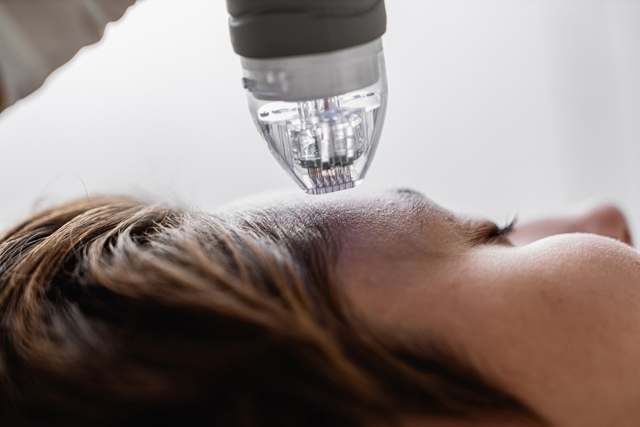
On the day, the skin is cleansed and prepared. Topical anaesthetic cream is applied. The handpiece is then worked over the selected areas, delivering microneedle radiofrequency energy at the chosen depths and intensities. The session takes about ten minutes. Most patients describe warmth, prickling or a stinging sensation during treatment rather than pain.
Temporary swelling, redness and itching can follow and generally resolve without intervention. Downtime is approximately three days. Washing the face and applying makeup can generally resume from the next day, following the clinic's own guidance. Avoid saunas, alcohol and strenuous exercise for one week after treatment. Keep the treated area clean and use sunscreen consistently. Washing the face and applying makeup can resume from the following day.
| Stage | What the clinic describes |
|---|---|
| Treatment day | About ten minutes; topical numbing cream; depth and intensity set per skin condition |
| Next day | Washing the face and applying makeup can generally resume |
| First three days | Downtime, with temporary swelling, redness and itching |
| First week | Sauna, alcohol and strenuous exercise avoided |
| Every one to two weeks | The interval between sessions in the clinic's course |
| After three or more sessions | The point at which change is expected to be felt |
| Three to six months | Effect duration, varying with individual skin condition |
Change is expected across a course rather than after one appointment. The clinic states the realistic goal directly: improvement in skin texture and firmness, not complete elimination of scars or pores. Nor is this a replacement for surgery where skin laxity is significant. What the clinic does claim for it is skin regeneration, pore improvement, scar reduction, collagen induction, a lifting effect, improved elasticity and fine-line improvement.
Combining Pore & Scar Treatment (Potenza) with Other Treatments
- The clinic states that it provides a Potenza synergy programme, combining the treatment with lifting and skin-regeneration treatments.
- Skin Booster Injections are the pairing named most often, adding hydration support alongside the structural work.
- Within the Skin Rejuvenation & Boosters category the clinic treats its procedures as complementary, selecting between them on skin type and treatment goals.
- Where the underlying problem is pigmentation or redness rather than texture, the clinic lists other options — PicoSure Pro Focus, its Clarity laser treatment and Cellivie — and the choice depends on which problem is actually driving the appearance.
Safety, Precision, and Clinic Standards

The treatment is delivered under a physician-led protocol, with depth and intensity selected per patient. Topical numbing cream is used rather than any deeper form of anaesthesia. The clinic records temporary swelling, redness and itching as the expected after-effects, and states that they generally resolve naturally. The side effects reported most often are localised redness and warmth in the treated area, which generally subside within twenty-four to forty-eight hours. Mild tenderness and short-lived skin sensitivity are common as well.
General radiofrequency microneedling risks are broader than that and worth reading before booking. They include temporary tenderness, swelling and redness. They also include pinpoint bleeding or crusting. Pigmentary changes and infection are possible. Scarring and burns are rare but recorded. Microneedling is not recommended by the American Academy of Dermatology for people who form keloid scars, who heal poorly, or who have an active skin infection in the area. Microneedling also has a more limited evidence base in darker skin tones, which the same source states plainly.
Microneedling is described by the American Society for Dermatologic Surgery as usually needing three or more sessions, spaced roughly a month apart, with two to seven days of downtime. Cellier Clinic's own protocol uses intervals of one to two weeks and puts downtime at about three days, so the schedule is tighter than the category-general figure. Bruising, scarring and an allergic response are listed by the same society as less common outcomes.
Aesthetic procedures carry a range of possible risks that vary depending on the type and depth of treatment. More common risks include temporary irritation, swelling or bruising. Less common outcomes may include prolonged sensitivity or uneven response. Discussing individual risk factors with the treating doctor before proceeding supports informed decision-making.
Infection is the most common complication among patients who travel to another country for medical care, according to the CDC's Yellow Book. The same guidance advises travellers to agree a plan for handling a complication before they leave. It also advises carrying medical records in English, which matters here because a course of this treatment may not finish in Korea.
The Bottom Line
- Potenza is radiofrequency microneedling: fine needles plus heat, aimed at pores, scars, texture, fine lines and elasticity.
- Two modes exist — needle-penetrating and non-invasive — and tip depth and energy intensity are set per patient by the treating doctor.
- A session is short at about ten minutes, with roughly three days of visible downtime.
- Results come from a course of three or more sessions at one-to-two-week intervals, and last about three to six months.
- The honest ceiling is improvement in texture and firmness, not the removal of scars or pores.
Frequently Asked Questions
Is this the right treatment for my pores and scars, or am I better off with a laser?
Potenza is aimed at enlarged pores, scarring, uneven texture, fine lines and reduced elasticity, and it works structurally by putting energy into the dermis through needles. If the visible problem is pigmentation or redness rather than texture, the clinic points to different options — PicoSure Pro Focus, its Clarity laser treatment or Cellivie. Which one fits depends on the underlying skin problem, which is exactly what the consultation is for.
What does a session feel like, start to finish?
The skin is cleansed, numbing cream goes on, and the handpiece is then passed over the treatment areas for about ten minutes in total. Patients typically report warmth, prickling or stinging rather than sharp pain. Depth and energy are adjusted as the clinician moves between areas, because a scarred cheek and a fine-lined forehead do not take the same settings.
How visible is the recovery?
Downtime is around three days, with temporary swelling, redness and itching. You can wash your face and wear makeup from the day after, which covers most of it. For a Seoul trip, scheduling this toward the end keeps the redness out of your photographs, and there is no surgical restriction on flying home.
Should I postpone for any reason?
Yes, and a few of them are absolute. An active skin infection, significant inflammation or an open wound in the area all need to clear first, as does any condition that interferes with wound healing. Patients who are pregnant or breastfeeding should postpone all elective aesthetic procedures. Active skin infections, open wounds, or inflammatory skin conditions in the treatment area require resolution before proceeding. Those with autoimmune conditions, a history of keloid scarring, or recent use of isotretinoin within 6 months may require additional assessment. Patients on blood-thinning medications should discuss timing with the clinic.
How many appointments will this take, and when do I see the change?
Three or more sessions at one-to-two-week intervals is the course the clinic describes, and change is expected to be felt across that course rather than after the first visit. The effect then lasts roughly three to six months, depending on skin condition. Patients who can only be in Korea once usually start the course here and discuss the remainder at the consultation.
Can it be combined with anything else while I am there?
Yes. The clinic runs a Potenza synergy programme that combines it with lifting and skin-regeneration treatments, and Skin Booster Injections are the pairing it names most often for hydration support. Combination planning is done at the consultation, since stacking treatments changes both the schedule and the recovery.
What happens if something does not look right after I get home?
After returning home, patients are able to contact the clinic's international coordination team with any questions or concerns. Photo-based remote assessment is available for minor post-treatment queries. For more complex concerns, the clinic advises patients to seek evaluation from a local practitioner and will support with medical documentation if needed. The clinic can also be reached by telephone or through its website.
What do I need to send before I travel?
An online consultation needs photographs of the treatment area, a current medication list and details of any previous procedures. That is enough for an initial view on whether the treatment suits the concern. The in-person assessment still governs the settings, because depth and intensity cannot be chosen from a photograph.
Book a Consultation at Cellier Clinic
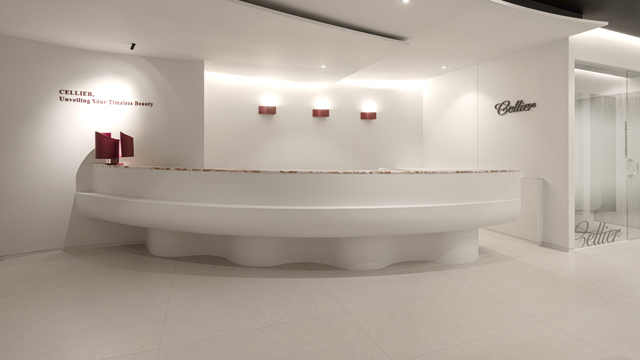
Pore and scar treatment with Potenza in Seoul begins with an assessment, because the tip, the depth and the energy level are all set from the skin in front of the doctor. Enquiries go through the clinic's contact page, and the full treatment range is on the clinic's website. An English-speaking team supports international patients at Cellier Clinic, and English-language assistance is available for both online enquiries and in-person consultations. Cellier Clinic is located on the 5th floor of Rex Tower, 108 Dosan-daero, Gangnam-gu, Seoul, South Korea. Cellier Clinic is a Registered Medical Institution for Attracting Foreign Patients, certified by the Ministry of Health and Welfare in compliance with the Medical Overseas Expansion and Foreign Patients Attraction Act.
Disclaimer
This page is for general information only and is not medical advice. Individual results vary, and suitability for any treatment must be determined by a qualified physician during consultation.
Sources & Further Reading
Other Services
Explore additional non-surgical lifting and skin rejuvenation treatments at Cellier Clinic.
Pore & Scar Treatment
Potenza in Seoul is RF microneedling for pores, scars and texture. Cellier Clinic's two modes, candidacy, three-day downtime and session course explained.
Learn More
Redness & Pigmentation Laser Care
Redness laser treatment in Seoul: diagnosis first, then the laser. Cellier Clinic on candidacy, session length, recovery by laser type and aftercare.
Learn More

Basic Skin Management
Basic skin management in Seoul at Cellier Clinic uses LDM ultrasound for hydration and texture, with no downtime and a skin assessment before every session.
Learn More