Cellier Clinic — Personalized Anti-Aging & Lifting Specialist Design Clinic in Gangnam, Seoul

Pigmentation & Skin Toning · Consultation Required
PicoSure Pro Toning
PicoSure Pro Toning in Seoul uses a 755 nm picosecond laser for pigment, pores and texture. Candidacy, session length, downtime and results explained.
Schedule a ConsultationPicoSure Pro Toning in Seoul
Medically reviewed by Dr. Youm Junghyun, General Surgery Specialist
PicoSure Pro Toning is a picosecond laser treatment that directs very short pulses of 755 nm energy at pigment held in the skin. Patients looking for pigmentation treatment in Gangnam usually arrive with one of five concerns — freckles and blemishes, deeper dermal pigmentation such as ADM, enlarged pores, scars or marks, or an uneven surface texture — and this treatment is pointed at all of them. The laser part of the appointment lasts about three minutes, and Cellier Clinic describes change accumulating across three or more sessions spaced one to two weeks apart.
What Is PicoSure Pro Toning?
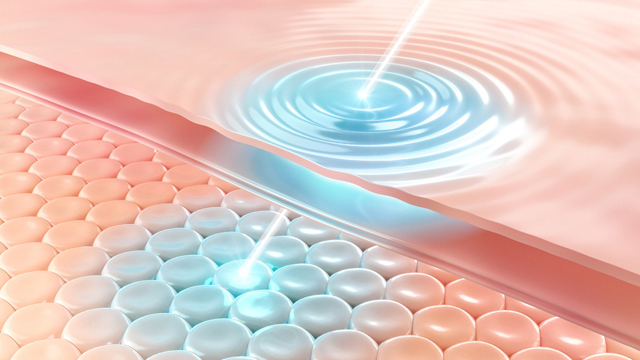
PicoSure Pro Toning is the delivery of precisely controlled picosecond laser energy to pigmented targets, with the stated aim of improving blemishes, uneven tone, enlarged pores, scars, fine lines and skin texture.
- The wavelength. The device is a 755 nm picosecond laser, and the clinic records that it delivers higher energy than the earlier PicoSure system it replaced.
- The pulse length is the point. Energy arrives in pulses measured in picoseconds, so it acts on pigment particles rather than holding surrounding tissue at temperature.
- Two handpieces, one of them small. A 5 mm handpiece sits alongside the standard fitting, which is what makes precise work on small or curved areas possible.
- Fluence is adjustable. Energy is set against how stubborn the pigment looks, so a dense patch and a faint freckle are not treated at the same level.
- Comfort. Anaesthetic cream is applied to the area before the laser is used.
Laser treatment of pigment is one of the routes MedlinePlus lists for severe melasma, alongside creams and chemical peels, in an encyclopedia entry that describes the condition as dark patches on sun-exposed facial skin associated with oestrogen and progesterone. Pigment-directed care has no single best option, the American Academy of Dermatology states, and the plan it describes as most effective pairs sun protection with topical treatment, adding a procedure only sometimes. Visible improvement on that account usually takes three to twelve months. Those figures belong to the treatment category and to melasma in particular, rather than to this clinic's protocol, and they are the reason the sun-protection instruction below is not a formality.
Who Performs PicoSure Pro Toning at Cellier Clinic
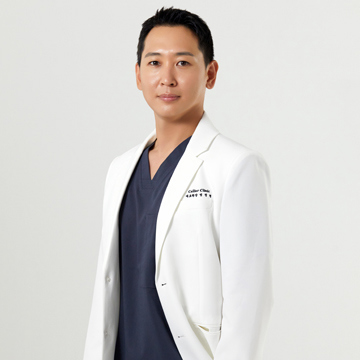
Dr. Youm Junghyun is the Director of Cellier Clinic and a General Surgery Specialist, having completed his specialist training and a clinical fellowship in General Surgery at Kyung Hee University Hospital at Gangdong. He is a member of the Korean Surgical Society, the Korean Society of Aesthetic Plastic Surgery and Laser, the Korean Society of Lifting, the Korean Society of Filler, the Korean Society of Obesity and Aesthetic Medicine, and the Korean Society of Dermatology, Obesity, and Plastic Surgery.
He is the clinic's only treating physician, so the doctor who assesses the pigment is the doctor who fires the laser. For this treatment his part of the work is largely diagnostic: identifying the type of pigmentation and the depth it sits at, then choosing the settings that suit it. Selective targeting is the clinic's stated technique here, with the fluence moved up or down according to how severe the pigmentation is. His practice rests on a comprehensive understanding of facial and body aesthetics, combining diagnostic precision with a broad range of treatment modalities. The personalised Skin Architecture planning system used at the clinic reflects a commitment to tailored, evidence-informed care. The kind of change the clinic documents is shown in its before-and-after gallery.
Who Is a Good Candidate for PicoSure Pro Toning?
- Adults concerned about pigmentation or blemishes on the face
- Patients with dermal pigmentation such as ADM identified at assessment
- Patients whose main complaint is enlarged pores
- Patients with scars or marks they want softened
- Patients concerned about fine wrinkles
- Patients with uneven skin texture rather than a single discrete mark
- Patients who want a non-surgical, laser-based option and are prepared to attend a short course rather than one appointment
Assessment may lead to postponement or to a different route:
- Patients who are pregnant or breastfeeding should postpone all elective aesthetic procedures. Active skin infections, open wounds, or inflammatory skin conditions in the treatment area require resolution before proceeding. Those with autoimmune conditions, a history of keloid scarring, or recent use of isotretinoin within 6 months may require additional assessment. Patients on blood-thinning medications should discuss timing with the clinic.
- Current skin irritation or inflammation in the area is a reason to wait.
- Suitability rests on the type of pigmentation as much as on how it looks, which is why the clinic asks for a professional assessment before treatment rather than after it.
- Where the pigment is better managed another way, other pigmentation and skin-texture treatments may be considered against the diagnosis.
What to Expect: Procedure, Recovery, and Results Timeline
The consultation is an examination of pigment. The practitioner assesses the type and the depth of the pigmentation. Skin condition and treatment goals are assessed alongside it. Suitability is decided before any setting is chosen. Laser parameters are then selected for that particular pigment, and may be adjusted again later according to how the skin has responded.
Preparation is short. Arrive without makeup. Tell the doctor about every medication, supplement and previous procedure. Active topical ingredients should be paused beforehand. Blood-thinning medication should be disclosed if you take any. Any active skin irritation needs to be mentioned rather than worked around.
On the day, the area is cleansed and prepared, and anaesthetic cream is applied. The laser is then delivered to the targeted areas at the settings chosen for them. The skin is cared for afterwards and the post-procedure instructions are given before you leave. Treatment time is approximately three minutes. Sensation during it is usually described as warmth, tingling, a snapping feeling or mild discomfort, and how much of that you notice depends on the area, the settings and your own sensitivity.
| Stage | What the clinic describes |
|---|---|
| Consultation | type and depth of pigmentation assessed, then settings selected |
| Treatment day | about three minutes of laser time, after anaesthetic cream |
| Within one day | the extent of the downtime |
| Next day | face washing and makeup, depending on the skin's condition |
| First week | sauna, alcohol and strenuous exercise avoided |
| Two to four weeks | UV exposure avoided |
| Three or more sessions at one- to two-week intervals | improvement described |
| Three to six months | described duration of effect |
Downtime is generally within one day. Temporary redness or swelling may occur and usually settles on its own. The clinic notes that redness and itching can be more pronounced on areas other than the face. Avoid saunas, alcohol and strenuous exercise for one week after treatment. Keep the treated area clean and use sunscreen consistently. Washing the face and applying makeup can resume from the following day. Direct UV exposure should be avoided for two to four weeks after a session.
Results are cumulative rather than immediate. Change may become noticeable after several treatments, and the clinic describes improvement after three or more sessions at one- to two-week intervals. The effect is then described as lasting roughly three to six months, depending on individual skin condition. The clinic recommends that course of three or more sessions, and notes separately that treatment sessions are not the same thing as follow-up appointments, so the review schedule is set by the treating clinic rather than assumed from the protocol.
Combining PicoSure Pro Toning with Other Treatments
- Skin boosters, where hydration and overall skin quality are a concern alongside the pigment.
- Collagen-stimulating injectables, which the clinic pairs with this treatment for skin quality rather than for tone.
- The clinic's dual-wavelength laser treatment, which it describes as complementary for comprehensive pigmentation management — that treatment has its own page and its own protocol.
- Sequencing and spacing are decided at consultation, because two treatments acting on the same skin in the same week is a different proposition from either one alone.
Safety, Precision, and Clinic Standards

Dr. Youm Junghyun assesses every patient individually before treatment. The 755 nm picosecond platform allows fluence to be adjusted per patient. The 5 mm handpiece allows small and curved areas to be treated without spilling energy into neighbouring skin. Anaesthetic cream is used as a matter of routine here rather than on request. Cellier Clinic applies a Skin Architecture philosophy for individualised treatment. Cellier Clinic does not publish a formal quality-control document.
The clinic's own record of adverse effects for this treatment is narrow. Temporary redness may occur. Temporary swelling may occur. Both generally subside without intervention. Redness and itching may be stronger away from the face. Beyond that, all medical aesthetic procedures carry some level of risk, and the clinic states that this risk is assessed individually from the patient's skin type, health history and the specific treatment planned. Rare adverse events are addressed by the clinical team as they arise.
What cannot be promised is worth stating plainly. A specific degree of pore reduction cannot be guaranteed. Nor can a specific degree of scar improvement, fine-line reduction or texture improvement. The clinic puts the duration of effect at approximately three to six months and says it varies with individual skin condition. This is also not a treatment for significant skin laxity, and the clinic does not present it as an alternative to surgery for that concern.
Cosmetic treatment is one of the leading reasons US patients travel abroad for care, the CDC records in its medical tourism guidance. The same guidance states that quality-of-care and infection-control standards vary significantly outside the United States. It advises a conversation with your own clinician before you travel. It also notes that accreditation on its own does not guarantee a good outcome, and that travellers may have limited legal recourse if something goes wrong. Reading that alongside a three-minute laser appointment is not alarmism: the point it makes is that the assessment and the aftercare, not the device, are where an overseas treatment succeeds or fails.
The Bottom Line
- The treatment acts on pigment with picosecond pulses, which is why the clinic frames it around pigment type and depth rather than around how dark a mark looks.
- It is directed at blemishes, dermal pigmentation such as ADM, pores, scars, fine wrinkles and texture — five concerns, one device.
- The laser takes about three minutes, and downtime is generally within a day.
- Improvement is described after three or more sessions at one- to two-week intervals, with the effect lasting roughly three to six months.
- Sun protection afterwards is part of the treatment, not an optional extra, and no specific degree of improvement can be guaranteed.
Frequently Asked Questions
My pigmentation seems to sit deep rather than on the surface. Is that treatable here?
Deeper dermal pigmentation, including ADM, is one of the concerns the clinic lists for this treatment. Depth is exactly what the assessment is looking for, because the type and depth of the pigment decide the settings. What the consultation cannot do is promise a particular outcome for a particular mark before it has been examined.
Who should postpone treatment?
Patients who are pregnant or breastfeeding should postpone all elective aesthetic procedures. Active skin infections, open wounds, or inflammatory skin conditions in the treatment area require resolution before proceeding. Those with autoimmune conditions, a history of keloid scarring, or recent use of isotretinoin within 6 months may require additional assessment. Patients on blood-thinning medications should discuss timing with the clinic.
Is three minutes really the whole treatment, and does it hurt?
Three minutes is the laser time; the assessment, cleansing and numbing cream take up most of the visit. Patients describe warmth, tingling, a snapping sensation or mild discomfort while the laser is working. How much you feel depends on the area treated, the settings used and your own sensitivity, and the anaesthetic cream is applied before any of it starts.
What is the recovery like?
Short. Downtime is generally within one day, and temporary redness or swelling settles by itself. Face washing and makeup resume from the following day, depending on how your skin looks. Sauna, alcohol and strenuous exercise are out for a week, and direct sun should be avoided for two to four weeks, which matters more than it sounds for a treatment aimed at pigment.
How many sessions will I need, and how long will it last?
The clinic recommends three or more sessions at one- to two-week intervals, and describes improvement building across them rather than appearing after the first. Duration of effect is put at approximately three to six months and varies with skin condition. Treatment sessions and follow-up appointments are counted separately, so the review schedule is agreed with the clinic.
Can I fly home afterwards?
There is no surgical restriction on flying, and most patients travel the day after treatment. One to two days in Seoul is enough for a single session. If you want to see early change while you are still in Korea, that is an argument for booking the first session early in the trip, since improvement is described across a course rather than after one visit.
What does it cost?
Cellier Clinic does not publish treatment prices; a quotation is given after an individual consultation. Because the protocol is a course of three or more sessions, the useful question at consultation is what the whole plan involves rather than what one appointment involves. Online consultation is available before you travel, which is the practical way to have that conversation early.
What if something looks wrong after I get home?
After returning home, patients are able to contact the clinic's international coordination team with any questions or concerns. Photo-based remote assessment is available for minor post-treatment queries. For more complex concerns, the clinic advises patients to seek evaluation from a local practitioner and will support with medical documentation if needed. The clinic can also be reached by telephone or through its website.
Book a Consultation at Cellier Clinic
PicoSure Pro Toning in Seoul begins with an assessment of the pigment rather than with a booking for the laser, so the consultation is the first appointment. Enquiries go through the clinic's contact page, and online consultation is available before you arrive. For that, the clinic asks for photographs of the treatment area, a current medication list and details of any previous procedures. An English-speaking team supports international patients at Cellier Clinic, and English-language assistance is available for both online enquiries and in-person consultations. The wider treatment range is set out on the Cellier Clinic website. Cellier Clinic is located on the 5th floor of Rex Tower, 108 Dosan-daero, Gangnam-gu, Seoul, South Korea. Cellier Clinic is a Registered Medical Institution for Attracting Foreign Patients, certified by the Ministry of Health and Welfare in compliance with the Medical Overseas Expansion and Foreign Patients Attraction Act.
Disclaimer
This page is for general information only and is not medical advice. Individual results vary, and suitability for any treatment must be determined by a qualified physician during consultation.
Sources & Further Reading
- Melasma: MedlinePlus Medical Encyclopedia — MedlinePlus
- Melasma: Diagnosis and treatment — AAD
- Medical Tourism | CDC Yellow Book — CDC
Other Services
Explore additional non-surgical lifting and skin rejuvenation treatments at Cellier Clinic.
Pore & Scar Treatment
Potenza in Seoul is RF microneedling for pores, scars and texture. Cellier Clinic's two modes, candidacy, three-day downtime and session course explained.
Learn More
Redness & Pigmentation Laser Care
Redness laser treatment in Seoul: diagnosis first, then the laser. Cellier Clinic on candidacy, session length, recovery by laser type and aftercare.
Learn More

Basic Skin Management
Basic skin management in Seoul at Cellier Clinic uses LDM ultrasound for hydration and texture, with no downtime and a skin assessment before every session.
Learn More