Cellier Clinic — Personalized Anti-Aging & Lifting Specialist Design Clinic in Gangnam, Seoul
Botox & Dermal Filler · Consultation Required
Dermal Filler
Dermal filler in Seoul restores facial volume and softens creases. Cellier Clinic's filler types, candidacy, downtime and six-to-twelve-month results.
Schedule a ConsultationDermal Filler in Seoul
Medically reviewed by Dr. Youm Junghyun, General Surgery Specialist
Dermal filler in Seoul adds volume to a selected area of the face, and the amount added is judged against facial structure, skin condition, age and how much volume has actually been lost. Patients search for hyaluronic acid filler in Gangnam expecting a plumping treatment; the clinic describes the goal differently, as natural-looking three-dimensional balance rather than volume for its own sake. Two variants are offered, one for restoring volume and one for treating creases, and they differ in recovery as much as in purpose.
What Is Dermal Filler?
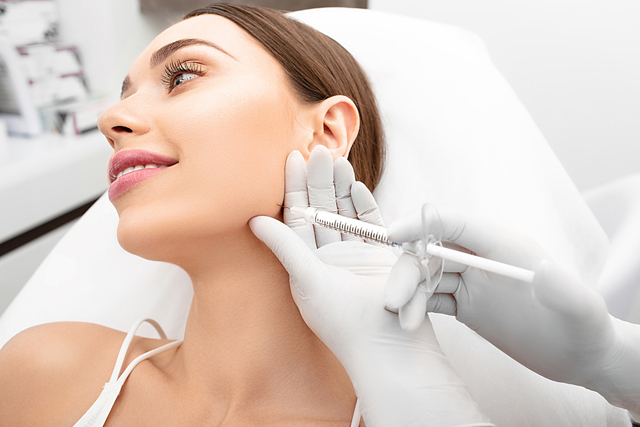
Dermal filler is an injectable gel placed beneath the skin to replace lost volume, lift a sunken area or soften a depressed line, with the result visible immediately rather than developing over weeks.
- What is injected. The clinic works with hyaluronic-acid-based products, drawn from the Restylane and Juvéderm ranges, with the specific product chosen per area and per patient.
- How it is placed. Fillers are injected using fine needles or cannulas, and both the technique and the injection depth are selected according to the treatment area and the correction wanted.
- What it changes. Filler adds physical volume beneath the skin, which is a different mechanism from relaxing a muscle and a different mechanism from improving skin quality.
- Comfort. Cream anaesthesia and nerve anaesthesia are both used, with the method chosen for the area, the product and the injection technique.
- How long it lasts. The clinic states approximately six to twelve months, varying with individual skin condition.
Soft-tissue fillers are described by the American Academy of Dermatology as restoring lost fullness to the face, lips and hands, with results that are mostly immediate and a same-day return to normal activities. Hyaluronic acid fillers are one family within that category, and one practical consequence of the chemistry is reversibility: an unwanted hyaluronic acid result can be dissolved with hyaluronidase, which is not true of every filler material.
Who Performs Dermal Filler at Cellier Clinic

Dr. Youm Junghyun is the Director of Cellier Clinic and a General Surgery Specialist, having completed his specialist training and a clinical fellowship in General Surgery at Kyung Hee University Hospital at Gangdong. He is a member of the Korean Surgical Society, the Korean Society of Aesthetic Plastic Surgery and Laser, the Korean Society of Lifting, the Korean Society of Filler, the Korean Society of Obesity and Aesthetic Medicine, and the Korean Society of Dermatology, Obesity, and Plastic Surgery.
His membership of the Korean Society of Filler sits directly behind this treatment rather than beside it. He is also the clinic's only treating physician, so the assessment and the injection are not split between people. For filler specifically that assessment covers facial structure, age, skin condition and the degree of volume depletion, and it produces a plan intended to hold natural proportions while restoring three-dimensional balance. Filler placement requires precise selection of the product, injection depth, amount, and treatment points to achieve natural-looking contour improvement while avoiding overfilling. Cellier Clinic applies a Skin Architecture philosophy for individualised treatment, and its injectable results are published in the clinic's before-and-after gallery.
Dermal Filler Options Available
The clinic separates filler into two treatments. They use the same class of material for different jobs, and the recovery is not comparable.
| Comparison | Volume filler | Wrinkle filler |
|---|---|---|
| Purpose | Restoring lost volume and building contour in a sunken area | Softening a depressed wrinkle or a fine line |
| Appointment length | Approximately 20 minutes | Approximately 15 to 20 minutes |
| Downtime | Within 3 days | Approximately 1 to 2 weeks |
| When the result shows | Immediately | Around 1 week |
| Flying home | Most patients fly within 3 days | Allow 1 to 2 weeks for swelling to settle |
The downtime difference is the part most patients do not expect, and it is the reason the two are scheduled differently around a trip.
Who Is a Good Candidate for Dermal Filler?
- Patients who want lost facial volume restored without surgery
- Patients with depressed wrinkles or fine lines they want softened rather than frozen
- Patients who want facial definition improved, including a jawline that has lost its edge
- Patients who want a sunken area filled out and look tired because of it
- Patients seeking non-surgical augmentation of the nose, chin or lips
- Patients who want an immediate change rather than one that develops over several weeks
- Patients who prefer a reversible material, since a hyaluronic acid result can be dissolved if they dislike it
Dermal filler is not suitable, or should be postponed, for:
- Anyone with an active skin infection at the intended treatment site
- Anyone with a severe bleeding or clotting disorder
- Anyone with known hypersensitivity to the components of the injectable
- Anyone pregnant or breastfeeding
- Patients who are pregnant or breastfeeding should postpone all elective aesthetic procedures. Active skin infections, open wounds, or inflammatory skin conditions in the treatment area require resolution before proceeding. Those with autoimmune conditions, a history of keloid scarring, or recent use of isotretinoin within 6 months may require additional assessment. Patients on blood-thinning medications should discuss timing with the clinic.
Candidacy exclusions for the category are wider than the clinic's own list. Active infection, uncontrolled diabetes, clotting problems and connective tissue disease are all named by the American Society for Dermatologic Surgery as reasons a patient is not a filler candidate.
What to Expect: Procedure, Recovery, and Results Timeline
The consultation is a structural assessment. The practitioner evaluates facial structure, age, skin condition and how much volume has been lost. A plan follows, setting the product, the points, the depth and the amount. Before the appointment you should clear any active skin irritation at the injection points. You should share your full medical background with the doctor. Blood-thinning agents should be stopped before treatment, on the clinic's instruction rather than your own judgement. The clinic asks patients to arrive without makeup.
On the day, the area is assessed and prepared, the filler is selected, and the product is injected into the planned areas to restore volume or refine a contour. The exact technique and the amount follow the plan rather than a standard quantity. Volume filler takes about twenty minutes; wrinkle filler takes about fifteen to twenty. Discomfort is usually mild and brief, described as pinching, pressure or stinging, and numbing cream or a local anaesthetic within the filler is used to reduce it.
Temporary localised swelling, slight redness, minor tenderness or bruising around the injection sites may follow. Downtime for volume filler is within three days. Downtime for wrinkle filler is approximately one to two weeks, and the bruising and swelling subside on their own. Avoid saunas, alcohol and strenuous exercise for one week after treatment. Keep the treated area clean and use sunscreen consistently. Washing the face and applying makeup can resume from the following day.
| Stage | Volume filler | Wrinkle filler |
|---|---|---|
| Treatment day | About 20 minutes; result visible immediately | About 15 to 20 minutes |
| Next day | Washing the face and applying makeup can resume | Washing the face and applying makeup can resume |
| First 3 days | Downtime; swelling and bruising settling | Still within the downtime window |
| About 1 week | Aftercare restrictions end | The result becomes apparent |
| 1 to 2 weeks | Result already established | End of the downtime window |
| 6 to 12 months | Effect duration, varying with individual skin condition | Effect duration, varying with individual skin condition |
Immediate follow-up visits are generally not needed. Annual maintenance is what the clinic describes for sustaining structural volume over the longer term. What the treatment is claimed to do is restore sunken areas, refine the jawline, smooth fine lines and deliver immediate three-dimensional contouring that stays stable for its duration. What it does not do is hold that volume indefinitely, because hyaluronic acid gels break down at a rate that depends on individual metabolism. Filler is also not a substitute for surgery where skin laxity is significant.
Combining Dermal Filler with Other Treatments
- Botox is the pairing the clinic names most often, an approach it calls a liquid facelift, on the basis that filler adds volume while a neuromodulator relaxes muscle.
- Skin boosters are specifically listed as combinable with filler, and they address skin quality across an area rather than volume at a point.
- Collagen boosters are also listed as combinable, for patients whose concern includes skin support as well as lost volume.
- Where the assessment finds laxity rather than volume loss, the clinic's stated alternatives are energy-based skin tightening or, in significant cases, a surgical procedure.
Safety, Precision, and Clinic Standards

Dr. Youm Junghyun injects the filler himself. Cellier Clinic states that it uses authentic hyaluronic-acid-based products. Product selection is made per area and per patient rather than from a single default. Avoiding overfilling is named by the clinic as an explicit objective of the technique.
The complications recorded for the category are more serious than the clinic's list of expected after-effects, and a patient should read both. Filler complications can include infection, nerve damage and blindness, which NHS guidance states in its section on choosing who injects. Lumps, numbness and filler migration are listed among the common and uncommon risks by the American Society for Dermatologic Surgery. The same society puts category-general filler duration at six months to two years, which is wider than the six to twelve months this clinic states for its own treatment. Reversibility is the practical safeguard specific to hyaluronic acid: hyaluronidase can dissolve the material if the result is not wanted.
Temporary redness, mild swelling and skin sensitivity at the treatment site are the most commonly reported side effects and typically resolve within hours to a few days. These responses are a normal part of the skin's healing process. Minor bruising is more likely after an injection-based procedure than after a topical one. As with all aesthetic procedures, there is a small possibility of adverse outcomes including prolonged redness, uneven results, or skin sensitivity. Rare complications may include infection, scarring, or unintended changes to skin texture. These risks are minimised through thorough pre-treatment assessment, sterile technique, and adherence to post-care instructions.
The Bottom Line
- Filler replaces volume; it does not relax muscle and it does not improve skin quality, so what it is good for depends on what is actually wrong.
- The clinic runs two versions, and the practical difference is downtime: within three days for volume filler, one to two weeks for wrinkle filler.
- Volume filler shows immediately, wrinkle filler at about a week, and both last roughly six to twelve months.
- Hyaluronic acid is reversible with hyaluronidase, which is a genuine safety advantage over materials that are not.
- The category's serious risks — infection, nerve damage, blindness — are the reason the injector's qualifications matter more here than the product brand does.
Frequently Asked Questions
Do I need filler, or do I need something else?
Filler is for volume that has gone: a hollow, a flattened cheek, a jawline that has lost definition, or a crease that stays put when your face is still. If the line only appears when you move, that is muscle and a different treatment addresses it. If the skin itself is dry, rough or losing quality across an area, a booster is the better match. The assessment distinguishes them before a product is chosen.
Which of the two filler treatments would I be having?
Volume filler is used to restore lost volume and build contour, takes about twenty minutes, and shows immediately. Wrinkle filler is used on depressed lines, takes about fifteen to twenty minutes, and takes around a week to settle into its result. They are chosen by the problem, not by preference, and the downtime difference between them is significant.
How long will the swelling and bruising show?
That depends on which treatment you have. Volume filler has downtime within three days. Wrinkle filler has approximately one to two weeks, which is long enough to matter for a short trip. Temporary swelling, slight redness, tenderness and bruising around the injection points are the usual extent of it, and they resolve without intervention.
When can I fly home?
There is no surgical restriction on flying. Most volume filler patients fly within three days. If you have had wrinkle filler, allow one to two weeks for the swelling to resolve, and schedule the treatment toward the end of a Seoul trip rather than the start so you are not sightseeing through it.
What if I do not like the result?
This is one of the few injectables where that question has a direct answer. Hyaluronic acid filler can be dissolved with hyaluronidase, so an unwanted result is reversible rather than permanent. The clinic's stated technique goal is to avoid overfilling in the first place, which is why the amount is set against measured volume loss rather than a standard syringe count.
Is there any reason I should not have this?
Yes, and some are firm. An active skin infection at the site, a severe bleeding or clotting disorder, known hypersensitivity to the injectable's components, and pregnancy or breastfeeding are all reasons not to proceed. Patients who are pregnant or breastfeeding should postpone all elective aesthetic procedures. Active skin infections, open wounds, or inflammatory skin conditions in the treatment area require resolution before proceeding. Those with autoimmune conditions, a history of keloid scarring, or recent use of isotretinoin within 6 months may require additional assessment. Patients on blood-thinning medications should discuss timing with the clinic.
How often would I be coming back?
Immediate follow-up visits are generally not required. The clinic describes annual maintenance as the way structural volume is sustained, which fits a six-to-twelve-month duration with some overlap. For an international patient that usually means one treatment visit and a plan, rather than a course of appointments.
Who looks after me once I am back in the US?
After returning home, patients are able to contact the clinic's international coordination team with any questions or concerns. Photo-based remote assessment is available for minor post-treatment queries. For more complex concerns, the clinic advises patients to seek evaluation from a local practitioner and will support with medical documentation if needed. The clinic can also be reached by telephone or through its website.
Book a Consultation at Cellier Clinic

Dermal filler in Seoul is planned at Cellier Clinic from a structural assessment of the face, since the product, the depth and the amount all follow from how much volume has actually been lost. An enquiry can start on the clinic's contact page, and the other treatments it offers are set out on the clinic's website. An English-speaking team supports international patients at Cellier Clinic, and English-language assistance is available for both online enquiries and in-person consultations. An online consultation begins with photographs of the treatment area, a current medication list and details of any previous procedures. Cellier Clinic is located on the 5th floor of Rex Tower, 108 Dosan-daero, Gangnam-gu, Seoul, South Korea. Cellier Clinic is a Registered Medical Institution for Attracting Foreign Patients, certified by the Ministry of Health and Welfare in compliance with the Medical Overseas Expansion and Foreign Patients Attraction Act.
Disclaimer
This page is for general information only and is not medical advice. Individual results vary, and suitability for any treatment must be determined by a qualified physician during consultation.
Sources & Further Reading
- Fillers: Overview — AAD
- Dermal Fillers — ASDS
- Choosing who will do your cosmetic procedure - NHS — NHS
Clinical Protocol Summary (Dr. Youm Junghyun)
- Swelling & Settling Timeline: Initial post-procedure swelling subsides within 3–7 days, with natural tissue integration over 1–2 weeks (
CEL-14). - Typical Duration: Approximately 6–12 months (up to 12–18 months in structural areas such as the forehead or chin depending on filler cross-linking and individual metabolism,
CEL-12). - Safety Note: Possible side effects include temporary swelling, bruising, asymmetry, or rare vascular complications; all procedures are performed using cannula/anatomical safety protocols.
Other Services
Explore additional non-surgical lifting and skin rejuvenation treatments at Cellier Clinic.

Pore & Scar Treatment
Potenza in Seoul is RF microneedling for pores, scars and texture. Cellier Clinic's two modes, candidacy, three-day downtime and session course explained.
Learn More

Redness & Pigmentation Laser Care
Redness laser treatment in Seoul: diagnosis first, then the laser. Cellier Clinic on candidacy, session length, recovery by laser type and aftercare.
Learn More

Basic Skin Management
Basic skin management in Seoul at Cellier Clinic uses LDM ultrasound for hydration and texture, with no downtime and a skin assessment before every session.
Learn More