Cellier Clinic — Personalized Anti-Aging & Lifting Specialist Design Clinic in Gangnam, Seoul

Non-Surgical Body Contouring · Consultation Required
Décolleté & Neck Care
Neck and decollete care in Seoul: a programme combining lifting, radiofrequency and skin boosters for neck wrinkles, texture and firmness, with real timelines.
Schedule a ConsultationNeck and Décolleté Care in Seoul
Medically reviewed by Dr. Youm Junghyun, General Surgery Specialist
Neck and décolleté care in Seoul, as Cellier Clinic runs it, is a non-surgical programme built for the thin skin of the neck and upper chest rather than adapted from a facial protocol. It combines lifting energy, radiofrequency and injected skin boosters in one session, targeting neck wrinkles, skin texture, hydration, radiance and firmness. The reason it exists as a separate programme is that this skin is thinner and more reactive than facial skin, so the settings and the technique have to change with it.
What Is Neck and Décolleté Care?
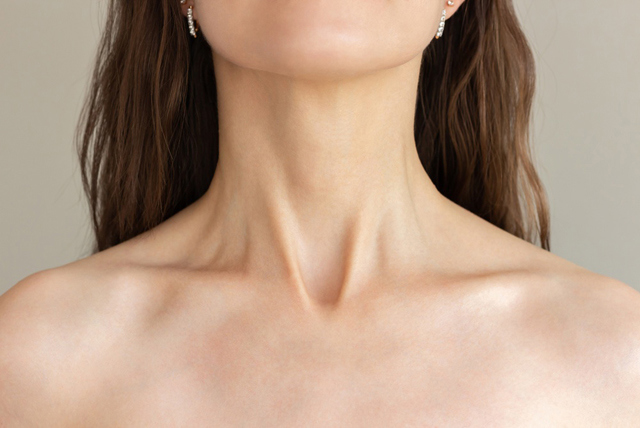
Neck and décolleté care at this clinic is a staged single-visit protocol in which lifting energy, radiofrequency and skin-booster injections are applied in sequence to the neck, upper chest and clavicle area, with the mix chosen from an assessment of that skin.
- Why the area is treated separately. The neck and décolleté generally carry thinner skin than the face and tend to show wrinkles and loss of elasticity as time passes, which is the clinic's stated reason for a dedicated protocol.
- What each stage contributes. Lifting energy is directed at vertical wrinkles and skin firmness; radiofrequency is directed at skin texture, pores and radiance; skin boosters are injected for hydration and radiance.
- What the assessment records. Skin condition, wrinkle type and sensitivity in the neck and décolleté, from which the components are selected.
- Comfort measures. Topical anaesthetic cream or a local anaesthetic injection is used at the start of the session.
- How long a session runs. Approximately twenty to thirty minutes per treatment.
Non-invasive skin tightening as a category is described by the American Society for Dermatologic Surgery as working through laser, radiofrequency, ultrasound or combined energy that heats tissue to stimulate collagen, with results developing over roughly three to six months. Focused ultrasound therapy is described separately by the same society as delivered below the skin surface to stimulate collagen in moderately lax brow, neck and submental skin, with the lifting effect appearing across two to three months and transient redness, swelling, tenderness or numbness as the expected after-effects. Both timelines are longer than a single appointment, which is the honest context for any programme sold as a course.
Who Performs Neck and Décolleté Care at Cellier Clinic
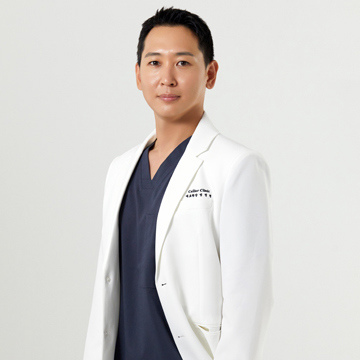
Dr. Youm Junghyun is the Director of Cellier Clinic and a General Surgery Specialist, having completed his specialist training and a clinical fellowship in General Surgery at Kyung Hee University Hospital at Gangdong. He is a member of the Korean Surgical Society, the Korean Society of Aesthetic Plastic Surgery and Laser, the Korean Society of Lifting, the Korean Society of Filler, the Korean Society of Obesity and Aesthetic Medicine, and the Korean Society of Dermatology, Obesity, and Plastic Surgery.
He is the clinic's only treating physician, and for this programme the clinic states that his involvement matters where skin thickness, elasticity, wrinkle pattern, pigmentation and overall skin condition in the neck and décolleté all have to be judged before settings are chosen. Its stated position is that these areas can be more delicate than the face, so device settings and injection technique are adjusted to the specific skin and the specific area rather than transferred from a facial plan. His membership of the Korean Society of Lifting and of the Korean Society of Filler covers the two halves of this programme, the energy-based lifting and the injected boosters. Cellier Clinic applies a Skin Architecture philosophy for individualised treatment, and results from the clinic's work on this area appear in its before-and-after gallery.
Neck and Décolleté Care Options Available
The programme is assembled from three components, applied in a set order within one visit. Which are used, and at what intensity, follows from the assessment of your skin.
| Component | Stage in the session | What the clinic directs it at |
|---|---|---|
| Precision lifting energy | After anaesthesia, first of the three | Vertical neck wrinkles and skin firmness |
| Radiofrequency | Second | Skin texture, pores and radiance |
| Skin boosters, injected | Third | Hydration and radiance |
The clinic also offers a standalone skin booster treatment for the neck, aimed at hydration, texture, pores, radiance and fine wrinkles, for patients whose concern is skin quality rather than firmness. Which route suits you is a consultation question, not a menu choice.
Who Is a Good Candidate for Neck and Décolleté Care?

- Patients concerned about neck wrinkles, which the clinic lists first among the reasons people ask for it
- Patients preparing for a wedding who want the neck and upper chest addressed alongside the face
- Patients photographed or filmed often, who want to hold the condition of this skin
- Patients wanting a more refined neckline and a cleaner clavicle contour
- Patients whose concern is skin quality — texture, pores, dullness, dryness — rather than laxity alone
- Patients who can attend three or more sessions at one-to-two-week intervals
The clinic lists the following as reasons not to proceed, or to postpone:
- Active skin infection or inflammation in the treatment area
- Uncontrolled skin disease
- Open wounds, or a new or unexplained skin lesion where treatment would go
- A known allergy to any of the injectable products selected
- Significant irritation, including sunburned skin, at the time of the appointment
- Medical conditions that make the selected energy-based or injection treatments inappropriate
Pregnancy or breastfeeding status, allergies, current medications, any bleeding problem and any history of abnormal scarring should all be disclosed to the clinician before treatment is planned. Non-invasive tightening also has candidacy limits that no setting adjustment overcomes: the American Academy of Dermatology describes the non-surgical options for sagging skin as producing modest firming over about two to six months, and as suited to mild or moderate laxity rather than to skin that has lost substantial support.
What to Expect: Procedure, Recovery, and Results Timeline
The session follows five published steps. Topical anaesthetic cream or a local anaesthetic injection goes on first. Precision lifting energy is then applied to address vertical wrinkles and firmness. Radiofrequency follows, directed at texture, pores and radiance. Skin boosters are injected for hydration and radiance. Post-treatment care is given before you leave.
Before the appointment, tell the doctor about allergies, current medications, any previous reaction to an injectable, pregnancy or breastfeeding status, and any recent procedure or surgery. Arrive with the area clean. Treatment is not carried out over active infection or significant inflammation.
Temporary swelling, bruising or itching may follow, and the clinic states these generally resolve naturally. Downtime is approximately one to two weeks, which is longer than the session length suggests and is the figure to plan travel around. Daily broad-spectrum SPF 30 or higher matters more here than on many areas, because the neck and décolleté are exposed skin that people routinely stop at the jawline when applying sunscreen.
Avoid saunas, alcohol and strenuous exercise for one week after treatment. Keep the treated area clean and use sunscreen consistently. Washing and applying makeup can resume from the following day.
| Stage | What the clinic publishes for it |
|---|---|
| Each appointment | Approximately twenty to thirty minutes across the three stages |
| The following day | Washing and makeup can resume |
| First week | Saunas, alcohol and strenuous exercise are off the list |
| One to two weeks | The stated downtime, with temporary swelling, bruising or itching settling |
| Every one to two weeks | How closely the appointments in a course are spaced |
| At the third session or later | The point from which the clinic anticipates visible change |
| Three to six months | The duration of effect the clinic states, varying with skin condition |
The improvements the clinic claims for the programme are brightening of the décolleté, better hydration, smoother skin texture, a reduced appearance of pores, relief of inflammatory skin symptoms, improved radiance, a reduced appearance of fine lines and neck wrinkles, and improved firmness and elasticity. Realistically that reads as smoother, firmer, better-conditioned skin across the neck and upper chest. The clinic does not state a specific degree of wrinkle reduction, tightening, pigmentation change or texture refinement, and it records that outcomes vary with skin condition, degree of ageing, elasticity, lifestyle and individual response. If a wedding is the deadline, the session count and the interval are what to work backwards from.
Combining Neck and Décolleté Care with Other Treatments
- The programme is already a combination: lifting energy, radiofrequency and injected boosters in one visit, with the stated intent of lifting, regeneration, tone improvement and hydration together.
- Where deeper lifting is the priority, the clinic lists Ultherapy Prime; where elasticity is, it lists Sofwave; for radiofrequency-based firmness it lists Thermage FLX; for neck and contour lifting it lists Soprano Titanium; and for neck contour and skin structure it lists Onda.
- Cellier Clinic is an official certification clinic for Ultherapy, Thermage, Onda, Titanium, Sofwave, Sculptra, Re2O and Rejuran. That certification belongs to those named device platforms and not to the neck and décolleté programme itself, which is a doctor-supervised protocol assembled from several treatments.
- Where skin quality rather than firmness is the whole concern, the standalone neck skin booster treatment is the narrower option.
- Sequencing across treatments is decided by the physician at consultation, because a one-to-two-week interval schedule does not combine freely with every other course.
Safety, Precision, and Clinic Standards
The clinic's stated safeguard on this programme is the assessment itself: skin condition, wrinkle type and sensitivity are recorded for the neck and décolleté specifically, and the protocol is described as designed to limit swelling and irritation in skin that reacts more readily than the face. Anaesthesia is part of the protocol rather than an optional extra, with topical cream or a local injection used at the start. Treatment over active infection or significant inflammation is ruled out rather than managed. Cellier Clinic does not publish a formal quality-control document.
The risks the clinic names for this programme are temporary swelling, bruising, redness, tenderness, itching and mild discomfort, with infection as the less likely one. As with all aesthetic procedures, there is a small possibility of adverse outcomes including prolonged redness, uneven results, or skin sensitivity. Rare complications may include infection, scarring, or unintended changes to skin texture. These risks are minimised through thorough pre-treatment assessment, sterile technique, and adherence to post-care instructions.
Energy-based tightening carries its own documented risks, and the American Society for Dermatologic Surgery lists burns, infection and change in contour among them for the category as a whole. That list is the reason device settings on thin skin are a clinical decision rather than a default. Deciding whether to have a cosmetic procedure at all is framed by the NHS as a question of motivation and expectation before anything else, and its advice warns specifically against time-limited offers and against pressure to add treatments once you have arrived. Patients are entitled to a cooling-off period and can walk away, which is worth knowing before a consultation abroad.
The Bottom Line
- This is a dedicated neck and upper-chest programme, not a facial protocol applied lower down, and the clinic's reason is that the skin there is thinner and more reactive.
- One visit contains three stages: lifting energy for wrinkles and firmness, radiofrequency for texture and pores, injected boosters for hydration.
- A session runs about twenty to thirty minutes, but the clinic states one to two weeks of downtime.
- Noticeable change is expected after three or more sessions at one-to-two-week intervals, with a stated effect duration of three to six months.
- Consistent sunscreen on the neck and décolleté is part of the treatment plan, not an afterthought.
Frequently Asked Questions
Why is the neck treated as a separate programme instead of an add-on?
Because the skin behaves differently. The clinic's stated reason for a dedicated protocol is that neck and décolleté skin is thinner and more sensitive than facial skin, and shows wrinkling and elasticity loss in its own pattern. Settings that are routine on a cheek are not automatically appropriate over a clavicle, so the programme was built around limiting swelling and irritation in this area.
What actually happens in the session?
Numbing cream or a local anaesthetic goes on first. Lifting energy is applied to the vertical wrinkles and to firmness, radiofrequency follows for texture, pores and radiance, and skin boosters are injected for hydration. Aftercare instructions are given before you leave. The whole thing takes about twenty to thirty minutes.
How much downtime should I plan for?
The clinic publishes approximately one to two weeks, which is the single most important number on this page for anyone travelling. Temporary swelling, bruising or itching is what it covers. Washing and makeup resume the next day, but saunas, alcohol and strenuous exercise wait a week. If there is an event in the diary, book backwards from it generously.
I am getting married in two months. Is that enough time?
It is tight rather than impossible, and the arithmetic is worth doing honestly. The clinic expects noticeable change after three or more sessions at one-to-two-week intervals, so the course itself takes several weeks, and collagen-driven firming in this category of treatment develops over months rather than days. Booking the last session well clear of the date is the sensible reading, and that is a plan to make at consultation rather than assume.
Who should postpone treatment?
Active skin infection or inflammation in the area, uncontrolled skin disease, open wounds, a new or unexplained skin lesion, sunburned or irritated skin, and a known allergy to a selected injectable are the clinic's stated reasons to wait. Pregnancy or breastfeeding status, bleeding problems and any history of abnormal scarring should be disclosed so the plan can account for them.
How long do the results hold?
The clinic states approximately three to six months, depending on individual skin condition. It does not state a fixed degree of improvement, and it records that outcomes vary with skin condition, ageing, elasticity, lifestyle and individual response. Maintenance is the realistic frame: this is skin that stays exposed to sun and movement after the course ends.
Is a quotation given before treatment?
Cellier Clinic does not publish treatment prices; a quotation is given after an individual consultation. Because the components and their intensity are set from the assessment, what a course involves is not fixed in advance. Online consultation is available if you want the assessment started before you fly.
What support is there after I return home?
After returning home, patients are able to contact the clinic's international coordination team with any questions or concerns. Photo-based remote assessment is available for minor post-treatment queries. For more complex concerns, the clinic advises patients to seek evaluation from a local practitioner and will support with medical documentation if needed. The clinic can also be reached by telephone or through its website.
Book a Consultation at Cellier Clinic
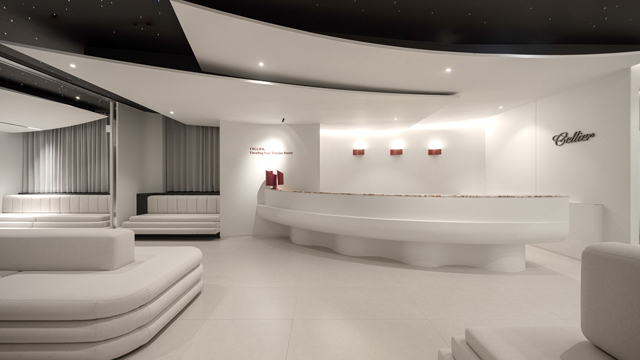
Neck and décolleté care in Seoul begins at Cellier Clinic with an assessment of how thin, how lax and how reactive that skin actually is, because the three components and their settings follow from it. Enquiries go through the clinic's contact page, and the rest of the treatment list is on the clinic's website. For a remote assessment the clinic asks for photographs of the treatment area, a current medication list and details of any previous procedures. An English-speaking team supports international patients at Cellier Clinic, and English-language assistance is available for both online enquiries and in-person consultations. Cellier Clinic is located on the 5th floor of Rex Tower, 108 Dosan-daero, Gangnam-gu, Seoul, South Korea. Cellier Clinic is a Registered Medical Institution for Attracting Foreign Patients, certified by the Ministry of Health and Welfare in compliance with the Medical Overseas Expansion and Foreign Patients Attraction Act.
Disclaimer
This page is for general information only and is not medical advice. Individual results vary, and suitability for any treatment must be determined by a qualified physician during consultation.
Sources & Further Reading
Other Services
Explore additional non-surgical lifting and skin rejuvenation treatments at Cellier Clinic.
Pore & Scar Treatment
Potenza in Seoul is RF microneedling for pores, scars and texture. Cellier Clinic's two modes, candidacy, three-day downtime and session course explained.
Learn More
Redness & Pigmentation Laser Care
Redness laser treatment in Seoul: diagnosis first, then the laser. Cellier Clinic on candidacy, session length, recovery by laser type and aftercare.
Learn More

Basic Skin Management
Basic skin management in Seoul at Cellier Clinic uses LDM ultrasound for hydration and texture, with no downtime and a skin assessment before every session.
Learn More