Cellier Clinic — Personalized Anti-Aging & Lifting Specialist Design Clinic in Gangnam, Seoul
Skin Care & Facial Treatments · Consultation Required
Acne Care
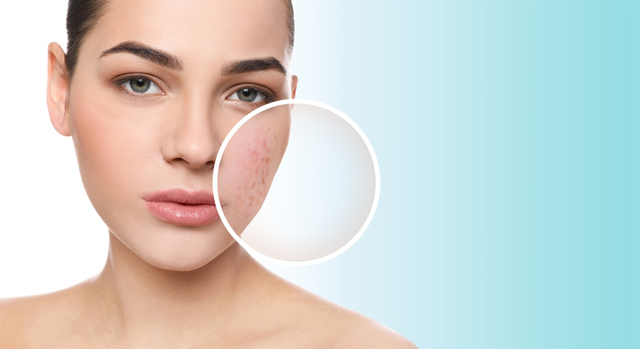
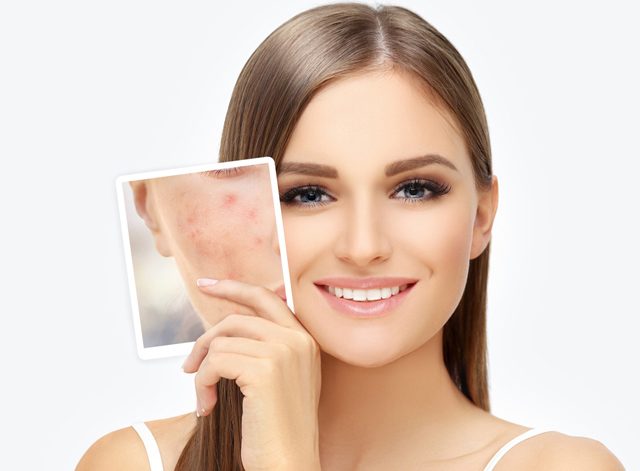
Acne care in Seoul at Cellier Clinic combines Gold PTT with medical acne treatment, assessed by acne type and severity, aimed at scarring prevention too.
Schedule a ConsultationAcne Care in Seoul
Medically reviewed by Dr. Youm Junghyun, General Surgery Specialist
Acne care in Seoul is medical management of acne with three aims at once: clearing the acne that is present, preventing new breakouts, and limiting the risk of permanent scarring and post-inflammatory pigmentation. At Cellier Clinic in Gangnam the plan is built after the skin is examined to establish which kind of acne is involved, because comedonal, inflammatory and nodular or cystic acne are not treated the same way. The clinic's in-clinic protocol is Gold PTT, used alongside complementary treatment rather than on its own.
What Is Acne Care?
Acne care is a treatment plan for acne, selected according to the type and severity of the lesions present, and directed at clearing current acne, stopping new breakouts and minimising the risk of scarring.
- The acne type sets the plan. Whether the patient has comedonal, inflammatory, nodular or cystic acne, or another acne-like eruption, determines what is used.
- Scarring is a treatment target, not an afterthought. Preventing permanent scarring and post-inflammatory pigmentation is part of the stated aim rather than a separate later service.
- The clinic's in-clinic protocol is Gold PTT. Cellier describes Gold Photothermal Therapy as a nanoparticle-based treatment directed at acne-causing bacteria and the sebaceous glands, and presents it as a non-antibiotic approach.
- It is not used alone. The clinic combines Gold PTT with complementary treatments appropriate to the patient's acne type and severity.
- Downtime is generally minimal. The clinic states minimal downtime for its acne care, with temporary redness resolving on its own.
Acne is diagnosed and then tailored to a plan by dermatologists with those same three aims — clearing existing acne, stopping new breakouts and preventing scarring — using topical options, oral options and in-office procedures, the American Academy of Dermatology explains.
Who Performs Acne Care at Cellier Clinic
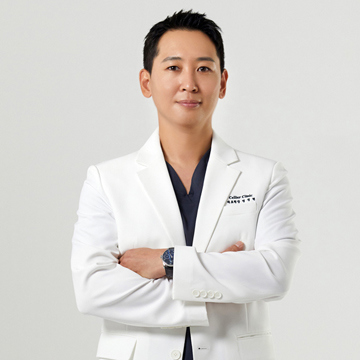
Dr. Youm Junghyun is the Director of Cellier Clinic and a General Surgery Specialist, having completed his specialist training and a clinical fellowship in General Surgery at Kyung Hee University Hospital at Gangdong. He is a member of the Korean Surgical Society, the Korean Society of Aesthetic Plastic Surgery and Laser, the Korean Society of Lifting, the Korean Society of Filler, the Korean Society of Obesity and Aesthetic Medicine, and the Korean Society of Dermatology, Obesity, and Plastic Surgery.
He oversees all acne care at the clinic, and his role is to combine Gold PTT with whatever complementary treatment the patient's acne type and severity call for. He is the clinic's only treating physician, so the assessment of acne type and the choice of protocol are made by the same person who carries it out. Cellier Clinic applies a Skin Architecture philosophy for individualised treatment. On acne that reduces to one clinical question — what kind of acne is this — because the answer determines whether a medication is prescribed at all and whether scarring is the more urgent concern.
Acne Care Options Available
Acne care at Cellier is assembled from components rather than sold as one treatment. The clinic names three routes that a selected plan may draw on.
| Component | What it involves | Where it fits |
|---|---|---|
| Prescribed medication | Topical or oral acne medication prescribed by the doctor | Where the acne needs medical treatment rather than a procedure |
| Extraction | In-clinic clearing of lesions during a session | Where clogged pores and comedonal acne dominate |
| Professional skin procedure | The clinic's Gold PTT protocol and other in-clinic treatment | Where an in-clinic treatment suits the acne type and severity |
Which components are used, and in what combination, follows from the examination. The clinic also combines acne care with LED or light-based treatment, and with acne-scar treatment where scarring has already occurred.
Who Is a Good Candidate for Acne Care?

- Patients with mild to severe acne
- Patients with blackheads or whiteheads
- Patients with inflammatory pimples
- Patients with recurring breakouts
- Patients with oily or acne-prone skin who need an individual treatment plan
- Patients with clogged pores and congestion
- Patients with persistent acne that has not responded to routine skin care
- Patients concerned about post-acne pigmentation or the risk of scarring
Acne care may not be suitable, or may need modifying, for:
- Anyone with an active skin infection unrelated to the acne
- Anyone with a known allergy to a proposed treatment ingredient
- Anyone with a medical condition that makes a particular treatment unsafe
- Anyone pregnant or breastfeeding, who may need to avoid certain acne medications
A dermatologist assesses suitability, and the pregnancy point in particular is a reason to raise it early rather than at the end of a consultation: it does not rule out acne care, but it changes which medications can be part of it.
What to Expect: Procedure, Recovery, and Results Timeline
The consultation is a history and an examination, in that order. The doctor reviews the acne history, the current medications, the existing skin-care routine, the previous treatments tried, and the skin's sensitivity. The skin is then examined to establish acne type, severity, the degree of inflammation and any scarring already present. A treatment plan is recommended from those findings. For medical acne care the clinic asks for a complete history of current medications, previous acne treatments, allergies, pregnancy status where relevant, any history of scarring, any history of cold sores, and previous cosmetic procedures.
A session follows a set order. The skin is assessed and the consultation completed. Where a professional treatment is being performed, the skin is cleansed and prepared. The selected acne treatment is then carried out — prescribed medication, extraction, or a professional skin procedure. Appropriate post-treatment skincare is applied. Aftercare instructions are given and follow-up is planned before the patient leaves.
Visit requirements vary with the plan. Some topical treatments can be started during a single consultation, while professional procedures may require additional visits. The clinic does not treat that as a detail to settle later; it is part of what the consultation decides.
Recovery depends on which route is taken. Routine topical acne care generally has little or no downtime. Professional procedures may bring temporary redness, swelling, dryness or peeling. Recovery after the stronger procedures may run several days or longer. For its own acne care the clinic states generally minimal downtime, with temporary redness resolving naturally.
The results timeline is the part most patients underestimate, and the clinic states it plainly: acne treatment is not an instant treatment, and patients generally need at least six to eight weeks before seeing fewer breakouts, though individual response varies.
| Stage | What the clinic describes |
|---|---|
| Consultation | History, examination, acne type and severity assessed |
| Session day | Cleansing and preparation where a procedure is performed, then the selected treatment |
| Immediately after | Generally minimal downtime; temporary redness resolves naturally |
| Days after a stronger procedure | Temporary redness, swelling, dryness or peeling possible |
| First 6–8 weeks | The minimum period before fewer breakouts are generally seen |
| Ongoing | Consistent treatment may reduce how often new lesions appear |
What the clinic claims for acne care is bounded: acne management, reduction of active breakouts, control of excess oil, and improvement in the condition of acne-prone skin. What it states alongside that is equally important — results vary with acne severity, skin type, adherence to the plan and the underlying causes, and acne treatment does not guarantee permanent clearance or complete removal of acne scars. That is the right expectation to start from.
Aftercare is unusually influential in acne, because much of it is daily rather than clinical. Use gentle, non-comedogenic skin care. Do not pick or squeeze lesions. Moisturise when acne medication causes dryness. Use a broad-spectrum SPF 30 or higher sunscreen. Over-the-counter and prescription options both have a place in acne management, and a provider may additionally suggest chemical skin peeling, dermabrasion or photodynamic therapy as adjunct procedures, MedlinePlus notes — which is the same logic the clinic follows in pairing its in-clinic protocol with complementary treatment.
Combining Acne Care with Other Treatments
- The clinic combines acne care with dermatologist-prescribed topical or oral medication, with selected professional acne procedures, with LED or light-based treatment, and with acne-scar treatment where appropriate.
- For post-acne pigmentation, the clinic pairs its acne care with PicoSure Pro Toning.
- For the texture left behind by acne, it pairs acne care with its peeling treatments.
- Which combination applies depends on the patient's skin condition and the clinical assessment rather than on a fixed package.
Acne-scar resurfacing carries its own risk profile, separate from acne treatment itself. Mechanical skin resurfacing for acne scars, fine lines and sun damage carries a risk of lasting pigment change and of scarring, MedlinePlus records, with a two-to-three-week swelling course, roughly two weeks before normal activity, and six to twelve weeks of sun protection afterwards. It also notes a greater risk of dark patches developing afterwards in darker skin. Anyone considering scar treatment after their acne has settled should read those figures before assuming that scar work is a light add-on to acne care.
Safety, Precision, and Clinic Standards

Acne type and severity are established by examination before a plan is recommended. Current medications, previous acne treatments and skin sensitivity are all reviewed at consultation. Pregnancy status is asked for where relevant, because it restricts which medications can be used. Allergy to a proposed treatment ingredient is a stated contraindication. Follow-up is planned at the session rather than left to the patient to arrange. Cellier Clinic does not publish a formal quality-control document.
The risks differ by route and are worth separating. Topical retinoids can cause dryness, irritation and peeling. Benzoyl peroxide can cause dryness and irritation. Antibiotics carry medication-specific risks. Isotretinoin requires particularly careful medical supervision. In-clinic procedures can additionally cause redness, swelling, irritation, pigment change, infection or scarring, depending on the technique used. That spread is the reason acne care is prescribed rather than chosen.
How to check the practitioner is set out by the NHS, which advises confirming training, qualifications, register entry, experience and insurance before agreeing to any procedure, and warns against group treatments, voucher deals, mobile services and practitioners reachable only through social media. Acne is a medical condition as well as an aesthetic concern, which is why it warrants a medical setting.
The Bottom Line
- Acne care aims at three things together: clearing current acne, preventing new breakouts, and limiting scarring and post-acne pigmentation.
- The acne type — comedonal, inflammatory, nodular or cystic — determines the plan, which is why the examination comes before any treatment.
- Cellier's in-clinic protocol is Gold PTT, described as a non-antibiotic nanoparticle treatment, and it is used alongside complementary treatment rather than alone.
- Expect at least six to eight weeks before breakouts reduce; this is not a single-visit treatment.
- Permanent clearance and complete removal of acne scars are not guaranteed, and the clinic says so directly.
Frequently Asked Questions
Will I be given a procedure or a prescription?
Possibly both, and the examination decides. The clinic assembles acne care from prescribed topical or oral medication, in-clinic extraction, and professional skin procedures including its Gold PTT protocol. Which components apply depends on your acne type, its severity, how inflamed the skin is and whether scarring has already started. Acne care here is prescribed rather than selected from a menu.
What is Gold PTT?
The clinic describes Gold PTT, or Gold Photothermal Therapy, as a nanoparticle-based treatment directed at acne-causing bacteria and at the sebaceous glands, and presents it as a non-antibiotic approach to reducing acne. It is used together with complementary treatments matched to the patient's acne type and severity rather than as a standalone answer to acne.
How soon will my skin look better?
Not quickly, and the clinic is honest about it: acne treatment is not an instant treatment, and patients generally need at least six to eight weeks before seeing fewer breakouts. Individual response varies. Consistent treatment may reduce how often new lesions appear, but that is a matter of months of adherence rather than of one appointment.
How much downtime is involved?
Generally minimal for the clinic's acne care, with temporary redness resolving on its own. Routine topical acne care has little or no downtime at all. Stronger in-clinic procedures can bring temporary redness, swelling, dryness or peeling, and recovery from those may take several days or longer. Which applies to you depends on the components in your plan.
Can anything here make my skin worse?
Some treatments can cause temporary irritation, and that is expected rather than a failure. Topical retinoids can cause dryness, irritation and peeling; benzoyl peroxide can cause dryness and irritation; antibiotics carry their own risks; and isotretinoin needs careful medical supervision. In-clinic procedures can cause redness, swelling, pigment change, infection or scarring depending on the technique. Report anything unexpected rather than waiting it out.
What about the marks and scars already there?
Those are treated as a separate problem from the active acne. The clinic pairs acne care with PicoSure Pro Toning for post-acne pigmentation and with its peeling treatments for texture, and offers acne-scar treatment where scarring has occurred. Complete removal of acne scars is not something the clinic guarantees, and scar resurfacing has a longer recovery and its own pigment risks.
Is there anything that would stop me having acne care?
An active skin infection unrelated to the acne, a known allergy to a proposed treatment ingredient, or a medical condition that makes a particular treatment unsafe. If you are pregnant or breastfeeding, certain acne medications may need to be avoided — which changes the plan rather than cancelling it. Say so at the start of the consultation.
What should I do at home between visits?
Use gentle, non-comedogenic skin care and do not pick or squeeze lesions. Moisturise when a medication dries the skin out. Use a broad-spectrum SPF 30 or higher sunscreen daily, which matters for post-acne pigmentation as much as for the acne. Cellier Clinic does not publish treatment prices; a quotation is given after an individual consultation.
Book a Consultation at Cellier Clinic
Acne care in Seoul starts with an examination rather than a booking, and at Cellier Clinic in Gangnam the plan follows from the acne type, its severity and whatever scarring is already present. Enquiries go through the clinic's contact page, and the treatments acne care is paired with — pigmentation toning and peeling among them — are listed on the Cellier Clinic website. For an assessment before travelling the clinic asks for photographs of the treatment area, a current medication list and details of any previous procedures, and for acne that list should include everything already tried. An English-speaking team supports international patients at Cellier Clinic, and English-language assistance is available for both online enquiries and in-person consultations.
Cellier Clinic is located on the 5th floor of Rex Tower, 108 Dosan-daero, Gangnam-gu, Seoul, South Korea. Cellier Clinic is a Registered Medical Institution for Attracting Foreign Patients, certified by the Ministry of Health and Welfare in compliance with the Medical Overseas Expansion and Foreign Patients Attraction Act.
Disclaimer
This page is for general information only and is not medical advice. Individual results vary, and suitability for any treatment must be determined by a qualified physician during consultation.
Sources & Further Reading
- Acne: Diagnosis and treatment — AAD
- Acne: MedlinePlus Medical Encyclopedia — MedlinePlus
- Dermabrasion: MedlinePlus Medical Encyclopedia — MedlinePlus
- Choosing who will do your cosmetic procedure - NHS — NHS
Other Services
Explore additional non-surgical lifting and skin rejuvenation treatments at Cellier Clinic.

Pore & Scar Treatment
Potenza in Seoul is RF microneedling for pores, scars and texture. Cellier Clinic's two modes, candidacy, three-day downtime and session course explained.
Learn More
Redness & Pigmentation Laser Care
Redness laser treatment in Seoul: diagnosis first, then the laser. Cellier Clinic on candidacy, session length, recovery by laser type and aftercare.
Learn More

Basic Skin Management
Basic skin management in Seoul at Cellier Clinic uses LDM ultrasound for hydration and texture, with no downtime and a skin assessment before every session.
Learn More