Cellier Clinic — Personalized Anti-Aging & Lifting Specialist Design Clinic in Gangnam, Seoul

Non-Surgical Body Contouring · Consultation Required
Abdominal Care
Abdominal care in Seoul: a non-surgical programme for postpartum laxity, stretch marks and abdominal firmness, with candidacy, downtime and session schedule.
Schedule a ConsultationAbdominal Care in Seoul
Medically reviewed by Dr. Youm Junghyun, General Surgery Specialist
Abdominal care in Seoul, as Cellier Clinic defines it, is a non-surgical programme for the abdominal wall that treats reduced skin elasticity, dermal change, swelling, sluggish circulation, stretch marks and fine wrinkles together rather than one at a time. The clinic's stated premise is that a changed abdomen is rarely only a fat problem, so the programme is planned across the layers from skin down toward fascia. Its aim is firmness and a refined abdominal line, not weight reduction.
What Is Abdominal Care?
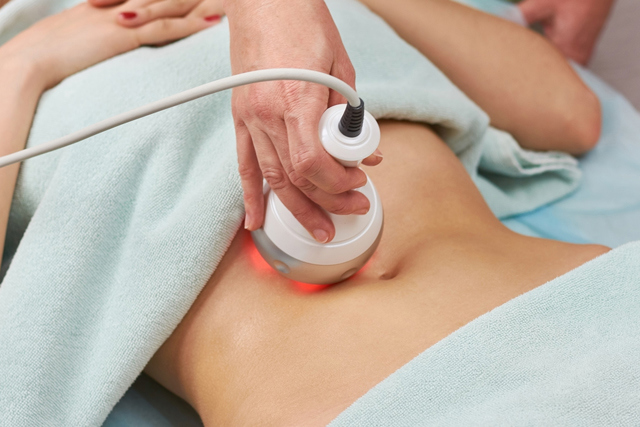
Abdominal care at this clinic is a combined course of energy-based and injectable treatment for the abdominal area, selected per patient from radiofrequency, ultrasound and micro-regenerative injections, and delivered alongside circulation activation and swelling care.
- What the assessment looks at. The clinic evaluates the abdomen as an integrated structure extending from the skin toward the fascia, recording elasticity, dermal damage, swelling and reduced circulation rather than fat alone.
- What the components are for. Radiofrequency and ultrasound are used to support dermal collagen regeneration and abdominal firmness; micro-regenerative injections are used as part of the skin-recovery side of the programme.
- What else is included. Circulation activation and swelling care are built into the programme rather than offered as extras.
- Comfort measures. Topical cream anaesthesia and local injection anaesthesia are both listed as options, and which applies depends on the components chosen.
- How long a session runs. Each treatment session takes approximately twenty to thirty minutes.
Radiofrequency lipolysis is described by the American Society of Plastic Surgeons as non-contact heating of fat delivered in roughly half-hour sessions repeated over several weeks, with mild redness as the reported risk and no recovery period. The same society records something an honest page has to pass on: this treatment does not produce a measurable reduction in every patient. Nonsurgical body treatments of this type are therefore best understood as a course with a range of outcomes, not as a fixed result per session.
Who Performs Abdominal Care at Cellier Clinic
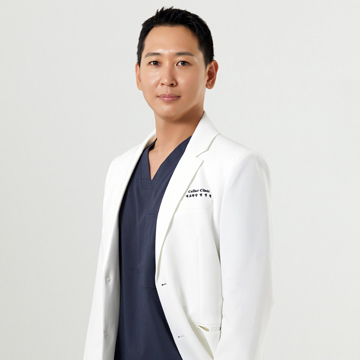
Dr. Youm Junghyun is the Director of Cellier Clinic and a General Surgery Specialist, having completed his specialist training and a clinical fellowship in General Surgery at Kyung Hee University Hospital at Gangdong. He is a member of the Korean Surgical Society, the Korean Society of Aesthetic Plastic Surgery and Laser, the Korean Society of Lifting, the Korean Society of Filler, the Korean Society of Obesity and Aesthetic Medicine, and the Korean Society of Dermatology, Obesity, and Plastic Surgery.
His practice rests on a comprehensive understanding of facial and body aesthetics, combining diagnostic precision with a broad range of treatment modalities. The personalised Skin Architecture planning system used at the clinic reflects a commitment to tailored, evidence-informed care.
He is the clinic's sole treating physician, and on this programme that matters more than usual, because deciding how much of the work should be radiofrequency, how much ultrasound and how much injection is a clinical judgement made per abdomen. Cellier Clinic applies a Skin Architecture philosophy for individualised treatment. Results from the clinic's body work are published in its before-and-after gallery.
Abdominal Care Options Available
The programme is assembled from three treatment components. All three are available; which are used, and in what proportion, follows from the assessment.
| Component | What the clinic uses it for | What it acts on |
|---|---|---|
| Radiofrequency | Dermal collagen regeneration and abdominal firmness | The dermis and deeper tissue, through heat |
| Ultrasound | Dermal collagen regeneration and abdominal firmness | Tissue below the skin surface, through focused energy |
| Micro-regenerative injections | Skin recovery | The skin itself, by direct delivery |
Circulation activation and swelling care accompany whichever components are chosen. A patient whose main concern is stretch marks will not receive the same mix as one whose main concern is a slack abdominal line, which is the point of assembling the programme rather than selling a fixed package.
Who Is a Good Candidate for Abdominal Care?
- Patients wanting to manage a sagging abdominal line after childbirth, which is the use the clinic names first
- Patients concerned about reduced abdominal firmness generally, with or without a pregnancy behind it
- Patients concerned about stubborn abdominal fat or excess tissue
- Patients wanting to improve the appearance of stretch marks
- Patients wanting to improve fine wrinkles on the abdominal skin
- Patients wanting a firmer and more refined abdominal contour
- Patients whose concern includes swelling or a heavy, congested feeling rather than volume alone
The clinic lists the following as reasons to avoid the programme or postpone it:
- Pregnancy
- Active skin infection or inflammation in the treatment area
- Unexplained abdominal pain or swelling
- Recent abdominal surgery that has not yet healed adequately, including unhealed surgical incisions
- Acute postpartum complications
- Severe abdominal muscle separation or tearing, which is a structural problem this programme does not address
- Medical conditions that make radiofrequency, ultrasound or injectable treatment inappropriate
For postpartum patients the clinic is explicit that the appropriate interval after delivery or after surgery is set by the treating physician rather than by a general rule. Nonsurgical fat reduction in all its forms is separately listed as unsuitable during pregnancy and breastfeeding by the American Society of Plastic Surgeons, which is the more restrictive position and the one worth planning around if you are still feeding.
What to Expect: Procedure, Recovery, and Results Timeline
The published sequence has six steps. The abdominal skin and contour are assessed first. Elasticity, stretch marks, fine wrinkles, swelling and circulation concerns are then identified individually. The appropriate radiofrequency, ultrasound or micro-regenerative injection treatment is selected from that. The abdominal area is treated. Circulation and swelling care are incorporated. Post-treatment care is provided before you leave.
Arrive with clean skin, free of makeup and skincare products. Tell the doctor about any medications, supplements or previous aesthetic procedures, and about pregnancy or childbirth history and current skin condition. Alcohol and blood-thinning medication should be avoided for twenty-four to forty-eight hours beforehand if you are advised to. Full preparation instructions are issued at booking rather than left to guesswork.
Sensation depends on which components are used. Radiofrequency and ultrasound produce warmth or vibration; micro-regenerative injections involve brief injection discomfort. Temporary swelling or bruising may occur afterwards and the clinic states these generally resolve naturally. Downtime is approximately three days.
Avoid saunas, alcohol and strenuous exercise for one week after treatment. Keep the treated area clean and use sunscreen consistently. Washing and applying makeup can resume from the following day.
| Stage | What the clinic publishes for it |
|---|---|
| Each appointment | Approximately twenty to thirty minutes of treatment |
| The following day | Cleansing and makeup can resume |
| First three days | The stated downtime, with temporary swelling or bruising settling |
| First week | Saunas, alcohol and intense exercise are off the list |
| Every three to four weeks | The interval between sessions in the course |
| After three or more sessions | When the clinic expects noticeable change |
| Six to twelve months | The duration of effect the clinic states, varying with skin condition |
Early on, what patients tend to notice is a feeling of improved firmness or reduced swelling. The slower changes — skin remodelling, collagen regeneration and elasticity improvement — develop across the course rather than after a single visit, and the clinic does not publish one fixed date for them. The improvements it claims are better abdominal firmness, improvement in stretch marks, improvement in fine wrinkles and improved skin condition overall, alongside circulation support, swelling care and a lighter, firmer abdominal line. What it does not state is any specific degree of stretch-mark reduction, tightening, swelling reduction or change in abdominal measurement, and it does not describe the programme as restoring a pre-pregnancy abdomen.
Combining Abdominal Care with Other Treatments
- The programme is itself a combination, pairing radiofrequency and ultrasound with micro-regenerative injections plus circulation and swelling care.
- Where the primary concern is the fat layer rather than the skin, the clinic lists Onda for body contouring and fat-layer management.
- Where the concern is body tightening and contour refinement, it lists Body LinearZ.
- Where the concern turns out to be muscle rather than skin or fat, it lists Body Botox, which works on a different tissue entirely.
- Cellier Clinic is an official certification clinic for Ultherapy, Thermage, Onda, Titanium, Sofwave, Sculptra, Re2O and Rejuran. That certification attaches to those named device platforms; the abdominal programme described on this page is not itself a certified treatment.
- Sequencing is decided at consultation, because a course at three-to-four-week intervals does not slot neatly around every other treatment schedule.
Safety, Precision, and Clinic Standards
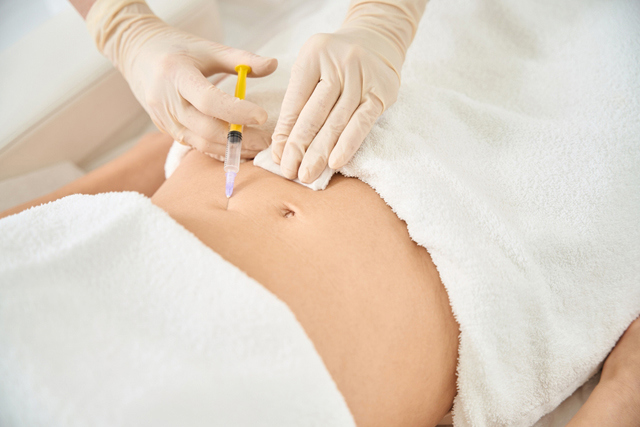
The clinic's stated safety process for this programme runs through detailed patient screening, individual treatment planning, and the use of devices with established safety profiles. Post-treatment review and written aftercare instructions are named as the other half of it. Risks vary with the components used. The temporary effects the clinic lists are swelling, bruising, redness, tenderness and discomfort. Energy-based treatment carries a risk of burns or irritation. Injections carry a risk of infection or inflammatory reaction. Individual risks are reviewed at consultation, before anything is booked. Cellier Clinic does not publish a formal quality-control document.
As with all aesthetic procedures, there is a small possibility of adverse outcomes including prolonged redness, uneven results, or skin sensitivity. Rare complications may include infection, scarring, or unintended changes to skin texture. These risks are minimised through thorough pre-treatment assessment, sterile technique, and adherence to post-care instructions.
All cosmetic procedures carry risk, non-surgical ones included, which the NHS states at the top of its pre-treatment advice rather than in a footnote. That guidance sets out what a patient should have established before committing: a consultation with someone qualified to give it, proper research into the procedure, a clear view of aftercare, and a cooling-off period rather than a decision taken on the day. For a programme delivered as a course of several sessions, the aftercare question is the one most easily skipped and the most worth asking.
The Bottom Line
- This is a programme, not a single treatment: radiofrequency, ultrasound and micro-regenerative injections are selected per patient and combined with circulation and swelling care.
- Its stated premise is that abdominal change involves skin, dermis, fascia, circulation and swelling together, not fat on its own.
- It was designed particularly for postpartum abdominal change, and the clinic also offers it for general abdominal management.
- The clinic publishes about three days of downtime and a course of three or more sessions at three-to-four-week intervals.
- The stated duration of effect is six to twelve months depending on skin condition, so it reads as maintenance rather than a one-off correction.
Frequently Asked Questions
Will this make me lose weight?
No, and the clinic says so directly rather than leaving it ambiguous. The programme is built around firmness, skin quality and the abdominal line; weight reduction is not what it targets. If your concern is primarily a volume of fat, that is a different conversation and possibly a different treatment. The useful way to judge this one is by how the skin behaves, not by what the scale says.
How soon after having a baby can I start?
That is a clinical decision rather than a fixed waiting period. The clinic states that for postpartum patients the appropriate timing after delivery or after any surgery is determined by the treating physician. Acute postpartum complications and surgical incisions that have not healed are both reasons to wait. If you are still breastfeeding, raise it at consultation, because the wider guidance on non-surgical body treatment excludes that period.
What does a session feel like?
It depends on which components your plan includes. Radiofrequency and ultrasound are usually described as warmth or a vibrating sensation. The micro-regenerative injections involve brief discomfort at the moment of injection. Numbing cream or local anaesthesia is available, and a session runs about twenty to thirty minutes.
How much downtime is there, and when can I travel?
The clinic publishes approximately three days. Temporary swelling or bruising is what that covers, and it resolves on its own. Cleansing and makeup resume the next day. There is no surgical restriction on flying, and most patients travel the day after treatment. Saunas, alcohol and strenuous exercise stay off the list for a week, which is worth knowing if a spa was part of the trip.
Who should postpone?
Pregnancy, an active skin infection or inflammation on the abdomen, unexplained abdominal pain or swelling, and recent abdominal surgery that has not healed are the clinic's stated reasons to wait. Severe separation or tearing of the abdominal muscles is different: that is a structural problem this programme is not designed to correct, so it needs assessing on its own terms.
How many sessions, and how long does the result hold?
The clinic expects noticeable change after three or more sessions at three-to-four-week intervals, which means the full course spans roughly two to three months. The stated duration of effect is six to twelve months, varying with individual skin condition. Whether further sessions would help is assessed at follow-up rather than booked in advance.
Is a quotation given before treatment?
Cellier Clinic does not publish treatment prices; a quotation is given after an individual consultation. Because the programme is assembled per patient from three possible components, what any individual course involves is not settled until the abdomen has been assessed. Online consultation is available if you want to begin that before travelling.
What support is there after I return home?
After returning home, patients are able to contact the clinic's international coordination team with any questions or concerns. Photo-based remote assessment is available for minor post-treatment queries. For more complex concerns, the clinic advises patients to seek evaluation from a local practitioner and will support with medical documentation if needed. The clinic can also be reached by telephone or through its website.
Book a Consultation at Cellier Clinic
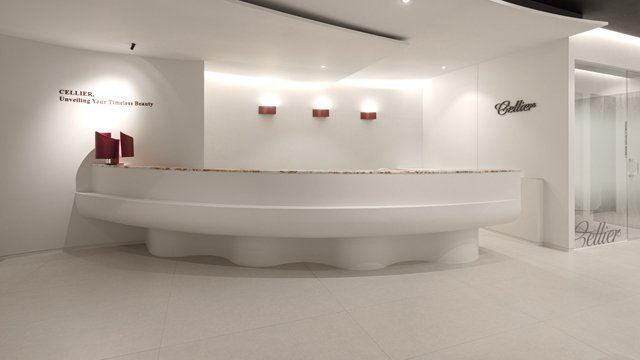
Abdominal care in Seoul is planned at Cellier Clinic from an assessment of the abdominal skin rather than from a fixed menu, since the mix of radiofrequency, ultrasound and injection follows from what the assessment finds. Enquiries begin at the clinic's contact page, and the wider treatment list is on the clinic's website. For a remote assessment the clinic asks for photographs of the treatment area, a current medication list and details of any previous procedures. An English-speaking team supports international patients at Cellier Clinic, and English-language assistance is available for both online enquiries and in-person consultations. Cellier Clinic is located on the 5th floor of Rex Tower, 108 Dosan-daero, Gangnam-gu, Seoul, South Korea. Cellier Clinic is a Registered Medical Institution for Attracting Foreign Patients, certified by the Ministry of Health and Welfare in compliance with the Medical Overseas Expansion and Foreign Patients Attraction Act.
Disclaimer
This page is for general information only and is not medical advice. Individual results vary, and suitability for any treatment must be determined by a qualified physician during consultation.
Sources & Further Reading
Other Services
Explore additional non-surgical lifting and skin rejuvenation treatments at Cellier Clinic.

Pore & Scar Treatment
Potenza in Seoul is RF microneedling for pores, scars and texture. Cellier Clinic's two modes, candidacy, three-day downtime and session course explained.
Learn More

Redness & Pigmentation Laser Care
Redness laser treatment in Seoul: diagnosis first, then the laser. Cellier Clinic on candidacy, session length, recovery by laser type and aftercare.
Learn More

Basic Skin Management
Basic skin management in Seoul at Cellier Clinic uses LDM ultrasound for hydration and texture, with no downtime and a skin assessment before every session.
Learn More