Cellier Clinic — Personalized Anti-Aging & Lifting Specialist Design Clinic in Gangnam, Seoul
Medical Guide
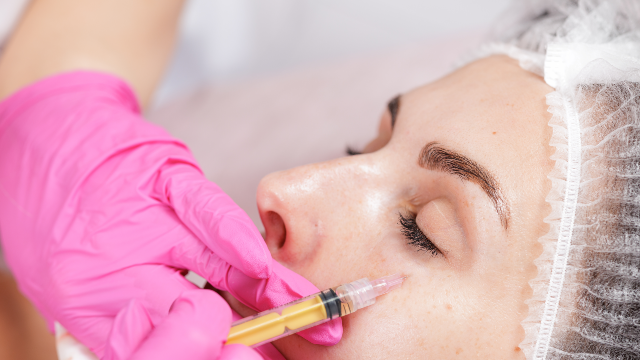
Facial Contour Injection vs Dermal Filler: Jawline Guide
Facial contour injection reduces unwanted volume along the cheeks and jawline; dermal filler adds it. Compare candidacy, assessment, timelines and recovery.
Schedule a ConsultationFacial Contour Injection vs Dermal Filler: What's the Difference for Jawline Definition?

Medically reviewed by Dr. Youm Junghyun, Specialist in General Surgery, Director of Cellier Clinic
Facial contour injection vs dermal filler is a comparison between two treatments that point in opposite directions. One is intended to reduce unwanted volume along the cheeks, jawline and under the chin; the other is intended to add volume and structure where the face has lost it. Both arrive by needle, both are offered at Cellier Clinic in Gangnam, Seoul, and both get described as "contouring" online, which is where the confusion starts. This article separates them by what they do, who they suit, and what each one means when it promises a sharper jawline.
Subtraction and addition are not two versions of the same treatment
The cleanest way to hold these apart is to ask what leaves the face and what enters it.
Cellier describes Facial Contour Injection as a non-surgical injection treatment intended to reduce unwanted facial volume and refine the look of the cheeks, jawline and double chin. The clinic states that the type of medication, the dose and the injection depth are individualized to each patient's facial structure, and that the substances used work by breaking down fat in the treated area. The result is meant to be a slimmer, more sculpted profile — less tissue, in specific places, rather than more.
Dermal filler moves the other way. The clinic describes it as placing volume into chosen areas, with the plan built around your facial framework, the state of your skin, your age and how much volume has gone — and with a stated goal of natural three-dimensional balance rather than bulk for its own sake. Cellier also states that its fillers are authentic products built on hyaluronic acid, and that this kind of filler can be dissolved afterward with hyaluronidase should that ever be wanted.
Two other pairings are commonly confused with this one and are worth naming so you can set them aside. Botulinum toxin works on muscle activity rather than on volume, which is a different comparison entirely. Skin booster injections work on skin quality and hydration rather than on shape, which is a third. This article stays with the volume question: taking some away, or putting some in.
"Jawline definition" means two different things
A patient asking for a defined jawline is describing an outcome, not a mechanism, and two very different anatomies produce the same request.
In the first, the jawline is intact underneath but obscured. Soft tissue sits over and below it, the transition from face to neck is soft, and there is fullness in the lower cheeks or under the chin. Nothing about the underlying frame needs changing; what is wanted is less material in front of it. That is the anatomy Facial Contour Injection is aimed at, and Cellier lists its treatment areas as the cheekbones, cheeks, deep cheeks, jawline and double chin.
In the second, the problem is the frame itself or what supports it. The jaw may lack projection, the chin may sit short of the profile line, or volume loss higher in the face may have let the contour above the jaw collapse so that the jawline reads as indistinct by comparison. Adding volume is the logical answer there. Cellier states that dermal filler restores sunken areas, refines jawlines and delivers immediate three-dimensional contouring, and describes Dr. Youm Junghyun's filler work as covering volume restoration, structural augmentation of the nose and chin, and wrinkle correction.
The same word covers both situations, which is exactly why the assessment matters more than the request. Reducing volume in a face that actually needed support will not produce definition; adding volume to a face that is already carrying too much will not produce it either.
What each assessment is looking for
The two consultations examine different things, and knowing what is being measured tells you which conversation you are in.
For Facial Contour Injection, Cellier states that the practitioner evaluates the depth of subcutaneous fat, skin elasticity and facial bone structure, then designs an individualized injection grid that maps the target areas — the lower cheeks or the submental zone beneath the chin, for example. Fat depth answers whether there is something to reduce. Skin elasticity answers whether the skin will follow the new contour once the volume beneath it decreases. Bone structure answers where the finished line should sit.
For dermal filler, the clinic states that the practitioner evaluates facial structure, age, skin condition and the degree of volume depletion, and designs a plan that keeps proportions natural while restoring three-dimensional balance. Injection sites, dose, depth and treatment areas are then planned individually. The clinic connects this planning to its Skin Architecture approach, which treats the face as layered structure rather than as a set of separate problems.
The American Academy of Dermatology, in its guidance on preparing for filler treatment, advises telling the person treating you about your medical history, the medications and supplements you take, and what you actually want the result to look like. That last item does more work than patients expect in this particular comparison, because "I want a sharper jaw" and "I want a smaller lower face" can lead to two different treatments.
Who each treatment suits, and who should wait
Candidacy separates the two more sharply than any other section, because the clinic's two lists barely overlap.
Cellier describes good candidates for Facial Contour Injection as people concerned about excess cheek volume, a double chin, deep-cheek sagging, or a facial contour that is not sufficiently defined — in short, people seeking facial slimming without surgery. Good candidates for dermal filler are described differently: people wanting to restore lost volume naturally, soften fine or depressed wrinkles, improve facial definition, or achieve an immediate volumizing effect.
The exclusions also differ, and the difference is informative. Cellier rules out Facial Contour Injection where there is an active infection on the face, where liver or kidney function is badly impaired in a way that affects how lipids are handled, where a hypersensitivity to the fat-dissolving solution is known, and during pregnancy or nursing. That liver and kidney entry is there because the treatment hands the body a metabolic task — clearing broken-down fat — rather than a purely local one.
The barrier list for dermal filler runs differently. Cellier names infection in the skin where the product would go, serious problems with bleeding or clotting, a known hypersensitivity to what is being injected, and pregnancy or nursing. Extra assessment is called for, the clinic adds, where there is an autoimmune condition, a history of keloid scarring, isotretinoin use within the last six months, or ongoing blood-thinning medication. Both lists point the same way: this is a medical decision made with a physician, not a menu choice.
The timelines are not comparable, and that surprises people
Someone expecting these two treatments to behave similarly on a calendar will be disappointed by one of them, so it is worth setting the numbers side by side.
Dermal filler is fast in every sense. Cellier puts volume filler at roughly twenty minutes in the chair and wrinkle filler at fifteen to twenty. The volume version reads immediately; the wrinkle version needs about a week before its result settles into view. Either way the clinic reports a lifespan of roughly six to twelve months, varying with the product and the site. Downtime is short for the first — inside three days — and longer for the second, at one to two weeks.
Facial Contour Injection runs on a different clock entirely. The injection itself takes about three minutes, which sounds like the faster option until you read the schedule around it: Cellier describes a course of three sessions at two-week intervals, with noticeable change after the third session and effects reported within about three months. Downtime is approximately one week per session because of swelling at the injection sites.
So the treatment that adds volume shows you its result immediately and then fades over many months, while the treatment that reduces volume asks for a course spread across weeks before the change reads clearly. The American Academy of Dermatology makes the general point about fillers in its patient material: the effect is visible straight away and gradually diminishes as the material is absorbed, which is why maintenance treatments are part of the plan rather than a sign that something went wrong.
Planning either one around a trip to Korea
The scheduling consequences follow directly from those timelines, and they push the two treatments to opposite ends of an itinerary.
For dermal filler, Cellier states that one to two days in Seoul is generally sufficient and that most patients fly within three days, with wrinkle filler patients advised to allow one to two weeks for swelling to settle. Because the change is immediate, you can see the result while you are still in the country and raise anything you want discussed.
Facial Contour Injection needs more planning. The clinic states that downtime is approximately one week, and recommends scheduling the treatment toward the end of a Seoul trip so that visible swelling does not occupy the rest of your stay. It also allows for flying after roughly a week of downtime. The three-session course is the bigger logistical question: completing all three in Korea means a minimum stay of around three weeks, while the alternative the clinic describes is an initial session in Seoul with follow-up handled remotely. That is a decision to settle before you book flights, and the clinic's consultation and booking page is where to raise it.
Comfort, side effects and aftercare
Both are injections, and the day-of experience is closer than anything else about them.
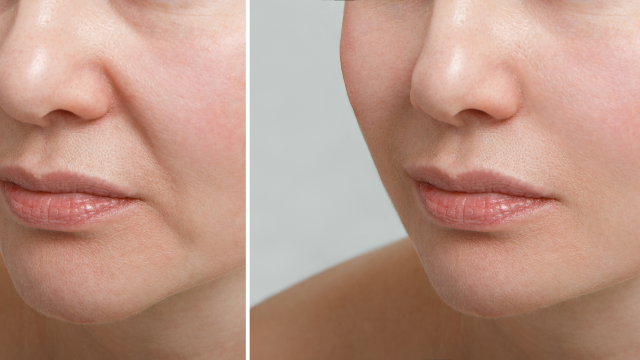
Cellier states that Facial Contour Injection usually causes mild, brief discomfort — a small pinch, stinging or pressure during the injection — with topical anesthetic cream used if needed. Dermal filler may cause mild, temporary pinching, pressure or stinging, and the clinic lists cream anesthesia and nerve anesthesia, with the choice depending on the treatment area, the filler type and the injection technique.
Side effects overlap but are not identical. After Facial Contour Injection, the clinic reports mild temporary swelling, localized redness and warmth that generally settles within twenty-four to forty-eight hours, minor bruising at puncture sites, and short-lived tenderness. After dermal filler, it reports temporary localized swelling, slight redness, minor tenderness and bruising around injection sites, typically resolving within hours to a few days.
Aftercare is largely shared: keep the treated area clean, use sunscreen consistently, resume facial washing and makeup from the following day, and avoid saunas, alcohol and strenuous exercise for one week. For injectables generally, Cellier adds that you should not rub or massage the treated zones, should stay upright for several hours afterward, may use ice to manage swelling, and should skip hard workouts for twenty-four hours.
The FDA's consumer guidance on dermal fillers is worth reading alongside that list. The agency advises that fillers be given by a licensed health care provider using a product obtained through legitimate channels, and warns consumers against buying injectable products to use on themselves. Its wider material on soft tissue fillers explains that these products are regulated as medical devices and that the agency maintains a public list of the fillers approved for use in the United States. Those approvals describe the US market specifically; Korea runs its own certification system under its own law.
Bringing the right question to the consultation
You do not have to arrive knowing which treatment you want, but arriving with an accurate description of the problem makes the appointment far more productive.
Try to say what you see rather than what you have read. "There is fullness under my chin and along my lower cheeks, and my jaw disappears into it" describes one anatomy. "My jaw looks flat in profile and the area above it has hollowed out" describes another. Cellier states that Dr. Youm Junghyun performs all dermal filler injections and all facial contour injections at the clinic, selecting the product, the injection points, the depth and the dose for each patient's facial structure and goals — so the description you give is the raw material the plan is built from.
The American Academy of Dermatology publishes a short list of things to establish before any aesthetic procedure: the identity and training of the person holding the needle, the outcome you can reasonably expect, the likely number of visits, and the side effects that come with the territory. MedlinePlus, from the US National Library of Medicine, suggests putting your questions on paper in advance so none of them evaporate once the appointment starts — doubly useful when the conversation crosses a language line. Cellier states that English-speaking support is available for consultations.
It also helps to see the scale of change each approach produces before committing to one. Reviewing documented before and after results will show you the difference between a jawline revealed by reduction and a jawline built by addition more clearly than any description can. Dr. Youm Junghyun is a specialist in General Surgery, trained at Kyung Hee University Hospital at Gangdong, and Director of Cellier Clinic, which is a Registered Medical Institution for Attracting Foreign Patients certified by the Ministry of Health and Welfare.
The Bottom Line
- Facial Contour Injection is intended to reduce unwanted volume in the cheekbones, cheeks, deep cheeks, jawline and double chin; dermal filler is intended to add volume and structure where the face has lost it.
- A blurred jawline caused by soft tissue sitting over it points toward reduction, while a jawline lacking projection or support points toward addition — the same complaint, two different anatomies.
- The assessments differ: contour injection evaluates subcutaneous fat depth, skin elasticity and bone structure, while filler evaluates facial structure, age, skin condition and the degree of volume depletion.
- Filler works on an immediate-to-one-week timeline lasting roughly six to twelve months; contour injection is a course of three sessions at two-week intervals with change reading clearly after the third and effects within about three months.
- Downtime is approximately one week per contour injection session against within three days for volume filler, which is why one is scheduled late in a Seoul trip and the other can be scheduled early.
Frequently Asked Questions
Can facial contour injection and dermal filler be used on the same patient?
They address opposite problems, so they are considered for different areas rather than the same one. Dr. Youm Junghyun performs both treatments at Cellier Clinic and assesses facial structure, fat depth, skin elasticity and volume loss before planning either. Whether both belong in one plan is determined at consultation.
Which one gives a faster visible change?
Dermal filler. According to Cellier, the volume version reads in the mirror straight away, and the wrinkle version arrives at roughly the seven-day mark. Facial Contour Injection is described as a course of three sessions at two-week intervals, with noticeable change after the third session and effects developing within about three months.
How long is recovery after each treatment?
Cellier states that Facial Contour Injection has approximately one week of downtime because of swelling at the injection sites. Filler downtime depends on the type: the clinic gives inside three days for the volume version and one to two weeks for the wrinkle version. Cleansing and makeup resume from the following day in both cases.
What anesthesia is used?
Facial Contour Injection uses topical anesthetic cream if needed, and Cellier describes the sensation as a brief pinch, stinging or pressure. For dermal filler the clinic lists cream anesthesia and nerve anesthesia, with the method chosen according to the treatment area, the filler type and the injection technique.
Is hyaluronic acid filler reversible?
Yes. Cellier states that its fillers are authentic products built on hyaluronic acid, and that material of this kind can be broken down afterward using hyaluronidase where that is wanted. The American Academy of Dermatology also notes that filler results fade naturally over time as the body absorbs the material.
Who should not have facial contour injection?
Cellier rules it out where there is an active infection on the face, where liver or kidney function is badly impaired in a way that affects lipid handling, where hypersensitivity to the solution is known, and during pregnancy or nursing. Active inflammatory skin disease, poorly controlled systemic illness, and recent surgery in the treatment area are also reasons to postpone. Suitability is assessed individually.
How should I schedule these around a trip to Seoul?
Cellier suggests scheduling Facial Contour Injection toward the end of a trip because of the roughly one-week downtime, and states that completing the three-session course in Korea would mean a minimum stay of around three weeks, with an initial session plus remote follow-up as the alternative. For dermal filler, one to two days is generally sufficient and most patients fly within three days.
This article is for general informational purposes and does not constitute individualized medical advice. Candidacy, technique, and expected outcomes can only be determined through a consultation with a qualified physician, and this article is not a self-diagnosis tool.
More Articles
Continue reading clinical insights and anti-aging guides from Cellier Clinic.

Can I Combine Botox, Filler and Skin Boosters in One Visit?
Combining Botox, filler and skin boosters in one visit to Korea is possible and planned together at Cellier Clinic. Here is what the appointment involves.
Learn More
Botox vs Dermal Filler: The Real Difference Explained
The difference between Botox and dermal filler is mechanism: one relaxes a muscle that creases skin, the other adds volume. Know which before your Seoul visit.
Learn More
Facial Contour Injection vs Dermal Filler: Jawline Guide
Facial contour injection reduces unwanted volume along the cheeks and jawline; dermal filler adds it. Compare candidacy, assessment, timelines and recovery.
Learn More