Cellier Clinic — Personalized Anti-Aging & Lifting Specialist Design Clinic in Gangnam, Seoul
Medical Guide
Ultherapy Prime With Skin Boosters: Lifting Plus Hydration
Cellier Clinic pairs Ultherapy Prime with skin boosters because one reaches the fascia and the other stays in the dermis. Here is how the pairing runs.
Schedule a ConsultationCombining Ultherapy Prime With Skin Boosters: Why Cellier Clinic Pairs Lifting and Hydration Treatments
Medically reviewed by Dr. Youm Junghyun, Specialist in General Surgery, Director of Cellier Clinic
An Ultherapy Prime with skin booster combination is the pairing Cellier Clinic names most often in its own treatment documentation, and the reason is anatomical rather than promotional: the two treatments stop at different depths and leave different things behind. Ultherapy Prime deposits focused ultrasound energy at a level the needle of a booster never reaches, and a booster places hydrating material inside the dermis that no amount of heat can supply. This article stays on that one pairing — what each half does, how the clinic documents it, how the two are sequenced and spaced, and who the combination actually suits.
The one-sentence rationale, then the specifics
Layering different treatment categories works because structural laxity, skin quality, and pigment are separate problems that each require their own mechanism — a general principle covered in full elsewhere on this site. Everything below is narrower: it is about the single pairing of an imaging-guided lifting treatment with an injected hydration treatment, at the level of protocol.
Cellier Clinic in Gangnam, Seoul lists lifting combined with skin boosters among its standing complementary pairings. That matters more than a general argument would, because it means the combination is part of how the clinic plans treatment rather than something assembled on request. Dr. Youm Junghyun, who performs the assessment and builds the plan, is described as using more than one modality together where the assessment indicates it.
What Ultherapy Prime contributes that a booster cannot
Ultherapy Prime reaches the deep support layer of the face, and nothing delivered by a fine needle into the dermis can do the same work.
In Cellier's description, Ultherapy Prime lifts without surgery by sending high-intensity focused ultrasound into the fascia and the dermis, aiming at facial contour, elasticity, and skin texture through a collagen response. The clinic's published protocol runs in five stages: the treatment area and depth are assessed, DEEP SEE real-time ultrasound imaging is used, focused energy is delivered through three transducers, that energy is directed at the fascia and SMAS layer and the dermis, and the resulting collagen and elastin response produces gradual change.
The imaging step is the part with a direct bearing on a combination plan. Cellier states that real-time visualization of the skin layers, together with three transducer types, allows energy to be placed at the intended depth for that individual. The FDA's consumer material on ultrasound imaging explains the underlying principle in general terms: ultrasound sends sound waves into tissue and builds a picture from the echoes that return, which is why it is used to see structures that are not visible from the surface. Being able to see a layer before delivering energy to it is what allows a depth to be chosen rather than assumed.
The practical shape of the session is a useful contrast with what follows. Cellier lists roughly twenty to thirty minutes for approximately three hundred shots, with anesthetic cream, a nerve block, or sedation available as comfort options, and states that Ultherapy Prime has been built for a lower pain burden than earlier models. Redness, swelling, and a tingling sensation may follow and usually settle on their own; the clinic describes mild tightness or minor swelling persisting for one to two days, with daily activity resumed straight away and washing and makeup from the next day.
The clock is the other defining feature. Cellier describes an immediate lifting sensation, more noticeable change at around four weeks, peak collagen response at roughly two to three months, and an effect lasting approximately six to twelve months depending on individual skin condition. The American Academy of Dermatology makes the same general point about non-invasive firming: the change is gradual and moderate rather than instant. None of that addresses how the skin surface itself looks in the meantime.
What a skin booster contributes that Ultherapy Prime cannot
A skin booster changes the condition of the skin as a material, and no energy device places material into tissue.
Cellier describes Skin Booster Injections as a customized mixture of moisturizing and skin-supporting ingredients delivered through multiple injection points, with a hyaluronic acid-based cocktail selected for the individual's skin type. The clinic's stated targets are hydration, texture, pores, radiance, inflammatory skin concerns, and fine lines, and it lists the forehead, the glabella, the eye area, the cheeks, and the neck among the areas treated. The session is short — around ten minutes — with anesthetic cream or a nerve block used to keep the injections comfortable.
Read those two target lists side by side and the lack of overlap is the argument. Ultherapy Prime is documented for elasticity loss, a double chin, facial contour, and wrinkles; the booster list contains nothing about contour and everything about the surface. A patient whose jawline has softened and whose skin also looks dull and dehydrated has described two findings, and the second one will still be there after a lifting session however well the energy is placed.
The booster's recovery profile is also the opposite shape. Cellier states that bruising, redness, and swelling can follow, with downtime of approximately one to two weeks depending on the individual, washing and makeup from the following day, and changes felt from around two weeks with an effect of roughly three to six months. Multiple small entry points are what placing material into the skin requires, and they behave differently from the surface response to ultrasound.
This is a hydration decision and not a volume decision. Whether a booster or a dermal filler is the right answer for a hollow is a separate question with its own decision rule, and it is answered elsewhere on this site rather than reopened here.
How the clinic documents the pairing
Cellier does not present lifting plus boosters as an add-on; it appears in the clinic's own summary of complementary pairings alongside the pairing of hyperbaric oxygen therapy with stem cell and IV therapy.
The clinic also runs at least one published program built on the same construction — Décolleté & Neck Care, which combines lifting, radiofrequency, and booster injections in a single planned course for the thin skin of the neck and upper chest. Its existence is the practical evidence that combining energy work with injected hydration is a routine planning pattern at this clinic rather than an improvisation.
Sitting underneath both is the clinic's stated planning philosophy, Skin Architecture and Time Design, described further in the clinic's account of its philosophy and team. Applied to this pairing, it produces a short sequence of questions: which layer is slack, which layer is depleted, and does this patient have one finding or two.
Sequencing the two inside a single appointment
When both are done on one day, the energy treatment goes first and the injections go last, and the reason is mechanical.
Ultherapy Prime is delivered through an intact skin surface with coupling gel and a handpiece passing over the treatment area. Skin booster injections create dozens of small puncture points across that same surface. Performing the ultrasound pass over freshly injected skin would mean working over open entry points and freshly deposited material, so the ordered version places the deep structural work first and the superficial injections after it.
Comfort planning also has to be decided once rather than twice. Cellier lists anesthetic cream, a nerve block, and sedation as options for Ultherapy Prime, and anesthetic cream or a nerve block for skin boosters. Because numbing cream needs time to take effect, a same-day pairing is planned around a single application period at the start rather than two separate waits — one of several details worth raising when the appointment is booked rather than on arrival.
Not every pairing belongs in one appointment. The two treatments are frequently split across a trip or across visits, particularly when the treatment areas differ or when the patient would rather judge the response to one before adding the other.
Spacing the two across a calendar
Across weeks, the pairing has one clear scheduling constraint: the booster is the component that shows on the outside.
Ultherapy Prime carries redness and mild swelling for a day or two, and Cellier states there is no surgical restriction on flying afterward. Skin booster injections carry approximately one to two weeks of possible bruising at the injection points, so the booster is the element that dictates where the appointment sits relative to anything you need to look settled for.
The review point differs too. Booster changes are described as becoming noticeable from around two weeks, while the lifting response is described as more noticeable at four weeks and peaking at two to three months. If you assess a combined plan at the two-week mark, you are mostly seeing the booster; the structural half has not finished arriving. Setting that expectation in advance is more useful than any photograph, though the clinic's before and after gallery can help frame what kind of change is being discussed. Renewal intervals differ as well — roughly three to six months against roughly six to twelve — so the maintenance conversation belongs in the first consultation.
Who the pairing suits, and who needs only one half
The combination suits a patient whose assessment returns two findings rather than one.
Cellier describes Ultherapy Prime candidates as people concerned about loss of elasticity, a double chin and facial contour, wrinkles around the eyes or between the brows, or a weak lifting response associated with thick skin. It describes booster candidates as people with dehydrated, dull, rough, or uneven skin, visible pores, fine lines, or inflammatory concerns, and its own FAQ material names a thinning dermis among the findings that point toward injections. Where both descriptions fit the same face, pairing them is the logical plan.
Where only one fits, pairing adds recovery time without adding benefit. Skin that is well hydrated and even but has drifted at the jawline is a single-treatment situation. So is skin that looks dry and tired with contours that have held. The American Academy of Dermatology's guidance on questions to ask before a cosmetic procedure puts the same discipline in patient terms: ask what result is realistic for your specific concern, and ask what the alternatives are, before agreeing to anything.
Screening does not get simpler because the plan is combined
Each half keeps its own exclusions, and a combined plan means both sets are checked.
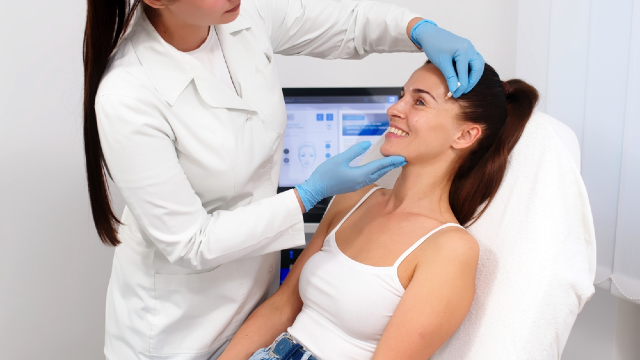
Cellier lists pregnancy or breastfeeding, active skin infection or significant inflammation in the treatment area, and medical conditions making ultrasound-based treatment unsuitable among reasons Ultherapy Prime requires assessment or postponement. The injectable half adds its own reasons to hold off: an allergy to any ingredient in the formulation, inflammatory skin disease in an active phase, systemic illness that remains poorly controlled, and a recent operation at the site where the injections would go. Blood-thinning medication is relevant to the injectable half in particular and should be disclosed rather than stopped independently. If one half is ruled out, the other may still be appropriate — the plan is rewritten rather than abandoned, by a qualified physician who has reviewed your history and medications, which is the standard the American Academy of Dermatology sets for any cosmetic procedure.
Aftercare, at least, is shared. For both treatments Cellier asks that the area be kept clean, that sunscreen be used consistently, and that saunas, alcohol, and strenuous exercise be set aside for about a week, with washing and makeup resuming the day after treatment. MedlinePlus, published by the US National Library of Medicine for patients, notes that skin thins and loses elasticity as we get older, and that sun exposure speeds up the visible part of that change — which is why the sunscreen instruction is part of the treatment rather than an afterthought.
Taking the pairing into a consultation
Arrive with your concerns described separately rather than as one complaint, and ask which finding each component is meant to answer, whether both are appropriate for you at all, whether they belong on the same day, when each result should be judged, and what the maintenance interval for each would be. Cellier states that consultations are conducted with English-speaking support, and you can arrange a consultation to have a combination assessed before you commit to travel dates.
The Bottom Line
- Ultherapy Prime is documented by Cellier as reaching the fascia and SMAS layer and the dermis using DEEP SEE real-time imaging and three transducers; skin booster injections place a customized hyaluronic acid-based formulation into the dermis through multiple points. Neither can do the other's work.
- Cellier lists lifting combined with skin boosters among its complementary pairings, and runs Décolleté & Neck Care as a published program built on the same combination of energy work and injections.
- In a same-day plan the ultrasound pass precedes the injections, because the booster leaves multiple entry points in the surface the handpiece has to travel across.
- The booster is the component that dictates scheduling: about one to two weeks of possible bruising, against one to two days of redness or mild swelling after Ultherapy Prime.
- The pairing suits a face with two findings — slack contour plus depleted skin quality. With only one finding, one treatment is the appropriate plan.
Frequently Asked Questions
Can Ultherapy Prime and skin boosters be done on the same day?
They can be planned into one appointment, with the ultrasound treatment performed first and the injections afterward. Cellier lists anesthetic cream, a nerve block, or sedation for Ultherapy Prime and anesthetic cream or a nerve block for boosters, so the comfort plan is decided once at the start. Whether one visit or two suits you better depends on the areas being treated and your own schedule.
Which treatment should I expect to notice first?
The booster, in most cases. Cellier describes booster changes as beginning to be felt at around two weeks, while lifting change is described as more noticeable at around four weeks and reaching its peak at roughly two to three months. A combined plan assessed at two weeks is showing you mainly the injected half.
How long does each half of the pairing last?
Cellier states approximately three to six months for skin booster effects and approximately six to twelve months for Ultherapy Prime, in both cases depending on individual skin condition. That means the two components come due for review at different times. Ask at your consultation how your specific plan is meant to be spaced.
Does combining the two make the session more painful?
The two treatments are handled with different comfort measures, and both are addressed before treatment starts. Cellier describes Ultherapy Prime as built for a lower pain burden than earlier ultrasound lifting models, and states that most patients tolerate booster injections comfortably with topical cream or a nerve block. Individual sensitivity varies, and your tolerance is worth raising during the consultation rather than during the treatment.
What downtime should I plan for if I have both?
Plan around the booster. Cellier lists approximately one to two weeks of possible bruising and redness at booster injection points, while Ultherapy Prime is described with redness, mild tightness, or minor swelling for one to two days and immediate return to daily activity. For both, washing and makeup generally resume the following day.
Is the combination suitable for everyone who wants a lift?
No. The pairing is for people whose assessment finds both slack structure and reduced skin quality. Cellier describes Ultherapy Prime candidates in terms of elasticity loss, contour, and a double chin, and booster candidates in terms of dehydration, dull or rough texture, pores, and fine lines — and if only one of those descriptions matches you, one treatment is the appropriate plan.
This article is for general informational purposes and does not constitute individualized medical advice. Candidacy, technique, and expected outcomes can only be determined through a consultation with a qualified physician, and this article is not a self-diagnosis tool.
More Articles
Continue reading clinical insights and anti-aging guides from Cellier Clinic.
Can I Combine Botox, Filler and Skin Boosters in One Visit?
Combining Botox, filler and skin boosters in one visit to Korea is possible and planned together at Cellier Clinic. Here is what the appointment involves.
Learn More
Botox vs Dermal Filler: The Real Difference Explained
The difference between Botox and dermal filler is mechanism: one relaxes a muscle that creases skin, the other adds volume. Know which before your Seoul visit.
Learn More
Facial Contour Injection vs Dermal Filler: Jawline Guide
Facial contour injection reduces unwanted volume along the cheeks and jawline; dermal filler adds it. Compare candidacy, assessment, timelines and recovery.
Learn More