Cellier Clinic — Personalized Anti-Aging & Lifting Specialist Design Clinic in Gangnam, Seoul

Medical Guide
Ultherapy Prime vs Standard Ulthera: What Has Changed
Already had HIFU or RF lifting in the US? Here is what Cellier Clinic documents about Ultherapy Prime and Thermage FLX, and how to describe your past treatment.
Schedule a ConsultationPreviously Tried Ulthera or Thermage at Home? What's Different About Ultherapy Prime and Thermage FLX
Medically reviewed by Dr. Youm Junghyun, Specialist in General Surgery, Director of Cellier Clinic
Suppose you have already sat through a focused ultrasound or radiofrequency lifting session somewhere in the United States, and you are now looking at Ultherapy Prime or Thermage FLX in Seoul, the most useful question is not which machine is newer. It is what the clinic documents about the platforms it runs today, and how the treatment you already had should shape the plan for the next one. A previous session is one of the most informative things a returning patient can carry into a consultation. This article is about how to use it.
Your previous treatment is clinical information, not a footnote
A past aesthetic procedure belongs in the medical history, and Cellier Clinic asks for it directly. The clinic's preparation guidance for Ultherapy Prime asks patients to inform the doctor about medical conditions, medications, previous cosmetic procedures and skin problems. Its preparation guidance for Thermage FLX asks for the same, adding implanted devices to the list. That request is not a formality. What was done to your skin before, how it responded, and how long the response lasted are all inputs into what should be done now.
The consultation is built to take that information. Before deciding whether Thermage FLX is appropriate, the clinician weighs several things at once: how lax the skin is, which wrinkles are present, how the facial contour sits, how thick the skin is, which areas are in scope, what the medical history contains, and what the patient wants. For Ultherapy Prime, the clinic describes assessing skin laxity, facial contours, skin thickness, the treatment areas and the patient's goals, then determining whether the treatment is suitable and selecting the depths and areas to treat. Your account of an earlier session feeds straight into both of those judgments.
The American Academy of Dermatology's general safety guidance for cosmetic treatment makes the same point from the patient's side: these are medical procedures, suitability is a medical decision, and the consultation is where realistic expectations get established rather than assumed. If you arrive with a clear account of what you have had, that conversation starts from a much better place.
What the clinic documents about Ultherapy Prime as it runs it today
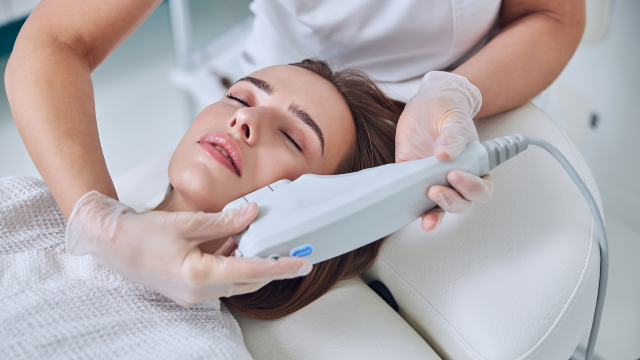
Cellier describes Ultherapy Prime as a non-surgical lifting treatment that uses high-intensity focused ultrasound to reach deeper skin layers, targeting the fascia and the dermis, with collagen regeneration supporting gradual change over time. Three details in the clinic's own documentation are the ones a returning patient usually wants.
The first is how the energy is aimed. The clinic describes the platform as using real-time visualization of the skin layers together with three types of transducers, so that energy can be delivered at the intended depth for that individual. What the imaging step contributes is a separate subject in its own right, so the short version is enough here: the operator can look before choosing.
The second is comfort, which is covered below because it is usually the memory that matters most to someone who has done this before.
The third is the shape of the session and the timeline afterward. Cellier describes approximately 20 to 30 minutes for a 300-shot treatment. Recovery is described as immediate with minimal downtime, though slight redness, mild tightness or minor swelling may last a day or two. Optimal lifting outcomes are described as typically realized around two to three months after the session, with results lasting roughly six to twelve months depending on individual skin condition.
What the clinic documents about Thermage FLX
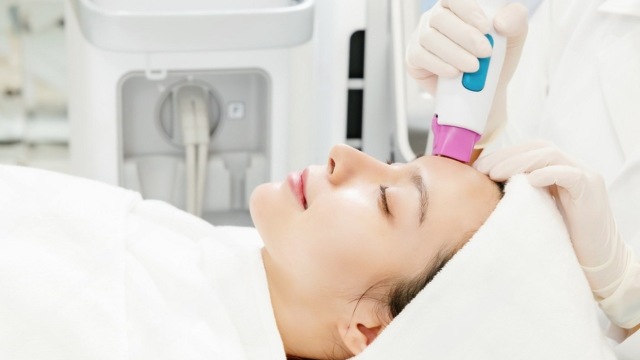
Thermage FLX is described by Cellier as a non-surgical tightening and lifting treatment that uses monopolar radiofrequency energy to deliver heat into deeper skin layers, aimed at elasticity, wrinkles, facial contour and collagen regeneration. On risk control, the clinic describes the platform as using automatic tuning together with a cooling system during treatment, so that radiofrequency energy is delivered while the skin surface is protected.
The candidate description is specific, and it is worth reading against your own face. The clinic points the platform at patients from their thirties onward whose skin has lost firmness; at faces that are thin and carry little cheek fat; at thin skin where irritation is a worry; at concern about the lines around the eyes; and at people who want a lift that holds for a while. Session length is described as roughly 20 to 30 minutes for 300 shots. The clinic indicates changes may become noticeable at around four weeks, with the effect generally lasting about six to twelve months.
How focused ultrasound and radiofrequency differ from each other in what they do to tissue, and which of the two suits which face, is a comparison that has been covered separately. The single-sentence version: they place heat differently and are chosen for different problems, which is why a clinic runs both rather than picking one.
The comfort question, for people who remember the last time
For many returning patients this is the real question, and the clinic answers it directly for one platform. Cellier describes Ultherapy Prime as having a reduced pain burden compared with traditional Ultherapy, and separately states that the platform has been enhanced for reduced pain relative to previous models. That is a specific claim about the current generation, and it is the most relevant thing the clinic documents for someone whose main memory of an earlier session is the discomfort.
It is not a promise that you will feel nothing. Cellier still describes some discomfort as possible, and lists topical cream anesthesia, nerve block anesthesia and sedation anesthesia among the pain-control options available for its lifting treatments. For Thermage FLX, the clinic notes that patients may feel heat, tingling or discomfort during radiofrequency treatment and that the level varies by individual sensitivity.
The practical move is to say what happened last time in plain terms. "I could not sit still through it," "I asked them to stop on the jawline," or "it was uncomfortable but manageable" are all more useful than a number on a scale, because they tell the clinician which part of the session to plan around.
"It didn't do much for me" deserves a second look
If your earlier treatment underwhelmed you, there are several ordinary explanations, and separating them matters more than switching brands.
One is the degree of laxity you started with. Cellier's own suitability notes state that for people whose degree of skin laxity would be better addressed with surgical treatment, an energy-based lifting platform may not be the right tool. The Academy of Dermatology's material on firming sagging skin makes the same point in general terms: non-invasive tightening produces gradual, modest change and does not substitute for surgery when laxity is advanced. A treatment aimed at the wrong severity will disappoint regardless of the model number.
A second is skin thickness. Cellier lists weak lifting effects associated with thick skin among the concerns Ultherapy Prime is described for, which is one reason skin thickness appears in the assessment for both platforms.
A third is timing. Collagen-dependent treatments do not declare themselves on the way out of the room. Cellier's own timelines place noticeable change at around four weeks for Thermage FLX and optimal outcomes at roughly two to three months for Ultherapy Prime. If you judged your last treatment at the two-week mark, you judged it early.
A fourth is simply the number of sessions and the areas covered, which is why the details below are worth assembling before you travel.
How to describe a past treatment so the plan accounts for it
Write this down before your consultation rather than trying to recall it in the room. MedlinePlus, the patient-education service of the US National Library of Medicine, advises preparing for a medical appointment by writing out your history and questions in advance and bringing the list with you, precisely because recall under time pressure is unreliable.
For a previous lifting treatment, the details that change a plan are:
- What it was. The brand or platform name as it appeared on your paperwork, and the generation if the clinic recorded it.
- When. The month and year of each session, not just "a couple of years ago."
- How many. One session, a course, or repeated maintenance rounds.
- Where on the face. Full face, lower face only, neck, the eye area, or a single trouble zone.
- What settings, if you have them. If your record lists line counts, shot counts or depths, bring the record.
- What was used for comfort. Numbing cream, a nerve block, sedation, or nothing.
- What you felt. During the session, that evening, and over the following week.
- What happened afterward. Redness, swelling, tenderness or numbness, and how long each lasted.
- What changed, and when you first noticed it. Along with how long the change held before fading.
- Anything unusual. A patch that stayed sensitive, an area that looked uneven, or a response that surprised you.
If any of that sits in a chart back home, ask for a copy before you leave. If you photographed your face before or after the earlier treatment, bring those images too. The Academy of Dermatology's list of questions to ask before a cosmetic treatment is a good companion document here, because it moves the conversation from "what do you recommend" to "what specifically is being planned for me, and why."
Timing your next round
Both platforms are described by Cellier as producing effects that generally last about six to twelve months depending on skin condition, and that figure is the natural anchor for a conversation about when to treat again. Where exactly you sit in that window, and whether a repeat is the right next step at all, is a judgment the treating doctor makes with your history and your current skin in front of them. Bring the date of your last session and let it inform the discussion rather than deciding in advance.
There are also short-term timing rules that apply to anyone. Cellier's guidance is to avoid treatment over active skin problems and to follow the clinic's instructions on skincare, sun exposure and other cosmetic procedures before the appointment, and to tell the clinic about blood-thinning medications rather than stopping anything on your own.
What a generation name does and does not tell you
It is easy to read a model name as a regulatory statement. It is not one. The FDA's consumer explanation of what "FDA approved" actually means is worth reading for exactly this reason: product naming, marketing language and regulatory status are three different things, and the agency's own terminology is narrower than everyday usage. Korean certification and US regulatory processes are separate systems with separate records, so a platform's presence in a Seoul clinic tells you about that clinic's equipment, not about a US filing.
What the clinic's documentation does tell you is concrete and checkable: what the device is aimed at, how the session is run, what the recovery looks like, and what the expected timeline is. Those are the claims to test against your own experience.
Bringing it into the room
If you are traveling for this, the consultation is where a returning patient gets the most value, because you arrive with data that a first-time patient does not have. Cellier describes English-speaking support during in-person consultations, and appointments can be arranged through the clinic's contact page before you travel. The clinic's approach to individualized planning is built around reading the individual skin layers and structure rather than applying a standard protocol, which is the framework your history feeds into.
Ask what is being planned for you specifically, what the clinician expects given what happened last time, and how the result will be assessed. Then judge the outcome on the clinic's stated timeline rather than on the first week.
The Bottom Line
- A previous HIFU or radiofrequency treatment is clinical information; Cellier asks patients to disclose previous cosmetic procedures before both Ultherapy Prime and Thermage FLX, and that history feeds into depth, area and suitability decisions.
- Cellier describes Ultherapy Prime as having a reduced pain burden compared with traditional Ultherapy, which is the most directly relevant documented difference for someone whose main memory of an earlier session is discomfort.
- A disappointing earlier result often reflects the starting degree of laxity, skin thickness, the number of sessions or judging too early, rather than the model of the device.
- Arrive with dates, areas, session counts, comfort measures and what you observed afterward, written down; Cellier states results generally last about six to twelve months for both platforms, which anchors the timing discussion.
Frequently Asked Questions
Should I tell the clinic about a lifting treatment I had years ago?
Yes. Cellier's preparation guidance for both Ultherapy Prime and Thermage FLX asks patients to inform the clinician about previous cosmetic procedures, along with medical conditions, medications and skin problems. Older treatments still tell the doctor how your skin has responded to energy-based work, which is useful information when depths and areas are being selected.
What exactly should I write down about my earlier treatment?
The platform name, the dates, how many sessions you had, which areas were treated, what was used for comfort, what you felt during and after, how long any redness or tenderness lasted, and what change you noticed and when. If your previous clinic recorded settings or shot counts, bring the record. MedlinePlus recommends preparing written notes before a medical appointment rather than relying on recall.
Cellier says Ultherapy Prime is more comfortable than traditional Ultherapy. Does that mean it is comfortable?
No. The clinic describes a reduced pain burden compared with traditional Ultherapy and states the platform has been enhanced for reduced pain relative to previous models, while also noting that some discomfort can still occur. Topical cream, nerve block and sedation are listed among the available pain-control options, and the right choice is decided with the treating doctor.
My first treatment did very little. Is a newer platform likely to change that?
It depends on why it did little. Cellier's own notes state that a degree of laxity better addressed surgically falls outside what these platforms are for, and the Academy of Dermatology describes non-invasive tightening as producing gradual and modest change. Bringing a clear account of your earlier result lets the clinician address the actual cause rather than assume it was the equipment.
How soon after a previous treatment can I have another one?
That is a judgment for the treating doctor based on your history and current skin. Cellier states that the effects of both Ultherapy Prime and Thermage FLX generally last about six to twelve months depending on individual skin condition, which is the usual reference point for the conversation. Bring the date of your last session to the consultation.
Does a newer device name mean the treatment is regulated differently in the US?
Product names and generation labels are naming conventions, not regulatory statements, and the FDA's own consumer material explains that its approval terminology is narrower than everyday use of the phrase. Korean certification and US regulatory processes are separate systems with separate records. The useful questions concern what the device is aimed at, how your session will be run, and what recovery looks like.
When should I judge whether my new treatment worked?
Use the clinic's stated timelines. Cellier indicates changes from Thermage FLX may become noticeable at around four weeks, and describes optimal Ultherapy Prime outcomes as typically realized around two to three months after treatment. Assessing at two weeks is assessing before the collagen response has finished developing.
This article is for general informational purposes and does not constitute individualized medical advice. Candidacy, technique, and expected outcomes can only be determined through a consultation with a qualified physician, and this article is not a self-diagnosis tool.
More Articles
Continue reading clinical insights and anti-aging guides from Cellier Clinic.

Can I Combine Botox, Filler and Skin Boosters in One Visit?
Combining Botox, filler and skin boosters in one visit to Korea is possible and planned together at Cellier Clinic. Here is what the appointment involves.
Learn More
Botox vs Dermal Filler: The Real Difference Explained
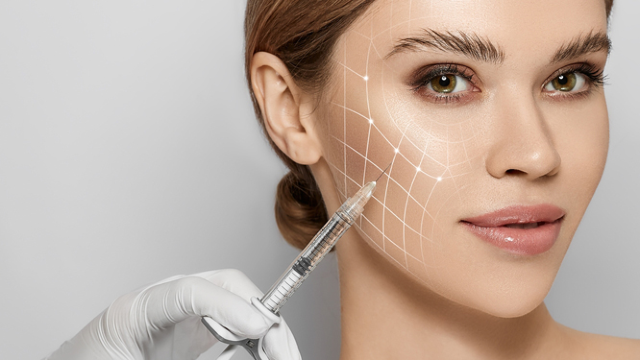
The difference between Botox and dermal filler is mechanism: one relaxes a muscle that creases skin, the other adds volume. Know which before your Seoul visit.
Learn More
Facial Contour Injection vs Dermal Filler: Jawline Guide
Facial contour injection reduces unwanted volume along the cheeks and jawline; dermal filler adds it. Compare candidacy, assessment, timelines and recovery.
Learn More