Cellier Clinic — Personalized Anti-Aging & Lifting Specialist Design Clinic in Gangnam, Seoul

Medical Guide
Stem Cell Therapy vs Skin Boosters and Biostimulators
Cellier Clinic documents a stem cell program, skin booster injections and a collagen booster. How their stated intents differ and how a clinician chooses.
Schedule a ConsultationStem Cell Therapy vs Skin Boosters and Collagen Biostimulators: Choosing a Regenerative Skin Treatment
Medically reviewed by Dr. Youm Junghyun, Specialist in General Surgery, Director of Cellier Clinic
Anyone weighing stem cell therapy vs skin booster treatment is usually hoping the comparison produces a winner. It does not, and the reason is visible in what Cellier Clinic in Gangnam-gu, Seoul says each one is for. The Stem Cell Program is described as regenerative care aimed at repair and regeneration. Skin Booster Injections are described as delivering moisturizing and skin-supporting ingredients for hydration, texture, and radiance. A Collagen Booster is described in terms of collagen production and natural volume formation. Three different intents, sitting inside one clinical conversation, is the honest shape of this decision, and this article sets out how that conversation runs.
Three stated intents, side by side
Start with what the clinic says each treatment is trying to do, because the rest of the comparison follows from it.
For the Stem Cell Program, Cellier describes support for cell regeneration, for the repair of damaged tissue, and for activation of cellular metabolism together with antioxidant and immune responses. For the localized Stem Cell Injection specifically, it lists improved elasticity, reduced wrinkles, and improved skin texture. For the whole-body Stem Cell Infusion, it states the aim is to promote regeneration of damaged tissue and immune recovery. The material is described as drawing on stem-cell-derived growth factors, cytokines, and antioxidant amino acids.
For Skin Booster Injections, Cellier describes a customized mixture of moisturizing and skin-supporting ingredients delivered into the skin, with claims covering hydration and moisture retention, skin texture, pores, relief for inflammatory skin concerns, radiance, and fine lines. The clinic describes the formulation as a customized hyaluronic acid-based booster cocktail selected for each patient's skin type.
For the collagen-stimulating end of that menu, the clinic describes collagen production and natural volume formation in connection with its Collagen Booster, within the broader face and integrated booster program.
Lay those three descriptions next to each other and the vocabulary separates cleanly. One speaks about regeneration and repair. One speaks about hydration and surface quality. One speaks about collagen and volume. A patient trying to decide which is strongest is comparing three different verbs.
What the stem cell program is aimed at
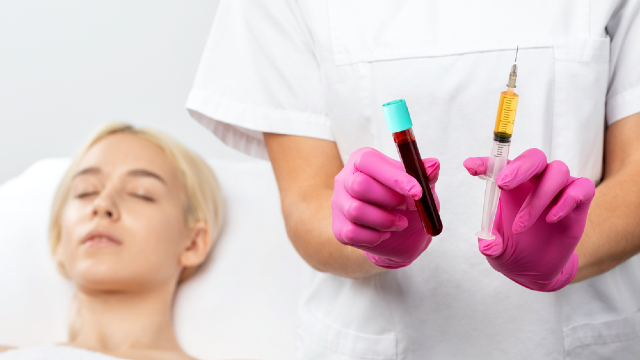
The Stem Cell Program is the only one of the three that the clinic describes in whole-body terms as well as local ones. It documents two administration routes: a localized Stem Cell Injection placed into a defined treatment area, and a Stem Cell Infusion given through an intravenous line over 20 to 30 minutes. Both begin with a blood draw of approximately 20 minutes.
Its stated scope is also the broadest. Cellier recommends the program for people wanting improvement in skin elasticity, wrinkles, rough texture, acne scars or skin damage, stubborn pigmentation, or scalp health and hair-loss concerns, with treatment areas that can include the crown, face, neck, full body, or another area you identify. Breadth of that kind is a reason to be careful rather than a reason to be impressed. It means the program is described as supporting several different concerns, so the clinic asks that you identify your primary treatment goal clearly during consultation.
MedlinePlus, the consumer service of the United States National Library of Medicine, explains that stem cells are unspecialized cells able to renew themselves and develop into more specialized types, and it is candid that a great deal of this field is still under research. That candor belongs in the comparison. The regenerative label describes a design intention, not a settled evidence base, and it is the one category here where that distinction has to be stated out loud.
What a skin booster is aimed at
Skin Booster Injections are aimed at the quality of the skin surface and the layer just beneath it, in areas the clinic names as the forehead, between the eyebrows, around the eyes, the cheeks, and the neck. Candidates, as the clinic describes them, are people whose skin is dehydrated, dull, rough, or uneven in texture, or who are concerned about visible pores, fine lines, or inflammatory skin.
Mechanically, it is a series of injections at multiple points across a treatment area, taking about 10 minutes, with anesthetic cream or a nerve block used to reduce discomfort. The formulation is customized to the individual rather than fixed, which is the part patients most often miss when they compare the treatment against a generic description of it.
The decision rule that separates a booster from a structural filler is a different question with a different answer, and it is covered in its own article on this site. What matters for this comparison is narrower: the booster's stated targets are hydration, texture, pores, radiance, and fine lines, and none of those is phrased in the language of repairing damaged tissue.
What collagen stimulation adds
The third intent is the one patients usually mean when they say biostimulator: a treatment whose stated purpose is to prompt the skin to produce collagen rather than to hydrate it or to place material where volume is missing. Cellier describes collagen production and natural volume formation in connection with its Collagen Booster, inside the wider face and integrated booster program.
Collagen-stimulating approaches at this clinic extend beyond injectables. Its Potenza microneedle radiofrequency treatment is described in terms of collagen induction and skin regeneration for pores, scars, and texture, which means an aim can sometimes be pursued by an entirely different mechanism. That is a useful thing to know before you assume a goal dictates a product.
The American Academy of Dermatology, in its overview of the many ways to firm sagging skin, makes the general point that several categories of procedure act on skin firmness through different mechanisms and suit different degrees of concern. Applied here, it explains why a clinic offers more than one route to what sounds like the same objective.
Where the three genuinely differ
Four differences do most of the practical work.
Where the treatment acts. Skin boosters and the collagen booster act on a defined area of skin. The stem cell program can do that through its injection route, and it can also act systemically through an intravenous infusion, which is not something a booster is described as doing at all.
What the stated goal is made of. Hydration and radiance are surface-quality goals. Collagen production and natural volume formation are structural goals. Regeneration of damaged tissue and immune recovery are whole-body goals. These are not three intensities of one idea.
What the assessment looks at. For boosters, the clinic describes evaluating skin condition, hydration, texture, pores, redness, and fine lines to set the treatment areas and the formulation. For the stem cell program, the assessment widens: the clinic names overall health and individual condition alongside your goals, and lists fatigue, sleep, hormone status, and inflammation markers among the factors it may consider. One assessment reads your skin; the other reads your skin and your general condition.
What the screening excludes. The clinic names acute systemic infection, active bleeding disorders, severe unmanaged medical conditions, and known sensitivities to injection procedures as reasons its stem cell program is not suitable, and states that Stem Cell Therapy requires a pre-treatment assessment. For boosters, it names active skin infection or inflammation at the treatment site, known allergies to the ingredients, and medical conditions that make injections unsuitable. Both screens exist, and they are not the same screen.
The longevity question, answered honestly
Patients often expect durability to break the tie. At this clinic it does not, because the stated figures land in the same place.
For the Stem Cell Program, Cellier expects a change to be felt approximately one to two weeks out, and puts the duration of effect at approximately three to six months, varying with individual skin condition. For Skin Booster Injections, it states that changes may begin to be felt around two weeks after treatment, with effects lasting approximately three to six months, again depending on individual skin condition.
Two treatments with different stated purposes, described with the same horizon. Which means the useful question is not which one lasts longer but which one is aimed at what you actually came in for. Duration is examined in more depth in its own article on this site.
What each asks of your calendar
Scheduling differs less than most patients expect, and knowing that keeps the decision on clinical ground.
The Skin Booster Injection session runs about 10 minutes, with downtime listed at approximately one to two weeks for bruising and redness at the injection points, cleansing and makeup from the following day, and a week without sauna, alcohol, or strenuous exercise. The Stem Cell Injection is also short, at approximately 10 minutes after the blood collection, and the clinic lists approximately one to two weeks of downtime for it as well; the Stem Cell Infusion allows an immediate return to daily activities. Recovery for the stem cell routes is set out in detail in its own article on this site.
So for the injectable options, the calendar is not the deciding factor. The infusion is the outlier, and it is an outlier because of where it acts rather than because it is gentler.
How the choice is actually made

By examination and conversation, in that order. Cellier states that consultation should cover indications, risks, benefits, alternatives, the number of treatments, and recovery before a cosmetic treatment proceeds. That list is the structure of the decision, and alternatives sitting inside it is the point: the clinic's own standard assumes more than one option will be discussed.
Dr. Youm Junghyun oversees the stem cell protocols and determines the appropriate combination of localized injection and intravenous infusion from a patient's skin condition and treatment goals, and all of the clinic's wellness and recovery treatments are performed under physician supervision. On the booster side, the clinician evaluates the skin and then sets both the treatment areas and the customized formulation. Neither pathway is a product selected in advance and then applied.
The most useful preparation is to arrive with your primary concern stated in ordinary words rather than in treatment names. Say that your skin looks dull and feels dry, or that a particular area has lost firmness, or that you are recovering slowly in general. A goal expressed that way can be matched to an intent. A goal expressed as a product name has already closed off the comparison before anyone examined you. Guidance from the American Academy of Dermatology on questions to ask before a cosmetic treatment covers the other half of the exchange: ask what is being used, what result is realistic, and what happens if a complication occurs. You can begin the conversation through the clinic's consultation page.
Whether they are combined
Sometimes, and the clinic is specific about which pairings it documents. Its own summary of complementary pairings lists lifting together with skin boosters, and hyperbaric oxygen therapy together with stem cell and intravenous therapy. The lifting-and-booster protocol is explained in its own article on this site.
What that tells you is that combination at this clinic is a documented clinical judgment rather than an open invitation to stack treatments. Any plan involving more than one of the three options here is a decision for a physician who has examined you and who has cleared you against each relevant screen separately, since passing one does not imply passing another.
The regulatory line that runs between these options
This is where the three categories stop being comparable on equal footing, and a patient traveling from the United States should hear it plainly.
The United States Food and Drug Administration states in its consumer information on regenerative medicine therapies that most products marketed under that heading are not approved by the agency, that many have not been reviewed for the safety or effectiveness of the uses being advertised, and that patients have been harmed. Its consumer alert covering regenerative products including stem cells and exosomes repeats the warning and asks readers to establish regulatory status before consenting. The agency also publishes plain guidance on what the terms approved, cleared, and registered actually mean, which is worth reading because those words are used loosely in aesthetic marketing everywhere.
Nothing in Cellier Clinic's Stem Cell Program is presented here as approved, cleared, proven, or curative, and it is not offered against any disease. No United States approval or clearance should be read into any treatment described on this page. Korean certification and United States regulation are separate systems, and one carries no information about the other.
The practical consequence for this comparison is a question rather than a conclusion. When a clinician proposes any of these options, ask what exactly would be administered, by which route, and what its status is under the system you are being treated in. A precise, unadorned reply tells you more about how a clinic operates than an enthusiastic one does. The clinic's about page describes the individualized planning it applies across its services.
The Bottom Line
- Cellier Clinic describes three different intents: a Stem Cell Program aimed at cell regeneration and repair of damaged tissue, Skin Booster Injections aimed at hydration, texture, pores, radiance, and fine lines, and a Collagen Booster described in terms of collagen production and natural volume formation.
- The stem cell program is the only one of the three with a whole-body route, delivered as an intravenous infusion over 20 to 30 minutes after a blood draw of approximately 20 minutes.
- Duration does not separate them: the clinic states approximately three to six months for both the stem cell program and its skin booster injections, varying with individual skin condition.
- The assessments differ, with booster planning reading the skin and stem cell planning also taking in overall health and factors such as fatigue, sleep, hormone status, and inflammation markers; each has its own exclusion list.
- The FDA states that most products marketed as regenerative medicine are not approved by the agency; nothing here is presented as approved, proven, or curative, and Korean and United States regulation are separate systems.
Frequently Asked Questions
Which is stronger, stem cell therapy or a skin booster?
They are not arranged on a scale of strength. Cellier describes the Stem Cell Program in terms of cell regeneration and repair of damaged tissue, and Skin Booster Injections in terms of hydration, texture, pores, radiance, and fine lines. The useful question at consultation is which stated intent matches your primary concern.
Do they last different lengths of time?
Not according to the clinic's own figures. It gives approximately three to six months for the Stem Cell Program, with changes felt at roughly one to two weeks, and approximately three to six months for Skin Booster Injections, with changes felt at around two weeks. Both are qualified as varying with individual skin condition.
What does the clinic mean by a collagen booster?
Cellier describes collagen production and natural volume formation in connection with its Collagen Booster, within the broader face and integrated booster program. That is a different stated purpose from a hydrating booster and from the regenerative program. Its Potenza microneedle radiofrequency treatment is also described in terms of collagen induction, so more than one mechanism can serve a similar aim.
Can I have more than one of these?
Combination is a physician's decision after examination rather than a patient's selection. The clinic's own summary of complementary pairings names lifting with skin boosters, and hyperbaric oxygen therapy with stem cell and intravenous therapy. Each treatment has its own suitability screen, and clearing one does not mean clearing another.
Is the stem cell option approved in the United States?
No approval should be inferred. The FDA states that most products marketed as regenerative medicine are not approved by the agency and advises patients to confirm a product's status before consenting. Korean certification and United States approval are separate systems, and a treatment offered in Seoul carries no American regulatory status.
How do I prepare for the consultation that decides this?
Bring your medical history, medications, supplements, allergies, and previous procedures, and state your primary concern in ordinary language rather than by product name. The clinic states that consultation should cover indications, risks, benefits, alternatives, the number of treatments, and recovery. The American Academy of Dermatology suggests also asking what is being used and what result is realistic.
Does the comparison change if my concern is general tiredness rather than my skin?
It changes which route is even relevant. The whole-body Stem Cell Infusion is described by the clinic as intended to promote regeneration of damaged tissue and immune recovery, and the stem cell assessment may take in fatigue, sleep, hormone status, and inflammation markers. Skin boosters are described only in terms of the skin, so a general-condition goal falls outside what they are aimed at.
This article is for general informational purposes and does not constitute individualized medical advice. Candidacy, technique, and expected outcomes can only be determined through a consultation with a qualified physician, and this article is not a self-diagnosis tool.
More Articles
Continue reading clinical insights and anti-aging guides from Cellier Clinic.
Can I Combine Botox, Filler and Skin Boosters in One Visit?
Combining Botox, filler and skin boosters in one visit to Korea is possible and planned together at Cellier Clinic. Here is what the appointment involves.
Learn More
Botox vs Dermal Filler: The Real Difference Explained
The difference between Botox and dermal filler is mechanism: one relaxes a muscle that creases skin, the other adds volume. Know which before your Seoul visit.
Learn More
Facial Contour Injection vs Dermal Filler: Jawline Guide
Facial contour injection reduces unwanted volume along the cheeks and jawline; dermal filler adds it. Compare candidacy, assessment, timelines and recovery.
Learn More