Cellier Clinic — Personalized Anti-Aging & Lifting Specialist Design Clinic in Gangnam, Seoul


Medical Guide
Stem Cell Therapy for Hair Loss: What Cellier Clinic Offers
Stem cell therapy for hair loss is not an approved treatment. Here is what Cellier Clinic states its scalp program supports, and why diagnosis comes first.
Schedule a ConsultationCan Stem Cell Therapy Help With Hair Loss and Scalp Health? What Cellier Clinic Offers
Medically reviewed by Dr. Youm Junghyun, Specialist in General Surgery, Director of Cellier Clinic
A careful answer to whether stem cell therapy helps with hair loss starts here: Cellier Clinic in Seoul lists scalp health and hair-loss concerns among the things its Stem Cell Program is intended to support, and that is a statement of intent rather than evidence of effect. Hair loss is not one condition; it is a group of conditions with different causes, different courses, and different established treatments. This article explains what the clinic documents for the scalp, what the United States Food and Drug Administration says about regenerative products generally, and why a diagnosis has to come before any decision about a regenerative treatment abroad.
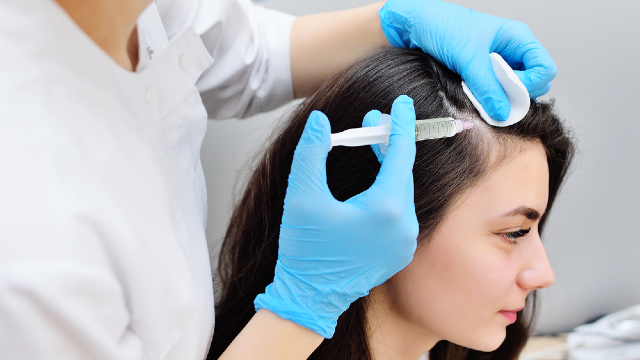
What does Cellier Clinic state about the scalp?
The clinic presents its Stem Cell Program as regenerative care with several stated aims, and scalp health alongside hair-loss concerns is one of them. The rest of that list covers skin elasticity, wrinkles, rough skin texture, acne scars with skin damage, and pigmentation. Treatment areas the clinic names can include the crown, the face, the neck, the full body, or another desired area, and the crown is where a scalp application would sit. The materials named are stem-cell-derived growth factors, cytokines, and antioxidant amino acids.
Nothing in that description promises regrowth, density, or a halt to shedding, and you should be wary of anyone who translates it into those words for you. The clinic recommends the program for people who want to improve concerns including scalp health and hair loss, and it asks that you identify your primary treatment goal clearly during the consultation if you are pursuing it for scalp reasons. The honest reading is that this is offered as supportive care within a broader regenerative program, sitting alongside rather than instead of the diagnostic and treatment pathway described below.
Why does hair loss need a diagnosis first?
Because the label on your hair loss determines what will actually help. The American Academy of Dermatology describes several distinct types, and they behave differently. Hereditary hair loss, the most common form, follows a recognizable pattern and progresses gradually. Alopecia areata involves the immune system attacking hair follicles and typically produces round patches of loss. Shedding that follows childbirth, surgery, a high fever, severe stress, or significant weight loss is a temporary phenomenon that usually resolves once the trigger has passed. Traction alopecia comes from sustained pulling by tight hairstyles. Scarring forms of hair loss destroy the follicle permanently, which makes early recognition urgent in a way the others are not.
The Academy also notes that hair loss can be a signal of something systemic, including thyroid disease, nutritional deficiency, or a reaction to a medication. MedlinePlus, from the United States National Library of Medicine, makes the same point in its overview of hair loss, describing causes that range from hormonal changes and illness to medical treatments. A regenerative treatment applied to the crown does nothing about a thyroid problem, an iron deficiency, or a medication side effect. If one of those is driving your hair loss, the treatment you need is a different one entirely, and the time spent traveling for something else is time the underlying cause keeps working.
What does established treatment for hair loss look like?
The American Academy of Dermatology describes a treatment pathway that begins with identifying the type of hair loss and then matching it to a therapy with evidence behind it. Topical minoxidil is the widely available option for hereditary hair loss. Prescription medication may be appropriate depending on the type of loss and the patient. Corticosteroid injections into the scalp are used for alopecia areata. Surgical hair restoration is an option for suitable candidates with pattern loss, and the Academy notes that treatment works best when it begins early, before follicles are lost.
The Academy also sets expectations plainly: treatment takes months before any change is assessable, and stopping a treatment that is working generally means the benefit fades. That timescale is worth holding next to the timelines a regenerative program describes, because they measure different things. If you have never had your hair loss assessed by a dermatologist, that assessment is the highest-value step available to you, and it is available without a flight. The Academy's explanation of what a dermatologist does is a useful place to start if you are unsure who to see.
What does the FDA say about regenerative products for conditions like this?
In its consumer information about regenerative medicine therapies, the FDA reports that approval has reached only a handful of products in this broad category, and that much of what is marketed has never been reviewed for the safety or effectiveness of the advertised use. The agency's consumer alert on regenerative products that include stem cells and exosomes goes further still, describing patients who came to serious harm after receiving unapproved material, and telling readers to pin down regulatory status before consenting.
Applied to hair loss, that means no clinic anywhere should describe a stem-cell-derived preparation to you as an approved, cleared, or proven treatment for any form of alopecia, and Cellier does not describe its program that way. It also means the burden of questioning sits with you. Ask what is being administered, what its status is under Korean regulation, and what would happen if you had a problem after returning home. Korean certification and United States approval are separate systems, and neither substitutes for the other.
How is the scalp treatment delivered at this clinic?
Two routes exist within the program, and the consultation decides between them for each patient: a Stem Cell Injection applied locally, and a Stem Cell Infusion given for the whole body. Roughly twenty minutes goes to blood collection. The clinic states that the injection may be given with anesthetic cream or a nerve block, which is relevant to the scalp because it is a sensitive area and patients reasonably want to know what comfort measures exist.
For the injection route the clinic lists approximately one to two weeks of downtime, and states that temporary redness or swelling may occur and usually settles within one to two days. Its aftercare guidance asks you to keep the treated area clean, use sunscreen without gaps, and stay away from sauna, alcohol, and hard exercise for a week. For a scalp treatment, plan around that week rather than against it. You can raise the practical details with the clinic through its contact and booking page before you fix any travel dates.
Who does the clinic say should not have this program?
Cellier states that the program does not suit people who have an acute systemic infection, a bleeding disorder that is active, severe medical conditions that are not under control, or a known sensitivity to injection procedures. Patients are asked to supply medical history, medications, allergies, previous procedures, and relevant health information before treatment, and advises that prescription medications should never be stopped without medical advice.
There is a scalp-specific reason to take the screening seriously. A scalp that is actively inflamed, infected, or affected by a condition that has not been diagnosed is not a scalp that should receive an elective injection. Assessment exists to catch that, and being told the timing is wrong is a useful outcome rather than a wasted consultation.
What can you realistically expect from the timeline?

According to the clinic, changes are expected to be felt about one to two weeks afterward, and the stated duration of effect is three to six months, varying with individual condition. Those figures describe the clinic's expectation for its program overall, not a measurement of hair density.
Set that against what hair biology permits. Hair grows slowly, in cycles, and any change in growth is assessable only over months, which is exactly why the American Academy of Dermatology tells patients that established hair loss treatments require patience before they can be judged. A short-horizon expectation and a long-horizon biology are a poor match, and the sensible way to hold both is to treat any regenerative component as one part of a longer plan supervised by someone who can examine your scalp, rather than as the plan itself.
How would you combine this with treatment you already use?
Tell both sides. If you are using minoxidil, taking a prescription medication for hair loss, or receiving injections for alopecia areata, the treating physician in Seoul needs to know, and your prescribing clinician at home needs to know what you are considering. The clinic asks for a full medication list as part of preparation precisely so that these conversations happen before rather than after.
Do not treat a trip abroad as a reason to pause something that is working. The Academy is explicit that benefit from established hair loss treatment generally fades when treatment stops, so interrupting a working regimen to try something else can cost you ground that is hard to recover. A regenerative program described as supportive care should be additive to a plan, never a replacement for one.
What should you ask before you book?
Ask who performs the treatment and who assesses you. At Cellier, the program is overseen by Dr. Youm Junghyun, Director of the clinic and a specialist in General Surgery. Ask what exactly is being administered and what its regulatory status is. Ask what the physician expects and what would count as no change. Ask how follow-up works once you are home and what symptoms would prompt contact.
The Academy's page on questions to ask before a cosmetic treatment covers similar ground, and it is worth reading ahead of any consultation, in Seoul or at home. MedlinePlus similarly encourages patients to prepare questions in advance and to ask for plain-language explanations when an answer is technical. Cellier's clinic background page describes the individualized planning approach it applies across its services, which is a reasonable thing to ask it to demonstrate in your own case.
The Bottom Line
- Cellier Clinic lists scalp health and hair-loss concerns among what its Stem Cell Program is intended to support, and names the crown among possible treatment areas. That is a statement of intent, not evidence of regrowth.
- Hair loss has diagnosable causes, including hereditary pattern loss, alopecia areata, temporary shedding, traction, scarring forms, and systemic causes such as thyroid disease or nutritional deficiency. Diagnosis belongs with a clinician who can examine your scalp.
- The American Academy of Dermatology describes established treatments matched to the type of loss, and notes that they take months to assess and that benefit generally fades if treatment stops.
- Most regenerative medicine products carry no FDA approval for the uses they are marketed for, the agency states, and it advises checking status before treatment.
- The clinic documents downtime of about one to two weeks for the injection route, changes felt in that same window, and an effect duration given as three to six months.
Frequently Asked Questions
Does Cellier Clinic offer its Stem Cell Program for the scalp?
Yes. The clinic lists scalp health and hair-loss concerns among the areas its Stem Cell Program is intended to support, and names the crown among the treatment areas it can address. The consultation determines whether the localized injection or the whole-body infusion is appropriate, and the clinic asks you to state your primary goal clearly if the scalp is your reason for coming.
Is this an approved treatment for hair loss?
It should not be. Only a limited number of products in this category hold FDA approval, and much of what is marketed has never been evaluated for the use it is advertised under, according to the agency. Korea and the United States regulate separately, and an offering in Seoul therefore carries no American status.
Should I see a dermatologist before considering this?
Yes, and ideally before booking any travel. The American Academy of Dermatology describes several distinct types of hair loss with different treatments, and notes that hair loss can also signal a thyroid problem, a nutritional deficiency, or a medication effect. Knowing which one you have changes what is worth doing.
Is anesthesia used for a scalp injection?
The clinic states that anesthetic cream or a nerve block may be used for its Stem Cell Injection. The infusion route is described as using no anesthesia. Raise comfort during the consultation, since the scalp is a sensitive area and the answer should be specific to your plan.
How long is the downtime?
For the Stem Cell Injection the clinic lists roughly one to two weeks, with temporary redness or swelling usually settling inside one to two days. After the infusion, daily activities can be resumed immediately. Its aftercare asks for a week without sauna, alcohol, or hard exercise.
Can I continue my current hair loss treatment?
Tell both clinicians what you are using and let them decide together. The clinic asks for a full list of medications, supplements, and previous procedures as part of preparation, and advises that prescription medications should not be stopped without medical advice. The Academy notes that established treatments generally lose their benefit when discontinued.
Who should not have this program?
Cellier names acute systemic infection, an active bleeding disorder, severe conditions that are not under control, and known sensitivity to injection procedures as reasons the program does not suit someone. An actively inflamed or undiagnosed scalp condition is a reason to pause and get it assessed rather than to proceed.
This article is for general informational purposes and does not constitute individualized medical advice. Candidacy, technique, and expected outcomes can only be determined through a consultation with a qualified physician, and this article is not a self-diagnosis tool.
More Articles
Continue reading clinical insights and anti-aging guides from Cellier Clinic.

Can I Combine Botox, Filler and Skin Boosters in One Visit?
Combining Botox, filler and skin boosters in one visit to Korea is possible and planned together at Cellier Clinic. Here is what the appointment involves.
Learn More
Botox vs Dermal Filler: The Real Difference Explained
The difference between Botox and dermal filler is mechanism: one relaxes a muscle that creases skin, the other adds volume. Know which before your Seoul visit.
Learn More
Facial Contour Injection vs Dermal Filler: Jawline Guide
Facial contour injection reduces unwanted volume along the cheeks and jawline; dermal filler adds it. Compare candidacy, assessment, timelines and recovery.
Learn More