Cellier Clinic — Personalized Anti-Aging & Lifting Specialist Design Clinic in Gangnam, Seoul

Medical Guide
Stem Cell Therapy for Acne Scars: Realistic Expectations
Stem cell therapy for acne scars is offered as supportive care, not scar removal. What Cellier Clinic documents, and what the FDA cautions about the category.
Schedule a ConsultationStem Cell Therapy for Acne Scars and Skin Damage: What Results Can You Realistically Expect?
Medically reviewed by Dr. Youm Junghyun, Specialist in General Surgery, Director of Cellier Clinic
Acne scars and skin damage appear on Cellier Clinic's list of what its Stem Cell Program in Seoul is intended to support, and that phrasing is deliberately narrower than what most patients arrive hoping for. Stem cell therapy for acne scars is offered here as part of a regenerative program aimed at skin quality, not as a procedure that removes scarring. This article sets out what the clinic documents, what scars are and why they behave the way they do, what the United States Food and Drug Administration says about this category of product, and how to think about the word "realistic" without either dismissing the option or overreading it.

What does the clinic document for acne scars and skin damage?
The clinic's own description is a list rather than a claim. Its Stem Cell Program is presented as regenerative care directed at skin elasticity, at wrinkles, at rough texture, at acne scars together with skin damage, at pigmentation, and at scalp health. It recommends the program to people seeking improvement in rough texture or in acne scarring and skin damage, and the treatment areas it names can include the face, the neck, the crown, the full body, or another desired area. What the preparation contains is given as stem-cell-derived growth factors, cytokines, and antioxidant amino acids.
For the localized Stem Cell Injection specifically, the clinic lists improved elasticity, wrinkle reduction, and improved skin texture. Texture is the word that carries most of the weight for a patient asking about scarring, and it is a narrower claim than scar correction. Read the whole description as a statement of what the program is aimed at supporting. It is not a regulatory finding, and it should not be presented to you as one.
What is a scar, and why does that shape expectations?
A scar is the tissue your body builds to close an injury, and MedlinePlus, from the United States National Library of Medicine, describes it as a normal part of healing rather than a flaw in it. The replacement tissue is structurally different from the skin around it: the collagen is laid down in a different arrangement, and the result does not fully match the original in texture, reflectivity, or color. That structural difference is why scars are durable, and why treatment aims at appearance rather than erasure.
Acne scarring takes more than one form. The American Academy of Dermatology describes depressed scars, where tissue sits below the surrounding surface, and raised scars, where the healing response produced too much tissue. Discoloration left behind after a lesion clears is a third thing again, and often fades on its own over months even though patients experience it as scarring. The distinction matters because the three respond to different approaches, and a treatment aimed at general skin quality is not a substitute for a plan matched to what you actually have.
What does "realistic" mean here?
It means improvement in appearance, assessed against your own starting point, with no expectation of removal. The American Academy of Dermatology is consistent on this across its scar content: procedures can make scars less noticeable, and the goal is reduction rather than elimination. The clinic's own published disclaimer language makes a compatible point, stating that individual results vary and that suitability, expected results, and recovery time depend on each patient's skin condition and medical assessment.
There is a second sense of realistic that matters more than most patients expect. A single treatment of any kind rarely settles textural damage that took years to form. Where a clinic describes a stated duration of effect, as Cellier does at approximately three to six months, you are being told about a recurring conversation rather than a one-time correction. Plan for a course, plan for review, and treat any single appointment as one data point rather than the verdict.
Where does this sit alongside energy-based scar treatment?
Alongside, not instead of. Cellier also offers Potenza radiofrequency microneedling within its Pore and Scar Treatment for patients whose concern is texture and scarring, and that is a different mechanism with a different evidence conversation. The American Academy of Dermatology describes microneedling as a procedure that can fade certain scars over a series of sessions, and separately explains what patients should understand before laser treatment for a scar, including that several sessions are usual and that results depend on the scar type and on the skin being treated.
The practical consequence is that these options are usually discussed together rather than ranked. A physician examining your skin may propose an energy-based approach for the structural component, a regenerative component aimed at skin quality, and a plan for any residual discoloration, sequenced over months. What you should resist is any framing that presents a regenerative program as a way to skip the assessment that decides which of those your skin actually needs. You can see how the clinic presents documented outcomes on its before and after page.
What does the FDA say about this category?
Consumer information published by the FDA on regenerative medicine therapies puts the number of approved products in this category at a small one, and notes that a great deal of what reaches patients has had no review of safety or effectiveness for the advertised use. A separate consumer alert from the agency, covering regenerative products that include stem cells and exosomes, recounts serious harm among patients who received unapproved material and tells readers to establish regulatory status before they consent.
For scarring specifically, that caution reduces to one sentence you can carry with you: a preparation of this kind should never be presented to you as approved, cleared, or demonstrated therapy for acne scarring, and Cellier does not present its program that way. The agency also explains how to report an adverse event that follows one of these regenerative products, and that is better learned before a trip than after a problem. Korean certification and United States approval are separate systems, and one never implies the other.
What does the appointment involve?
Two routes are documented, and the consultation chooses between them: a Stem Cell Injection given locally and a Stem Cell Infusion given for the whole body. Around twenty minutes is set aside for the blood draw. Treatment time is roughly ten minutes on the injection route, while the infusion route runs an intravenous drip of twenty to thirty minutes instead. The clinic notes anesthetic cream or a nerve block as options for the injection, with none used for the fluid route.
Downtime on the injection route is listed at approximately one to two weeks. Redness or swelling, where it occurs, is temporary and usually settles inside one to two days; facial cleansing and makeup can start the following day. The clinic's instructions for that first week are to skip sauna, alcohol, and hard exercise, keep the area clean, and use sunscreen without gaps. If you are traveling, that week belongs in the plan rather than at its edges, and you can settle the details through the clinic's contact and booking page.
Does active acne change the picture?
Yes, and this is the most common sequencing mistake. MedlinePlus describes acne as a condition in which clogged follicles produce lesions, and notes that the most significant long-term consequence is scarring. Treating scars while acne is still producing new lesions means chasing a target that keeps moving. Cellier's own acne care description makes the same point in a different way, presenting the goal as clearing existing acne, preventing new breakouts, and minimizing the risk of permanent scarring and post-inflammatory discoloration.
The clinic also rules the program out for anyone with an acute systemic infection, an active bleeding disorder, severe conditions that are not being managed, or a known sensitivity to injection procedures. Active inflammation on the skin you want treated is a reason to settle the acne first with a clinician who can prescribe for it, then revisit the texture question once the surface is stable. That order costs you time and saves you from treating a moving problem.
How will you know whether anything changed?
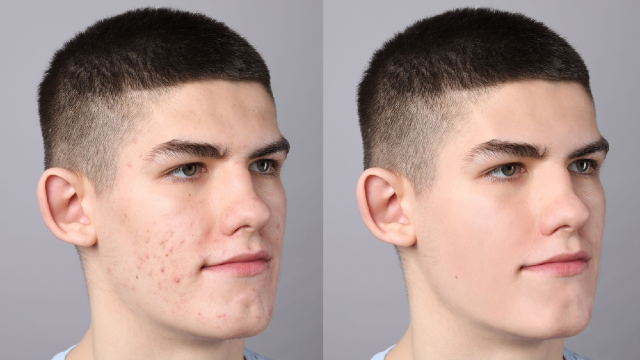
Photograph the same area, in the same light, at the same angle, before you start. Textural change is gradual and your daily reflection is a poor instrument for detecting it, which is why standardized photographs are the honest comparison. The clinic expects changes to be felt somewhere around one to two weeks after treatment, so a review at that distance is reasonable.
Be specific with yourself about what you are measuring. Smoother-looking texture, more even light reflection, and skin that takes makeup differently are the kinds of change this class of treatment is aimed at supporting. A depressed scar that has filled in is a different and much larger claim. Bringing that precision to the consultation helps the physician tell you plainly whether your goal matches what is on offer, and the clinic's patient reviews page gives another angle on what patients report.
What should you ask before agreeing?
Ask what type of scarring you have and whether the plan addresses that type. Ask what exactly is being administered and what regulatory status it holds. Ask what the physician expects to change, over what period, and what would count as no change. Ask what happens if a problem develops after you return home and who you contact.
Guidance from the American Academy of Dermatology on what to ask before a cosmetic treatment covers similar territory and makes a good rehearsal. At this clinic that is Dr. Youm Junghyun, Director of Cellier Clinic and a specialist in General Surgery, who performs the assessment and oversees the program. A physician who answers narrowly and without embellishment is giving you better information than one who answers expansively.
The Bottom Line
- Cellier Clinic lists acne scars and skin damage among what its Stem Cell Program is intended to support, and lists improved texture, elasticity, and wrinkle reduction for the injection route. These are statements of intent, not scar removal.
- Scar tissue is structurally different from the skin around it, which is why the American Academy of Dermatology frames scar treatment as making scars less noticeable rather than eliminating them.
- Most regenerative products are not FDA-approved for what they are marketed to do, the agency states, and it advises checking a product's status first.
- Energy-based scar treatment, including the radiofrequency microneedling the clinic also offers, is usually discussed alongside a regenerative component rather than replaced by it.
- Settle active acne first, photograph your starting point, and plan around the approximately one to two weeks of downtime the clinic lists for the injection route.
Frequently Asked Questions
Can stem cell therapy remove acne scars?
Cellier describes its Stem Cell Program as intended to support concerns including acne scars and skin damage, and lists improved skin texture, elasticity, and wrinkle reduction for the injection route. That is a skin-quality claim rather than scar removal. The American Academy of Dermatology frames scar treatment generally as reducing how noticeable a scar is.
Is this program approved for treating scars?
It should not be presented that way. Approval in this category extends to only a limited number of products, and the agency warns that much of what is marketed has had no evaluation for the advertised use. Korea and the United States run separate regulatory systems, so a Seoul program holds no American status.
How does it compare with radiofrequency microneedling?
They are different mechanisms and are usually discussed together rather than ranked against each other. The clinic offers Potenza radiofrequency microneedling within its Pore and Scar Treatment for texture and scarring, and a physician who has examined your skin is the right person to say which components belong in your plan and in what order.
What kind of change should I look for?
Look for smoother-looking texture and more even light reflection rather than the disappearance of a scar. Photograph the same area in the same light before you begin, since gradual textural change is difficult to judge from memory. The clinic puts the point at which changes are felt at roughly one to two weeks.
How long do the described effects last?
The clinic puts the stated duration of effect at three to six months, varying with individual skin condition. Read it as a signal of how often the subject comes back around, not as a forecast for your skin, and expect a course with review rather than one appointment.
Should I treat my acne first?
Yes. MedlinePlus notes that scarring is the most significant long-term consequence of acne, and treating texture while new lesions are still forming means working against a moving target. The clinic's own acne care approach is built around clearing existing acne and reducing the risk of permanent scarring and discoloration.
What is the downtime for the injection route?
Approximately one to two weeks is the figure the clinic gives for its Stem Cell Injection. Redness or swelling usually settles inside one to two days, cleansing and makeup resume the following day, and the first week excludes sauna, alcohol, and hard exercise while sunscreen is used without gaps.
Who should not have this treatment?
The clinic excludes anyone with an acute systemic infection, an active bleeding disorder, severe conditions that are not being managed, or a known sensitivity to injection procedures. Suitability is settled through individual assessment, and being told to wait is a legitimate outcome of that screening.
This article is for general informational purposes and does not constitute individualized medical advice. Candidacy, technique, and expected outcomes can only be determined through a consultation with a qualified physician, and this article is not a self-diagnosis tool.
More Articles
Continue reading clinical insights and anti-aging guides from Cellier Clinic.

Can I Combine Botox, Filler and Skin Boosters in One Visit?
Combining Botox, filler and skin boosters in one visit to Korea is possible and planned together at Cellier Clinic. Here is what the appointment involves.
Learn More
Botox vs Dermal Filler: The Real Difference Explained
The difference between Botox and dermal filler is mechanism: one relaxes a muscle that creases skin, the other adds volume. Know which before your Seoul visit.
Learn More
Facial Contour Injection vs Dermal Filler: Jawline Guide
Facial contour injection reduces unwanted volume along the cheeks and jawline; dermal filler adds it. Compare candidacy, assessment, timelines and recovery.
Learn More