Cellier Clinic — Personalized Anti-Aging & Lifting Specialist Design Clinic in Gangnam, Seoul

Medical Guide
Stem Cell Injection vs Infusion: Choosing Your Route
Stem cell injection vs infusion at Cellier Clinic: the localized route is aimed at skin concerns, the IV route at whole-body support. Here is how to choose.
Schedule a ConsultationStem Cell Injection vs Stem Cell Infusion: How Cellier Clinic Decides Which Is Right for You
Medically reviewed by Dr. Youm Junghyun, Specialist in General Surgery, Director of Cellier Clinic
The choice between stem cell injection vs stem cell infusion at Cellier Clinic comes down to where the material is placed and what it is aimed at. The localized Stem Cell Injection is placed into a specific area you want to change, and the clinic lists elasticity, wrinkles and skin texture as what it is intended to address there. The whole-body Stem Cell Infusion is delivered through an IV line, and the clinic describes it as intended to promote damaged-tissue regeneration and immune recovery rather than to alter one patch of skin. Which one suits you is decided in consultation, and this article explains the reasoning that sits behind that decision.
What Cellier Clinic's Stem Cell Program Actually Is
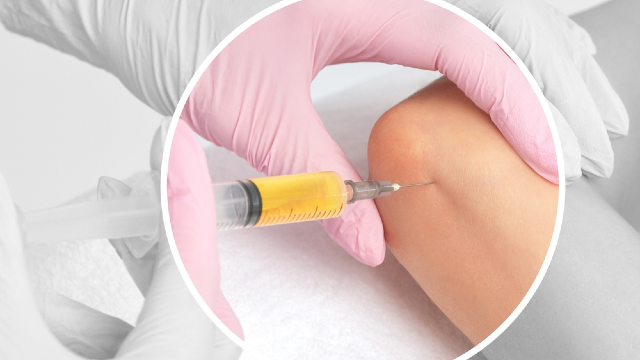
Cellier Clinic describes its Stem Cell Program as a regenerative program, not as a treatment for any disease. The clinic states that it is intended to support elasticity and wrinkles, the texture of the skin, acne scars and other skin damage, concerns about pigmentation, and scalp health where hair loss is the issue. It describes the material used as drawing on stem-cell-derived growth factors, cytokines and antioxidant amino acids, and it describes its stem cell materials as autologous or approved stem cell materials. Treatment areas can include the crown of the scalp, the face, the neck, the full body, or another area you identify as your priority.
Both routes begin the same way. For the injection, the clinic lists roughly 20 minutes for blood collection. For the infusion, it lists roughly 20 minutes for blood extraction. What happens after that blood draw is the entire substance of the decision.
The US National Library of Medicine's MedlinePlus explains that stem cells are unspecialized cells with two unusual properties: they can renew themselves, and they can develop into more specialized cell types. MedlinePlus is also clear that a great deal of the field remains a subject of active research rather than settled clinical practice. That framing is worth holding on to as you read the rest of this page, because it sets the register for what any clinic, including this one, can honestly say.
What the Localized Stem Cell Injection Is Aimed At
The injection route is aimed at a defined area of skin or scalp that you can point to. Cellier lists improved elasticity, wrinkle reduction and improved skin texture as what it intends for the Stem Cell Injection, and its program description names acne scars and skin damage, stubborn pigmentation, and scalp and hair-loss concerns among the reasons patients ask about it.
The defining feature of this route is that placement matters. The material is delivered into the area under treatment, which is why the clinic lists anesthetic cream or a nerve block as options for comfort during the session, and why it reports temporary redness or swelling afterward that usually settles within one to two days. Cellier lists approximately 10 minutes of treatment time following the blood collection, so the whole appointment is short; the clinic advises allowing about 30 minutes for collection plus treatment together.
If your concern is describable in terms of a place — this area of the cheek, this band across the neck, this part of the crown — the injection is the route that can be aimed at it.
What the Whole-Body Stem Cell Infusion Is Aimed At
The infusion route is aimed at your general condition rather than at one location. Cellier states that the Stem Cell Infusion is intended to promote damaged-tissue regeneration and immune recovery, and it describes the program overall as supporting cell regeneration, repair of damaged tissue, and activation of cellular metabolism and of antioxidant and immune responses.
Practically, the infusion follows the roughly 20-minute blood extraction with a 20 to 30 minute IV infusion. No anesthesia is used, because there is no treated skin area to numb — only the IV access itself. Because nothing is placed into a cosmetic treatment area, there is no local site to protect afterward, and the clinic states that patients resume daily activities immediately.
The honest description of this route is that it addresses a systemic goal. It is not aimed at a wrinkle. If what brought you to the consultation is a specific line or scar, the infusion by itself is unlikely to be the answer to that specific question.
The Factors That Point Toward One Route or the Other
Cellier states that the consultation weighs your general health, what you want the treatment to do, and your individual condition, and that from those it determines which of the two routes — the localized injection or the whole-body infusion — is the more appropriate one. It adds that the assessment may take in fatigue, sleep, hormone status and inflammation markers before an approach is settled. Those four named factors are the clearest signal in the clinic's own material about how the two routes are distinguished.
Whether your goal has an address. The first question is whether your primary concern can be located. Elasticity in a defined zone, a wrinkle pattern, texture on a particular area, a scar, a patch of pigment, thinning at the crown — these have addresses. Fatigue, general recovery capacity and immune resilience do not. Cellier's own framing separates the localized route from the whole-body route on exactly this line.
Fatigue and sleep. Fatigue and sleep appear in the clinic's stated assessment because they describe a whole-body state rather than a skin finding. A patient whose main complaint is a fine-line pattern and a patient whose main complaint is persistent tiredness are not describing the same problem, and the clinic's material treats them as pointing in different directions.
Hormone status and inflammation markers. Hormone status and inflammation markers are also listed among the factors reviewed before a route is chosen. They are systemic measures; they say something about the body's overall environment rather than about a particular square inch of skin.
What screening may rule out first. Before route selection comes eligibility. Cellier lists acute systemic infections, active bleeding disorders, severe unmanaged medical conditions and known sensitivities to injection procedures among the situations in which its Stem Cell Program is not suitable, and the clinic states that Stem Cell Therapy requires a pre-treatment assessment. That screen is examined in its own right elsewhere on this site and is settled before any comparison of routes becomes relevant.
When the Two Are Combined
The two routes are not mutually exclusive. Cellier states that Dr. Youm Junghyun oversees all of the clinic's Stem Cell Therapy protocols and determines the appropriate combination of injection and IV infusion based on the patient's skin condition and treatment goals. The clinic's own summary of what Stem Cell Therapy involves describes it as combining localized injection and IV infusion of stem cell materials.
So the consultation question is not always "which one." It can be "in what combination, and in what order." A patient with both a located skin concern and a general recovery goal may be offered both; a patient with only one of the two may be offered only the route that matches it. All wellness and recovery treatments at the clinic are performed under physician supervision, which is the mechanism by which that judgment is made rather than left to a menu.
What Each Route Asks of You in Practical Terms
Two practical differences follow directly from the choice, and both belong in the decision.
The first is comfort. The injection may use anesthetic cream or a nerve block; the infusion uses no anesthesia. The clinic's own description of discomfort is modest for both: needle discomfort, pressure or soreness for injection-based treatment, and brief discomfort at IV insertion with possible site soreness for the infusion.
The second is the aftermath. For the injection, Cellier puts downtime at roughly one to two weeks; for the infusion, it states that daily activities resume right away. That gap is large enough to influence the decision for anyone with a fixed schedule, and it is examined in detail in its own article on this site rather than repeated here.
What the FDA Says You Should Ask Before Either Route

This is the part of the decision that no clinic can make for you, and it deserves your attention as much as the clinical comparison does.
The US Food and Drug Administration has published direct consumer guidance on regenerative medicine therapies, and its position is unambiguous: most products marketed as regenerative medicine, including products described in terms of stem cells and exosomes, are not FDA-approved. The FDA's consumer alert on regenerative medicine products warns that patients have experienced serious harm from unapproved products, including infections and other adverse events, and it advises consumers to ask directly whether a product is FDA-approved or is being studied under an authorized investigational application.
Cellier Clinic's Stem Cell Program is not presented here as FDA-approved, FDA-cleared, proven or curative, and it is not offered as a treatment for any disease. The FDA also maintains a page explaining how to report adverse events related to stem cell, exosome and other products marketed as regenerative, which is worth knowing about before you travel rather than after. Korean certification and US regulatory status are separate systems, and a treatment being lawfully offered in Seoul tells you nothing about its status in the United States.
The American Academy of Dermatology's guidance on questions to ask before a cosmetic treatment fits the same moment. The AAD advises asking who will perform the procedure, what their training is, what results are realistic, what the recovery involves and what the risks are — and treating vagueness in the answers as information in itself. MedlinePlus's guidance on talking with your doctor makes the complementary point that writing your questions down in advance is what stops you from leaving with them unasked.
What the Clinic Describes About Timing and Duration
Whichever route is chosen, the expectation the clinic sets is the same in shape. Cellier states that changes are expected to be felt approximately one to two weeks after treatment, and lists a duration of effect of approximately three to six months, varying with individual skin condition. That is a maintenance framing, not a permanent one, and it should be part of how you weigh the decision rather than a surprise afterward.
MedlinePlus's healthy aging material is a useful counterweight here. The habits with the strongest evidence behind them for how you age — physical activity, sleep, nutrition, not smoking, sun protection — sit outside any clinic, and no in-clinic program substitutes for them. A treatment plan is a supplement to that baseline, not a replacement for it.
If you want to open the conversation about which route fits your goals, you can start through the clinic's consultation page, and the clinic's about page describes how it approaches planning across treatments.
The Bottom Line
- Cellier Clinic's localized Stem Cell Injection is aimed at a defined area, with elasticity, wrinkle and skin-texture goals; the whole-body Stem Cell Infusion is delivered by IV and is described as intended to promote damaged-tissue regeneration and immune recovery.
- The clinic states that the consultation evaluates overall health, treatment goals and individual condition, and may take in fatigue, sleep, hormone status and inflammation markers before selecting a route.
- The two are not exclusive: Dr. Youm Junghyun determines the appropriate combination of injection and IV infusion based on skin condition and treatment goals.
- The FDA states that most products marketed as regenerative medicine are not FDA-approved and advises patients to ask directly about a product's regulatory status; this program is not presented as approved, proven or curative, and is not a treatment for disease.
- The clinic describes changes felt at roughly one to two weeks and a duration of effect of about three to six months, which makes this a maintenance decision rather than a one-time one.
Frequently Asked Questions
What is the core difference between the injection and the infusion?
Placement and aim. The Stem Cell Injection is delivered into a specific treatment area and Cellier lists elasticity, wrinkle and skin-texture goals for it. The Stem Cell Infusion is delivered through an IV line over 20 to 30 minutes and is described by the clinic as intended to promote damaged-tissue regeneration and immune recovery.
Does the blood draw happen for both routes?
Yes. Cellier lists approximately 20 minutes of blood collection before the injection and approximately 20 minutes of blood extraction before the infusion. The clinic describes its stem cell materials as autologous or approved stem cell materials.
Can I have both in one treatment plan?
The clinic states that Dr. Youm Junghyun determines the appropriate combination of injection and IV infusion based on your skin condition and treatment goals, and describes the program as combining localized injection and IV infusion. Whether a combination applies to you is a consultation decision made under physician supervision.
Which areas can the injection treat?
Cellier lists the crown of the scalp, the face, the neck, the full body, or another area you identify as your goal. The clinic asks that you clearly identify your primary treatment goal during consultation if you are pursuing the program for pigmentation, scars, skin aging or scalp concerns.
Is this program FDA-approved?
No, and it is not presented as such. The FDA states that most products marketed as regenerative medicine, including those described in terms of stem cells and exosomes, are not FDA-approved, and it encourages patients to ask directly whether a product is approved or is being studied under an authorized investigational application.
What should I bring to the consultation to make the decision easier?
Your medical history, current medications, supplements, allergies, previous procedures and relevant health conditions, along with a clearly stated primary goal. MedlinePlus advises writing your questions down beforehand, and the American Academy of Dermatology suggests asking who performs the treatment, what results are realistic and what the risks are.
How long do the described effects last?
Cellier lists a duration of effect of approximately three to six months, varying with individual skin condition, with changes expected to be felt at roughly one to two weeks. Individual responses vary, and no outcome is guaranteed.
This article is for general informational purposes and does not constitute individualized medical advice. Candidacy, technique, and expected outcomes can only be determined through a consultation with a qualified physician, and this article is not a self-diagnosis tool.
More Articles
Continue reading clinical insights and anti-aging guides from Cellier Clinic.

Can I Combine Botox, Filler and Skin Boosters in One Visit?
Combining Botox, filler and skin boosters in one visit to Korea is possible and planned together at Cellier Clinic. Here is what the appointment involves.
Learn More
Botox vs Dermal Filler: The Real Difference Explained
The difference between Botox and dermal filler is mechanism: one relaxes a muscle that creases skin, the other adds volume. Know which before your Seoul visit.
Learn More
Facial Contour Injection vs Dermal Filler: Jawline Guide
Facial contour injection reduces unwanted volume along the cheeks and jawline; dermal filler adds it. Compare candidacy, assessment, timelines and recovery.
Learn More