Cellier Clinic — Personalized Anti-Aging & Lifting Specialist Design Clinic in Gangnam, Seoul
Medical Guide
Redness and Pigmentation Laser Care: Treating Facial Redness
Redness and pigmentation laser treatment targets blood vessels rather than brown pigment. Here is what Cellier Clinic's laser care addresses and what to expect.
Schedule a ConsultationRedness and Pigmentation Laser Care: Treating Rosacea-Like Redness Without Surgery
Medically reviewed by Dr. Youm Junghyun, Specialist in General Surgery, Director of Cellier Clinic
Redness and pigmentation laser treatment covers two problems that look related in the mirror and are not related underneath it. Persistent facial redness comes from blood vessels sitting close to the surface; brown marks come from pigment held in the skin. Cellier Clinic's Redness & Pigmentation Laser Care in Gangnam, Seoul is built around that distinction: the clinic identifies which kind of discoloration is present before it chooses a laser, because the setting that fades a sun spot has no effect on a dilated vessel. This article explains what the service addresses, how redness treatment differs from brown-pigment treatment, and what realistic improvement and maintenance look like.
What the clinic's Redness & Pigmentation Laser Care actually is
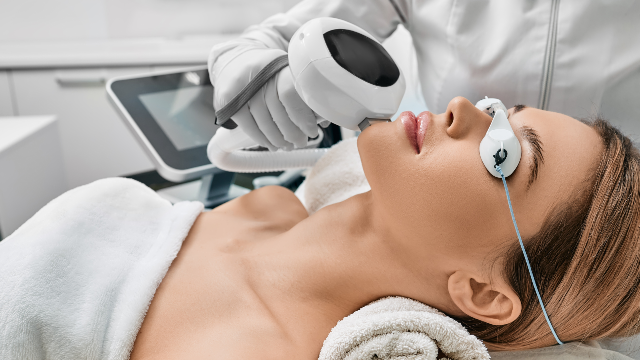
It is a laser and light-based treatment selected case by case rather than a single fixed procedure.
In Cellier's description, the service directs laser or light energy at facial redness, at tone that has become uneven, and at pigment, choosing the approach from what kind of discoloration is present, the state of the skin, and what the patient is trying to change. Its named candidates are adults with facial redness, rosacea-related redness, sun spots, freckles, post-inflammatory pigmentation, or an uneven complexion who have been assessed as suitable for laser treatment.
That phrasing is deliberate and worth reading closely. The service treats the appearance of redness as an aesthetic concern. It is not a disease-management program, and a rosacea diagnosis remains something to establish and manage with a dermatologist. Within the clinic's pigmentation and skin toning category, this service sits alongside PicoSure Pro Toning and Clarity II Treatment, the dual-wavelength system whose 755 nm and 1064 nm output with integrated cooling gives it a role in both vascular and pigment concerns. Which of the clinic's lasers suits which pigment pattern is compared in detail elsewhere on this site.
Why redness and brown pigment are different targets
They are different targets because laser light is absorbed by different substances in the skin, and each treatment is aimed at one of them.
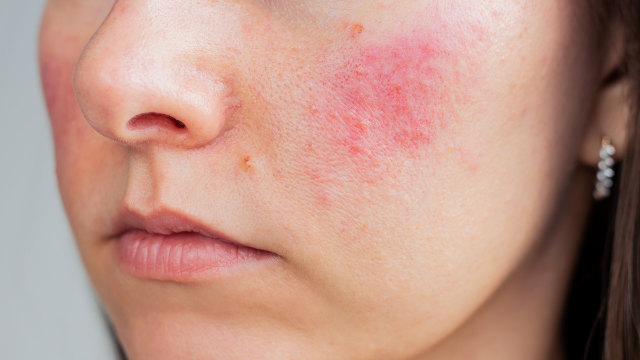
A laser works by delivering light that a particular structure absorbs more strongly than the tissue around it. Brown marks absorb light because of melanin, the pigment produced in the upper layers of the skin. Persistent facial redness is not pigment at all — it is blood, visible through the skin because small vessels in the dermis are dilated or have become permanently widened, and the absorbing substance is the hemoglobin inside those vessels. Two different absorbers means two different wavelength and pulse choices, delivered with different intent.
The practical consequence is that these problems do not respond to one another's treatment. Energy tuned to break up clustered melanin passes through a dilated vessel without doing meaningful work on it. Energy tuned to heat hemoglobin does not clear a freckle. This is why Cellier describes the consultation as identifying the type of redness or pigmentation present before the laser is selected, and why a patient who has both often ends up with a plan containing more than one kind of session.
The American Academy of Dermatology reinforces the same discipline from the patient side. In its material on age spots and dark marks it stresses that the cause of a discoloration must be established before any cosmetic treatment is chosen, since different causes behave differently and some marks need a medical evaluation rather than a cosmetic one. A brown patch driven by hormones, for instance, is melasma — a chronic condition with its own treatment logic, addressed separately on this site.
What causes the redness people want treated
The redness that brings people to an aesthetic clinic is usually a mix of visible vessels and a tendency to flush, and the AAD's rosacea material is the clearest public description of it.
The American Academy of Dermatology explains rosacea as a common condition that causes lasting facial redness, episodes of flushing, visible blood vessels, and sometimes bumps that resemble acne, most often across the central face. It also explains that rosacea is a medical diagnosis made by a dermatologist and that the condition is controlled rather than cured, with a treatment plan that may combine prescription therapy with changes in daily skin care. MedlinePlus, the patient information service of the US National Library of Medicine, describes it in the same terms — a long-term condition of the facial skin with no cure, managed through treatment.
Two things follow for anyone considering an aesthetic laser. First, if you have not been assessed, the diagnosis comes first and the cosmetic question comes second; an aesthetic clinic answers whether a treatment suits your skin, not what your underlying condition is. Second, redness has causes that are not rosacea at all — sun damage accumulated over decades, broken capillaries, and the residual flush left behind by other inflammatory skin problems all look similar in a photograph. The assessment exists to tell them apart. Whether reactive, easily irritated skin is suitable for aesthetic treatment in general is a separate question covered elsewhere on this site.
What happens in a session
The session is short, staged, and built around protecting the skin while the energy is delivered.
Cellier lists five steps: skin assessment and treatment planning, cleansing of the area, eye protection and skin cooling where appropriate, application of the selected laser or light energy, and post-treatment soothing with sun-protection instructions. Many facial laser sessions are completed within roughly fifteen to sixty minutes, depending on the technology, the number of areas, and the settings used.
Comfort is handled with cooling, topical numbing cream where needed, or both. Cellier describes the sensations patients report as warmth, tingling, snapping, or stinging, varying with the laser and the intensity chosen. Nothing is cut and nothing is stitched, and the clinic states that treatments in this category generally carry minimal downtime, with cleansing and makeup resuming from the following day.
The assessment beforehand is the part that does most of the work. Cellier states that it reviews your skin concerns, medical history, medications, previous treatments, and skin sensitivity, then examines the skin to identify what kind of redness or pigmentation is present. Recent sun exposure or tanning, and any medication that increases light sensitivity, change the calculation and need to be raised before a setting is chosen.
What realistic improvement looks like
Improvement is measured in sessions and in degrees, not in a single before-and-after moment.
Cellier states plainly that no one should be told pigment will be entirely erased or permanently prevented from returning, and that outcomes shift with what caused the discoloration, the patient's skin type, the settings used, and how many sessions are done. For the dual-wavelength approach, the clinic describes noticeable change after three or more sessions spaced one to two weeks apart, with an effect lasting roughly three to six months depending on skin condition. Redness and pigmentation are described as improving progressively over several weeks rather than immediately, and the clinic notes that vascular and pigment conditions commonly need a series.
Two practical implications follow. A single appointment during a trip to Seoul starts a course rather than completing one, and the honest way to evaluate the result is weeks after the last session in a series, not on the day. If you want to calibrate what kind of change is being discussed before you travel, the clinic's before and after gallery is a more useful reference point than a general description.
It is also worth being clear about what a laser does not change. It treats vessels and pigment that are already there. It does not alter how readily your skin flushes in response to heat, alcohol, exercise, or emotion — that tendency is part of the underlying condition, which is why the AAD's rosacea guidance places so much weight on identifying and avoiding personal triggers alongside any treatment.
Maintenance is the part that holds the result
Results are maintained through sun discipline and trigger awareness, and neither of those is optional after a laser session.
The American Academy of Dermatology's guidance on rosacea triggers describes keeping a personal record of what precedes a flare — commonly sun exposure, heat, wind, stress, alcohol, spicy food, and hot drinks — and then working around the individual pattern that emerges. It also recommends gentle, fragrance-free skin care and daily broad-spectrum sun protection as the background to any medical treatment. MedlinePlus similarly identifies sun exposure as a factor that aggravates facial redness and points to sun protection as basic care.
Cellier's own aftercare instructions for this service run in the same direction: keep the treated area clean, use sunscreen consistently, avoid saunas, alcohol, and intense exercise for one week, and resume cleansing and makeup from the following day. The sauna and alcohol instructions are doing double duty here — they protect the freshly treated skin, and they happen to be two of the triggers most often associated with flushing.
Because the effect is described in the range of three to six months, maintenance sessions are part of the normal pattern rather than a sign that something failed. Planning for that at the outset, including how a series would be spaced against future trips, is a reasonable thing to raise when you book a consultation.
Risks, skin type, and who should postpone
Laser treatment of redness and pigmentation carries real risks, and they scale with how aggressive the settings are.
Cellier lists temporary redness, swelling, warmth, sensitivity, tenderness, and irritation among common effects, along with possible temporary darkening or lightening of treated pigmentation, dryness, peeling, or small crusts. Less common but more serious possibilities include burns, blistering, infection, scarring, and pigment changes that persist — either darker or lighter than the surrounding skin. The clinic states that the level of risk varies with skin type, the laser used, the energy settings, and the condition being treated.
Risk reduction, as the clinic describes it, is a sequence: establish what is actually being treated, assess skin type and pigmentation risk, review medications and previous treatments, select appropriate parameters, use suitable cooling or protection, and adjust intensity to the individual. Skin tone is a meaningful variable in that assessment, and the American Academy of Dermatology maintains dedicated guidance on laser treatment considerations for darker skin tones — a subject with its own article on this site.
Cellier's list of reasons to postpone is specific. Pregnant or breastfeeding patients should defer elective aesthetic treatment. Active skin infection, open wounds, or inflammatory skin conditions in the treatment area need to settle first. Extra assessment is called for if you have an autoimmune condition, if you have formed keloid scars before, or if you have taken isotretinoin at any point in the last six months. Anyone using a blood thinner should work out the timing with the clinic instead of adjusting medication independently. Recent tanning and photosensitizing medications also require review before any setting is selected.
The American Academy of Dermatology's general safety guidance applies to all of this: cosmetic treatment should be performed by a qualified physician who has reviewed your health history and medications and assessed whether the procedure suits you. Cellier states that Dr. Youm Junghyun performs the assessment and selects the modality for redness and pigmentation correction.
The Bottom Line
- Redness and brown pigment are different targets: redness comes from hemoglobin in dilated vessels, brown marks from melanin in the skin, and the laser approach for one does not treat the other.
- Cellier Clinic's Redness & Pigmentation Laser Care selects laser or light-based energy according to the type of discoloration identified at the consultation, and treats facial redness, sun spots, freckles, post-inflammatory pigmentation, and uneven tone.
- Rosacea itself is a medical diagnosis managed with a dermatologist; the American Academy of Dermatology describes it as controlled rather than cured, and the aesthetic service addresses the appearance of redness rather than the condition.
- Realistic improvement means a series — the clinic describes visible change after three or more sessions one to two weeks apart, with an effect of roughly three to six months, and states that complete or permanent removal should not be promised.
- Maintenance rests on daily sun protection and trigger awareness, along with the clinic's aftercare: keep the area clean, skip saunas, alcohol, and hard exercise for a week, and resume cleansing and makeup the next day.
Frequently Asked Questions
Can a laser treat facial redness, or only brown spots?
Both, but not with the same settings. Energy aimed at redness is absorbed by hemoglobin in the small vessels that make skin look flushed, while energy aimed at brown marks is absorbed by melanin. Cellier's Redness & Pigmentation Laser Care identifies which kind of discoloration is present during the assessment and selects the laser or light-based approach accordingly.
Will laser treatment cure my rosacea?
No, and no aesthetic treatment should be presented that way. The American Academy of Dermatology and MedlinePlus both describe rosacea as a long-term condition that is managed rather than cured, with the diagnosis and medical treatment plan belonging to a dermatologist. A laser session addresses the visible redness; your trigger management and any prescribed therapy continue alongside it.
How many sessions should I expect?
Cellier describes noticeable change after three or more sessions at one-to-two-week intervals for its dual-wavelength approach, with results continuing to develop over several weeks afterward. Vascular and pigment concerns commonly need a series rather than a single appointment. The number appropriate for you depends on the cause of the discoloration and how your skin responds.
How much downtime does a redness laser session involve?
The clinic describes this category as generally carrying minimal downtime, with temporary redness that settles naturally and cleansing and makeup resuming the following day. More intensive laser settings can produce swelling, sensitivity, or peeling over several days. Because recovery depends on the technology and intensity chosen, confirm the expected downtime for your specific plan before you schedule travel around it.
Does the treatment hurt?
Most patients describe sensations rather than pain — warmth, tingling, a snapping feeling, or brief stinging, varying with the laser and the settings. Cooling is used during treatment where appropriate, and topical numbing cream can be applied when needed. Tell the clinic about your pain tolerance during the consultation so comfort measures are planned in advance.
What should I avoid before a redness or pigmentation laser?
Avoid excessive sun exposure and tanning in the period before treatment, since recently tanned skin changes the risk calculation. Depending on the laser, you may be asked to pause irritating actives such as retinoids or exfoliating acids. Give the clinic a full account of your medications, supplements, allergies, and previous laser sessions, and never stop a prescribed medication on your own.
Who should postpone this treatment?
Cellier lists pregnancy and breastfeeding, active skin infection, open wounds, or inflammatory skin conditions in the treatment area as reasons to wait. Autoimmune conditions, a history of keloid scarring, and isotretinoin use within the past six months require additional assessment, and blood-thinning medication should be discussed with the clinic. Photosensitizing medications and recent tanning also need to be reviewed before settings are selected.
This article is for general informational purposes and does not constitute individualized medical advice. Candidacy, technique, and expected outcomes can only be determined through a consultation with a qualified physician, and this article is not a self-diagnosis tool.
More Articles
Continue reading clinical insights and anti-aging guides from Cellier Clinic.
Can I Combine Botox, Filler and Skin Boosters in One Visit?
Combining Botox, filler and skin boosters in one visit to Korea is possible and planned together at Cellier Clinic. Here is what the appointment involves.
Learn More
Botox vs Dermal Filler: The Real Difference Explained
The difference between Botox and dermal filler is mechanism: one relaxes a muscle that creases skin, the other adds volume. Know which before your Seoul visit.
Learn More
Facial Contour Injection vs Dermal Filler: Jawline Guide
Facial contour injection reduces unwanted volume along the cheeks and jawline; dermal filler adds it. Compare candidacy, assessment, timelines and recovery.
Learn More