Cellier Clinic — Personalized Anti-Aging & Lifting Specialist Design Clinic in Gangnam, Seoul
Medical Guide
Post-Treatment Skincare Routine at Home After Korea
Your skincare after Korean aesthetic treatment follows a simple order: keep the area clean, resume washing and makeup the next day, and protect the skin daily.
Schedule a ConsultationMedically reviewed by Dr. Youm Junghyun, Specialist in General Surgery, Director of Cellier Clinic
Good skincare after Korean aesthetic treatment is less complicated than most people expect. For the great majority of the treatments performed at Cellier Clinic, the instructions come down to four habits: keep the treated area clean, put sunscreen on every day, wait until the day after treatment before washing your face and wearing makeup again, and stay away from saunas, alcohol, and hard exercise for about a week. What happens after that first week is a different question, and it is the one that decides whether a result you paid attention to in Seoul still looks like a result six months later at home.
This article walks through both halves: the short protected window immediately after your appointment, and the long routine that keeps supporting your skin once the restrictions lift.
What the clinic's own aftercare instructions ask of you
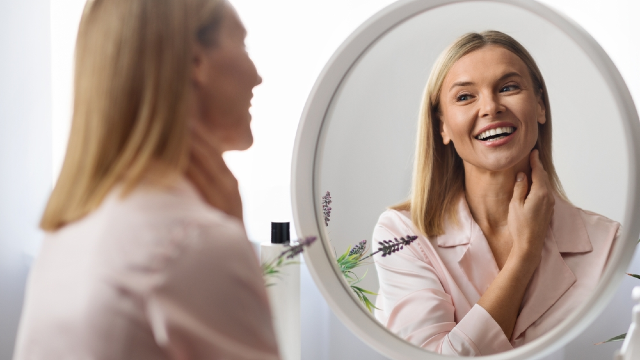
Cellier Clinic's aftercare guidance is remarkably consistent from one treatment to the next, which makes it easy to remember.
Across its lifting, tightening, laser, and injectable services, the clinic asks patients to keep the treated area clean and to use sunscreen consistently. Facial washing and makeup are generally permitted starting the day after treatment. Saunas, alcohol, and strenuous exercise are set aside for one week. For its facial lifting and skin-tightening category as a whole, the clinic's written guidance covers skincare, cleansing, sun protection, physical activity, and any prescribed or recommended medication, and adds a caution about excessive heat, pressure, and vigorous activity during the early recovery period.
Injectable treatments carry a few extra lines. For facial contour injection, Cellier advises against rubbing or massaging the treated zones, recommends staying upright for several hours after the injection, suggests ice packs to manage swelling, and asks patients to skip demanding workouts for twenty-four hours. For skin boosters and rejuvenation treatments, the guidance is to keep the area clean, resist touching or rubbing it, use the skincare products the clinic recommends, and shield the treated skin from sun exposure.
One general principle sits underneath all of it. Cellier notes that after any procedure that disturbs the skin barrier, sunscreen and the avoidance of heavy sun exposure become especially important. That single sentence explains why sun protection shows up in every aftercare list the clinic publishes, regardless of which device or injection was used.
Two practical notes. First, your own written instructions win. They were issued for the treatment you actually had, on the skin you actually have, and a general article cannot outrank them. Second, the numbers above describe restriction windows, not healing deadlines — a one-week pause on saunas is a boundary, not a promise that everything is finished on day eight.
When your normal products come back
Most people can return to an ordinary routine within a day, and to their full routine within a week, but the order matters.
Start with the basics. Since washing and makeup generally resume the day after treatment, your cleanser, moisturizer, and sunscreen are the first products back in rotation. Keep cleansing gentle for the first several days: lukewarm water, a mild non-foaming or low-foaming cleanser, and no scrubbing, no washcloths, no cleansing brushes. Pat dry instead of rubbing. Skin that has just been heated, needled, or injected does not need friction added to the list of things it is recovering from.
Active ingredients come back last. Cellier's pre-treatment instructions across several services ask patients to pause active topical ingredients, retinoids, and exfoliating treatments in the days before an appointment, and to avoid introducing aggressive new exfoliants right before treatment. The same logic applies going the other direction: the period right after a session is not the moment to restart a retinoid, an acid toner, a scrub, or a new active you have never used. Ask the clinic when your particular treatment allows them back, and reintroduce one product at a time rather than all of them on the same evening, so that if something stings you know which bottle caused it.
Peels are the clearest case of all. For peeling treatments, Cellier's guidance is to keep the skin moisturized, to leave flaking skin alone rather than pulling or picking at it, to avoid tanning and sun exposure, and to use sunscreen daily once the skin has healed. Picking at skin that is in the middle of renewing itself is the single easiest way to turn a controlled treatment into an uncontrolled one.
If your treatment was acne-related, the emphasis shifts slightly: the clinic recommends gentle non-comedogenic products, no picking or squeezing of lesions, moisturizer when medication is causing dryness, and a broad-spectrum sunscreen of SPF 30 or higher.
The daily routine that does the work
A maintenance routine has three jobs — clean the skin, support the barrier, and protect it from ultraviolet light — and everything else is optional.
Cleansing. Once in the morning and once at night is enough for most people. The goal is to remove makeup, sunscreen, sweat, and surface oil without stripping the skin. Cellier's own basic skin management sessions follow a similar arc: assess the skin, cleanse away makeup and surface impurities, exfoliate gently only where it is appropriate, apply hydrating or conditioning care, restore moisture and barrier, and finish with sunscreen and aftercare advice. That sequence is a reasonable template for a home routine, minus the professional steps in the middle.
Barrier support. Moisturizer is not a luxury layer. The clinic describes basic skin management as care intended to maintain cleanliness, hydration, barrier health, and overall skin condition, and it lists better maintenance of the skin barrier among the benefits. A comfortable, well-moisturized barrier is also less likely to overreact to the next treatment you have. If your skin feels tight, flaky, or stings when products go on, that is a barrier signal, and the answer is usually fewer actives and more moisturizer rather than the reverse.
Protection. This is the step that changes outcomes over years rather than days, and it gets its own section below.
One caution worth carrying home: the clinic notes that even basic cleansing and moisturizing can cause temporary redness, dryness, irritation, contact reactions, or breakouts when the products are unsuitable or the exfoliation is too aggressive. A routine that is too ambitious is not a safer routine.
Sun protection is the habit that carries the result
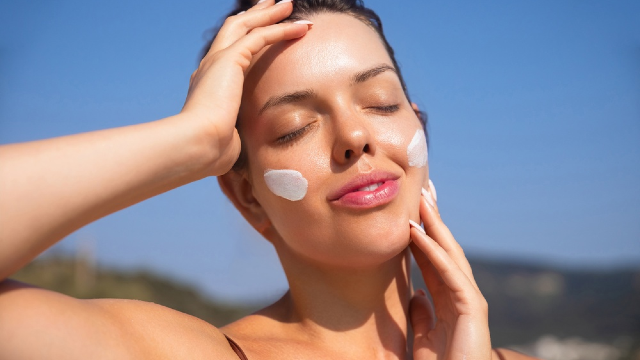
Daily sun protection is the one instruction in your aftercare sheet that never expires.
The reason is that ultraviolet exposure is not merely a short-term irritant for treated skin, it is one of the main drivers of the aging you had treated in the first place. MedlinePlus, the patient information service of the US National Library of Medicine, explains that ultraviolet radiation from the sun damages skin over time and contributes to wrinkling and changes in skin texture and color, and that it reaches you on cloudy days as well as clear ones. Its guidance on aging skin makes the same connection from the other side: sun exposure is a major reason skin thins, loses elasticity, and develops uneven pigment as the years accumulate.
Treated skin is more exposed than usual to that risk. The American Academy of Dermatology advises protecting skin after cosmetic procedures, because skin that is healing is more prone to pigment changes when it meets ultraviolet light. The Academy's guidance on darker skin tones is especially relevant here, since deeper skin tones are more likely to develop post-inflammatory dark marks after any inflammation of the skin — which makes consistent protection and a gentle routine a pigment strategy, not only a comfort one.
Practically, this means broad-spectrum sunscreen every morning, reapplied when you are outdoors for extended periods, plus the physical measures the Academy and MedlinePlus both recommend: shade during the strongest hours, a wide-brimmed hat, sunglasses, and clothing that covers. On a long-haul flight home, a window seat is more sun exposure than most people assume.
What maintains a result over months
Beyond the first week, results are maintained by time, protection, and a realistic schedule rather than by any one product.
Start with how these treatments actually work. Cellier's energy-based lifting treatments stimulate collagen and elastin, and the visible change develops gradually rather than instantly — the clinic describes changes becoming noticeable at around four weeks for Ultherapy Prime and Thermage FLX, around one week with a peak at three to four weeks for Density Lifting and Coolphase, and effects that begin at one month and peak at three months for Sofwave. Collagen-related improvement after CoolSoniq is described as developing over roughly four to six weeks. Your home routine during those weeks is not decorative; it is the environment the remodeling happens in.
Duration is the next piece. Cellier states approximately six to twelve months for Ultherapy Prime, Thermage FLX, and CoolSoniq, and approximately three to six months for Titanium Lifting, Density Lifting, and Coolphase, in each case depending on individual skin condition. Those numbers are a planning tool. If your last treatment was in April and the documented range for it is three to six months, the question of what comes next belongs in the autumn calendar, not in a panic in December.
For its skincare and facial treatments generally, the clinic is direct that basic maintenance produces short-term gains in hydration, smoothness, and appearance, and that these require ongoing upkeep. It also notes that maintenance sessions may be recommended after laser and pigmentation treatments, where longevity depends on the cause of the pigmentation, sun exposure, and skincare habits. Those last two variables are entirely yours to manage between visits.
The honest boundary is worth stating plainly: the clinic's own approved language for facial lifting says no treatment can permanently prevent the natural aging process. Maintenance slows the loss and keeps the improvement visible for longer. It does not freeze the clock, and any routine sold to you on that basis is overselling itself.
Planning maintenance from another continent
Distance changes the logistics of maintenance, not the principles.
Because you are not a short drive from the clinic, the home routine carries more of the load between visits, and the plan you leave with matters more than it would for a local patient. Before you fly home, it is worth confirming which products you should use, when actives can resume, what your treatment's documented duration is, and what the clinic would suggest as a reasonable interval before the next session. The American Academy of Dermatology encourages patients to ask specific questions before and after cosmetic treatments rather than filling gaps with guesswork, and this is exactly the moment for it.
It also helps to keep a simple record. A note of what was treated, on which date, with which device, plus a few photographs in consistent lighting, turns a vague impression into something you can actually evaluate months later. Cellier publishes before and after results that show the kind of gradual change these treatments produce, which is a useful calibration for your own expectations.
If something about your skin changes in a way the instructions did not describe, or if a symptom persists rather than settling, contact the clinic rather than adjusting your routine on your own. Cellier asks patients to follow the post-treatment instructions and to get in touch about unusual or persistent symptoms, and you can reach the team through the clinic's contact page from anywhere.
The Bottom Line
- Cellier Clinic's aftercare guidance is consistent across treatments: keep the treated area clean, use sunscreen consistently, resume washing and makeup the day after treatment, and avoid saunas, alcohol, and strenuous exercise for one week.
- Restart products in order — cleanser, moisturizer, and sunscreen first, then actives such as retinoids and exfoliants only when the clinic says the treatment allows them, one product at a time.
- Daily broad-spectrum sun protection is the habit that matters most, because ultraviolet exposure both irritates healing skin and drives the aging the treatment addressed.
- Documented durations at the clinic run roughly three to six months for some platforms and six to twelve months for others, which gives you a realistic schedule rather than a guess.
- No routine and no treatment stops aging; maintenance keeps an improvement visible longer, and your written instructions always outrank a general article.
Frequently Asked Questions
When can I wash my face and wear makeup again?
For most treatments at Cellier Clinic, facial washing and makeup can generally resume the day after your appointment. Keep that first wash gentle, with lukewarm water and no scrubbing. If your written instructions give a different timeline for your specific treatment, follow those instead.
How long do I need to avoid saunas, alcohol, and exercise?
Cellier Clinic recommends avoiding saunas, alcohol, and strenuous exercise for about one week after most of its treatments. After facial contour injection, the clinic also asks patients to skip demanding workouts for twenty-four hours, stay upright for several hours, and avoid rubbing the treated areas.
When can I start using retinoids and exfoliants again?
Ask the clinic for the timing that applies to your specific treatment, since it varies by procedure. Cellier's instructions around treatment consistently involve pausing active topicals and exfoliating treatments and avoiding aggressive new exfoliants, so restarting them too early works against that logic. Reintroduce one product at a time so you can identify anything your skin objects to.
What sunscreen should I use after treatment?
The clinic's guidance is simply to use sunscreen consistently, and for acne care it specifies a broad-spectrum product of SPF 30 or higher. The American Academy of Dermatology also recommends physical measures alongside sunscreen — shade, a wide-brimmed hat, sunglasses, and covering clothing — which matter on the days you forget to reapply.
How long will my results last?
It depends on the treatment. Cellier Clinic reports approximately six to twelve months for Ultherapy Prime, Thermage FLX, and CoolSoniq, and approximately three to six months for Titanium Lifting, Density Lifting, and Coolphase, in every case varying with individual skin condition. Your consultation is where a realistic interval for your own skin gets set.
Does my home routine actually change the outcome?
It supports it. The clinic notes that the longevity of pigmentation results depends partly on sun exposure and skincare habits, and that basic maintenance gains require ongoing upkeep. A gentle, protective routine gives the collagen remodeling triggered by treatment a stable environment to develop in over the following weeks.
What if my skin reacts badly to a product after treatment?
Stop the product and keep the routine simple — gentle cleanser, moisturizer, sunscreen — while the skin settles. Cellier Clinic asks patients to contact the clinic if they experience unusual or persistent symptoms after treatment, and English-speaking support is available. Persistent irritation is worth reporting rather than treating with another new product.
This article is for general informational purposes and does not constitute individualized medical advice. Candidacy, technique, and expected outcomes can only be determined through a consultation with a qualified physician, and this article is not a self-diagnosis tool.
More Articles
Continue reading clinical insights and anti-aging guides from Cellier Clinic.
Can I Combine Botox, Filler and Skin Boosters in One Visit?
Combining Botox, filler and skin boosters in one visit to Korea is possible and planned together at Cellier Clinic. Here is what the appointment involves.
Learn More
Botox vs Dermal Filler: The Real Difference Explained
The difference between Botox and dermal filler is mechanism: one relaxes a muscle that creases skin, the other adds volume. Know which before your Seoul visit.
Learn More
Facial Contour Injection vs Dermal Filler: Jawline Guide
Facial contour injection reduces unwanted volume along the cheeks and jawline; dermal filler adds it. Compare candidacy, assessment, timelines and recovery.
Learn More