Cellier Clinic — Personalized Anti-Aging & Lifting Specialist Design Clinic in Gangnam, Seoul

Medical Guide
Laser Treatment for Darker Skin Tones: Safety Considerations
Why melanin changes laser risk, what post-inflammatory hyperpigmentation is, how assessment and conservative settings work, and what to ask before treatment.
Schedule a ConsultationDarker Skin Tones and Laser Pigmentation Treatment: Safety Considerations
Medically reviewed by Dr. Youm Junghyun, Specialist in General Surgery, Director of Cellier Clinic
Laser treatment for darker skin tones is not off the table, but it is a different calculation. Melanin absorbs light, so in skin that contains more of it the same laser energy has more to interact with, and the margin between treating a spot and irritating the surrounding skin narrows. That is why assessment, settings and aftercare carry more weight here than the choice of platform does. This article explains what actually changes, what post-inflammatory hyperpigmentation is and how clinicians work to avoid it, and what you should ask before any laser is pointed at your face.
Why more melanin changes the arithmetic of a laser treatment
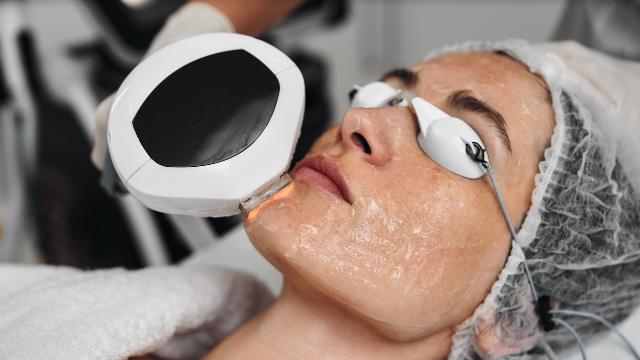
A pigment laser works by delivering light that pigment absorbs. The absorbed energy breaks up or disperses the unwanted pigment, and the surrounding tissue is meant to absorb comparatively little. That premise holds cleanly when the target is much darker than its background, which is why a discrete brown spot on pale skin is the easiest case a pigment laser ever gets.
In richer skin tones the background itself contains substantial melanin. The target still absorbs energy, but so does the skin around and above it. Two consequences follow. The first is that a setting calibrated for lighter skin delivers more energy than intended into non-target tissue. The second is that the visible contrast between the lesion and the surrounding skin is lower to begin with, so the clinician has less margin for error in identifying exactly what is being treated.
Nothing about this makes laser treatment inappropriate for deeper skin tones. It makes it a procedure where the clinician's assessment of your skin, and the parameters chosen on the basis of that assessment, do most of the work. The American Academy of Dermatology's resource hub for people with darker skin tones is built on the same premise: skin rich in melanin has particular patterns of response, and care that accounts for those patterns is different from care that ignores them.
Post-inflammatory hyperpigmentation, explained properly
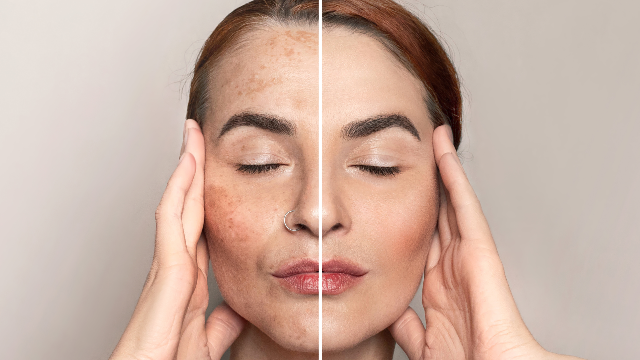
Post-inflammatory hyperpigmentation is the dark mark that appears where skin has been inflamed or injured. It is not a scar and it is not a burn. It is the pigment system overreacting to an insult: the skin is irritated, pigment-producing cells respond, and the healed area comes back darker than the skin around it.
Almost everyone can develop it. What differs is how readily, how darkly and how long it lasts. The Academy of Dermatology identifies dark marks left behind after inflammation as one of the most common skin concerns among people with deeper skin tones, and describes them as marks that can take months to fade on their own. Anyone whose acne spots leave brown shadows for half a year, or whose mosquito bites still show in autumn, already knows their own tendency without needing a clinical label for it.
This matters for laser treatment for an uncomfortable reason. The very thing a pigment laser is often being used to remove — a brown mark — is also a thing an over-energetic laser session can create. A treatment run too hot in melanin-rich skin can inflame the surrounding tissue enough to trigger the response, and the patient ends up with a broader, more diffuse darkening than the discrete spot they came in to treat. The mark is usually temporary, but "temporary" can mean many months, which is a poor trade for someone who traveled for the appointment.
The Academy's own guidance on dark marks emphasizes protecting treated skin from sun and following professional guidance, because pigment that is still settling responds badly to ultraviolet exposure. That connection between the treatment and the weeks around it is the practical heart of this subject.
The other risks, named plainly
Hyperpigmentation is the most likely adverse pigment outcome, but it is not the only one, and Cellier Clinic's own documentation lists the range rather than softening it. For its redness and pigmentation laser work, the clinic states that temporary redness, swelling, warmth, sensitivity and darkening or lightening of the treated pigmentation may occur, and that possible complications include burns, blistering, scarring, and post-inflammatory hyperpigmentation or hypopigmentation. The clinic further states that the level of risk can vary with skin type, laser type, energy settings and the condition being treated.
Two items in that list deserve unpacking.
Hypopigmentation is the opposite outcome: a treated area that comes back lighter than the surrounding skin. It is less common than darkening, but it is more visible in deeper skin tones because the contrast is greater, and it can be more persistent.
Uneven response is the practical version of both. Pigment does not clear at a uniform rate across a face, and a course pushed too quickly can leave a patchwork in which some areas have cleared, some have darkened in reaction, and some have not moved.
The clinic's general pigmentation and skin toning documentation adds a conditional worth noticing: treated pigment can shift either way for a period afterward, and it flags inadequate protection of the skin in the following days as the situation in which that is most likely. That "particularly" is the part patients control.
What a careful assessment actually looks at
The clinic's description of how it reduces risk in laser pigmentation work reads like a checklist, and it is worth taking apart because each item corresponds to a real decision.
Cellier states that safe treatment generally involves identifying the correct diagnosis, assessing skin type and pigmentation risk, reviewing medications and previous treatments, selecting appropriate laser parameters, using suitable cooling or protective measures, and adjusting treatment intensity to the individual patient.
Identifying the correct diagnosis comes first for a reason. Brown patches on a face are not one condition. Sun-induced spots, freckles, dermal pigment, post-inflammatory marks and melasma look superficially similar and respond very differently to the same light. Cellier describes examining the skin to identify the type of redness or pigmentation before selecting the laser, and describes evaluating the pigmentation pattern, skin type and treatment goals in its general pigmentation assessment. Treating the wrong diagnosis aggressively is one of the more reliable ways to produce a worse result than you started with.
Assessing skin type and pigmentation risk is where your own history belongs. How readily you tan, whether you burn, whether past spots or cuts left marks, how long those marks took to fade — these are the observations that tell a clinician how reactive your pigment system is, and they matter more than a photograph of your resting skin tone.
Reviewing medications and previous treatments catches the factors that change light sensitivity or healing. Cellier specifically asks patients to inform the clinician about recent sun exposure, active skin problems, medications and previous laser treatments before a Clarity II session, and to provide a complete history of previous laser work and skincare procedures before laser care generally.
Selecting appropriate parameters and adjusting intensity to the individual is the decision that everything else feeds. Cellier describes customized settings according to skin type and treatment area across its pigmentation category, and states that individual parameters may be adjusted according to the pigmentation and the skin's response. That phrasing matters: response is something observed across a course, not predicted once at the start.
What the clinic documents about PicoSure Pro Toning
Cellier describes PicoSure Pro as using precisely controlled picosecond laser energy to target pigmentation, alongside concerns such as blemishes, uneven tone, enlarged pores, scars, fine lines and skin texture. On the technical side relevant here, the clinic describes a 755 nm picosecond laser with adjustable fluence and an additional 5 mm handpiece, with individualized assessment guiding treatment planning.
Fluence is the amount of laser energy delivered per unit of skin area. The word "adjustable" is the operative one for this discussion: it means the energy level is a parameter the operator sets rather than a fixed property of the device, so a session can be run conservatively in skin that warrants caution and adjusted across a course as the response becomes visible. An added handpiece size gives the operator a second variable, because spot size changes how energy is distributed over the treated area.
Practically, the clinic describes a treatment of about three minutes with anesthetic cream applied beforehand, downtime generally within a day, face washing and makeup usually resuming the following day, and improvement described after three or more sessions at one-to-two-week intervals with effects lasting roughly three to six months depending on skin condition. Redness or swelling may occur afterward and generally subsides naturally, and the clinic notes these can be more pronounced in areas other than the face.
How picosecond delivery compares with other pigment lasers is a separate discussion that has been covered on its own; the conclusion there is that pulse duration is the meaningful technical difference between the two platforms this clinic runs. For the purposes of skin tone safety, the parameter that matters is not the category but whether the energy can be dialed down and whether it is.
What the clinic documents about Clarity II
Cellier describes Clarity II as a laser treatment aimed at pigmentation, uneven tone, visible pores and related concerns, combining long-pulse Alexandrite and Nd:YAG wavelengths — 755 nm and 1064 nm — with integrated cooling, and allowing settings to be customized according to skin type and treatment area.
Three of those details are relevant to melanin-rich skin. Having two wavelengths available means the clinician has a choice about what the light is aimed at, rather than a single fixed option. Integrated cooling protects the skin surface during energy delivery, which is directly relevant when the surface itself contains more absorbing pigment. And customization by skin type is, again, the point: the clinic describes the clinician determining treatment area and settings on the basis of pigmentation, skin type and individual skin condition.
Cellier describes the session as taking approximately five minutes with topical anesthetic cream available, with about a day of downtime and mild redness or sensitivity that generally settles as the skin recovers. Its aftercare instruction is specific: keep the treated area moisturized, avoid unnecessary irritation, protect the skin from sunlight with appropriate sun protection, and avoid sauna, alcohol and strenuous exercise for one week, with cleansing and makeup resuming the following day. The clinic states plainly that pigmentary changes and other laser-related complications are possible, particularly if the skin is not appropriately assessed or cared for.
Conservative practice: what "careful" looks like in a treatment plan
Conservative treatment is not vagueness. It is a set of identifiable choices, and you can ask whether each one is being made.
Starting below the maximum. Because fluence is adjustable, a first session can be deliberately gentle. The purpose of a gentle first session is information: it shows how your skin reacts before more energy is committed.
Judging response before escalating. Cellier describes parameters that may be adjusted according to the pigmentation and the skin's response, and describes improvement being assessed across a series of sessions at one-to-two-week intervals rather than after one visit. Escalation should follow evidence from your own face.
Treating a limited area first. Asking whether a small test area can be treated before a full-face session is a reasonable request, and it mirrors the standard dermatologic habit of trying something on a small patch of skin before committing.
Spacing sessions properly. Pigment continues to change for weeks after a laser session. Compressing a course into a short trip removes the observation window that makes adjustment possible.
Accepting a slower plan. For pigment-reactive skin, a longer course at lower energy is generally the safer design than a short course at high energy. Cellier's own framing across its pigmentation work is that improvement appears gradually over several sessions and that maintenance may be recommended, which is consistent with that approach.
Sun exposure, tanning and the weeks before treatment
Recently tanned skin is not the same skin you had a month ago. Tanning means the pigment system has already been activated, and treating activated skin raises the chance of an uneven or exaggerated response.
Cellier's preparation guidance is explicit: avoid excessive sun exposure and tanning before treatment, avoid irritating or aggressive skin treatments beforehand, and inform the clinician about recent sun exposure, active skin problems, medications or previous laser treatments. Depending on the plan, irritating active skincare products may need to be paused. The clinic also states that prescribed medication should never be stopped without medical advice.
MedlinePlus, the patient-education service of the US National Library of Medicine, sets out the general case for sun protection — covering up, seeking shade, and using sunscreen consistently — and notes that ultraviolet exposure drives changes in skin pigmentation. For anyone planning laser pigmentation treatment, that general advice becomes a specific preparation instruction for the weeks before the appointment, not just a lifestyle suggestion.
Aftercare is where the result is protected
Cellier's aftercare instructions for its pigmentation work are consistent across platforms: keep the treated area clean, use sunscreen consistently, keep the skin moisturized, avoid unnecessary irritation, and avoid sauna, alcohol and strenuous exercise for about a week, with cleansing and makeup resuming from the following day. The clinic's general pigmentation guidance adds gentle skincare and avoiding excessive heat.
For melanin-rich skin, sun protection after treatment is not a general wellness recommendation — it is the specific step that reduces the chance of the treated area darkening. The Academy of Dermatology's material on dark marks makes the same connection: pigment that is in the process of settling responds to ultraviolet exposure by darkening again, which can undo the treatment you just paid for and traveled for.
If your trip includes outdoor time, plan the laser session and the sightseeing in the right order rather than hoping the sunscreen will carry the day.
Conditions and medications that change the calculation
Some factors move a patient from "proceed carefully" to "assess further before proceeding at all," and Cellier documents them.
Pregnancy and breastfeeding are grounds for postponing elective aesthetic procedures, the clinic says. An infection, an open wound or an inflammatory condition sitting in the area to be treated has to clear before anything proceeds. that those with autoimmune conditions, a history of keloid scarring, or use of isotretinoin within the previous six months may require additional assessment; and that patients on blood-thinning medication should discuss timing with the clinic. It also notes that recent tanning, photosensitivity, or medications that increase light sensitivity may require additional assessment.
A history of keloid scarring deserves particular attention in this context, because it is one more indication that your skin's healing response runs strong, and it belongs in the conversation even if it came from a childhood injury rather than anything cosmetic.
What to ask before a laser touches your skin
The Academy of Dermatology's guidance on questions to ask before a cosmetic treatment establishes the principle: you are entitled to know who is treating you, what is being used, what the realistic outcome is and what could go wrong. For pigment treatment in deeper skin tones, these are the specific versions.
- What exactly are you diagnosing this as? Not "pigmentation" but which kind, since the answer determines the approach.
- Which platform and which settings, and why those? Ask whether the energy level has been chosen with your skin tone in mind.
- Have you treated skin like mine before? A direct question with a direct answer.
- Can the first session be run conservatively, and can we start with a limited area?
- What is the chance this leaves a dark mark, and what happens if it does? A clinic that has an answer for the complication has thought about the complication.
- How will you decide whether to increase energy at the next session?
- How many sessions is this likely to take, and at what spacing?
- What is the aftercare, and what specifically am I protecting against?
- What should make me contact you rather than wait?
Write the answers down. If you are traveling, that record is also what you will refer to when you are assessing your own skin weeks later from home.
Melasma is its own problem
One caution about diagnosis. If your pigmentation is symmetrical, sits in patches across the cheeks, forehead or upper lip, and has darkened with sun or hormonal change, melasma belongs on the list of possibilities. It behaves unlike a sun spot: it is chronic, it recurs, and aggressive treatment can worsen it. That condition has been covered separately in its own right, and the conclusion there is that melasma is managed over time rather than removed in a course. The reason it belongs in this article at all is that melasma is common in deeper skin tones, and mistaking it for ordinary sun damage is exactly the diagnostic error that leads to an over-energetic session.
Setting realistic expectations
Cellier states plainly in its laser documentation that complete removal or permanent prevention of pigmentation should not be promised, and that results vary according to the cause of the discoloration, skin type, treatment settings and number of sessions. That honesty is worth holding onto, because the pressure to deliver a dramatic single-visit result is precisely the pressure that produces complications in melanin-rich skin.
A good outcome here usually looks like gradual evening of tone over a series of sessions, held in place by sun discipline, with maintenance considered later. The clinic describes improvement appearing gradually across sessions with longevity depending on the cause of the pigmentation, sun exposure, skincare habits and individual skin characteristics.
If you want to discuss your own pigmentation and skin tone before committing to anything, that conversation belongs in a consultation, where the skin can actually be examined. The clinic's treatment philosophy centers on assessing individual skin layers and condition rather than applying a standard protocol, which is the framework a skin-tone-specific plan has to come from.
The Bottom Line
- Melanin absorbs laser light, so in richer skin tones the surrounding skin competes with the target for energy; this narrows the safety margin and makes assessment and settings more decisive than platform choice.
- Post-inflammatory hyperpigmentation is a darkened mark left after skin inflammation, identified by the American Academy of Dermatology as one of the most common concerns in deeper skin tones, and it is the main adverse outcome a careful plan is designed to avoid.
- Cellier documents adjustable fluence for PicoSure Pro and settings customized by skin type and treatment area for Clarity II, meaning energy is a parameter that can be set conservatively and escalated only on observed response.
- Conservative practice is specific: correct diagnosis first, a gentle opening session, a limited test area, proper spacing, and escalation based on your skin's actual reaction.
- Avoiding sun and tanning before treatment and protecting the skin consistently afterward is the part you control, and it is where a good result is most often won or lost.
Frequently Asked Questions
Can people with darker skin tones have laser pigmentation treatment at all?
Yes, with assessment and settings chosen for that skin. Cellier states that suitability depends on the type and cause of the pigmentation, skin condition, medications and medical history, and that treatment settings are customized according to skin type and treatment area. The decision is made individually after the skin has been examined rather than from a photograph or a general rule.
What is post-inflammatory hyperpigmentation?
It is a dark mark that appears where the skin has been inflamed or injured, produced by the pigment system responding to the insult. The American Academy of Dermatology describes such marks as among the most common skin concerns in people with deeper skin tones and notes they can take months to fade. It is a pigment change rather than a scar.
How does a clinician reduce the risk of causing a dark mark?
Cellier describes identifying the correct diagnosis, assessing skin type and pigmentation risk, reviewing medications and previous treatments, selecting appropriate laser parameters, using suitable cooling or protective measures, and adjusting treatment intensity to the individual. Alongside this, the clinic's preparation guidance asks patients to avoid sun exposure and tanning beforehand, and its aftercare guidance asks for consistent sun protection.
What does "adjustable fluence" mean and why does it matter for my skin tone?
Fluence is the amount of laser energy delivered per unit of skin area. Cellier describes PicoSure Pro as having adjustable fluence, which means the energy level is set by the operator rather than fixed by the device. For melanin-rich skin, that adjustability is what allows a first session to be run conservatively and increased only if the skin responds well.
Should I ask for a test area before a full-face session?
It is a reasonable request and a common dermatologic precaution. Cellier describes parameters that may be adjusted according to pigmentation and skin response, and describes assessing improvement across a series of sessions at one-to-two-week intervals, so a staged approach fits how the treatment is already structured. Raise it at consultation and ask how the response will be judged.
What should I avoid before a laser pigmentation appointment?
Cellier advises avoiding excessive sun exposure and tanning, avoiding irritating or aggressive skin treatments, and informing the clinician about recent sun exposure, active skin problems, medications and previous laser treatments. Irritating active skincare products may need to be paused depending on your plan. Prescribed medication should never be stopped without medical advice.
How important is sunscreen after treatment?
It is the single most important thing you control. Cellier's aftercare for both PicoSure Pro and Clarity II asks for consistent sunscreen use, and states that pigmentation can temporarily darken or lighten particularly when the skin is not properly protected afterward. MedlinePlus reinforces that ultraviolet exposure drives pigment change in skin generally.
Are there conditions that mean I should wait?
Yes. Cellier states that pregnancy and breastfeeding call for postponing elective aesthetic procedures, that active infections, open wounds or inflammatory skin conditions in the area need to resolve first, and that autoimmune conditions, a history of keloid scarring or isotretinoin use within six months may require additional assessment. Photosensitizing medication and recent tanning also call for further assessment.
This article is for general informational purposes and does not constitute individualized medical advice. Candidacy, technique, and expected outcomes can only be determined through a consultation with a qualified physician, and this article is not a self-diagnosis tool.
More Articles
Continue reading clinical insights and anti-aging guides from Cellier Clinic.

Can I Combine Botox, Filler and Skin Boosters in One Visit?
Combining Botox, filler and skin boosters in one visit to Korea is possible and planned together at Cellier Clinic. Here is what the appointment involves.
Learn More
Botox vs Dermal Filler: The Real Difference Explained
The difference between Botox and dermal filler is mechanism: one relaxes a muscle that creases skin, the other adds volume. Know which before your Seoul visit.
Learn More
Facial Contour Injection vs Dermal Filler: Jawline Guide
Facial contour injection reduces unwanted volume along the cheeks and jawline; dermal filler adds it. Compare candidacy, assessment, timelines and recovery.
Learn More