Cellier Clinic — Personalized Anti-Aging & Lifting Specialist Design Clinic in Gangnam, Seoul
Medical Guide
How to Book a Virtual Consultation Before Flying to Korea
Book a virtual consultation with Cellier Clinic through its online inquiry page, learn what you can settle from home, and see what waits for an in-person exam.
Schedule a ConsultationHow to Book a Virtual Consultation Before Flying to Korea
Medically reviewed by Dr. Youm Junghyun, Specialist in General Surgery, Director of Cellier Clinic
You can open a remote conversation with Cellier Clinic long before you book a flight. The clinic runs its online consultation for English-speaking patients through its online inquiry page, which is also its primary contact channel for this market. This article covers how to book a virtual consultation with a Korea clinic from the United States, what that exchange can realistically settle, and which decisions stay open until a clinician looks at your skin in the room.
What the clinic's online consultation route is
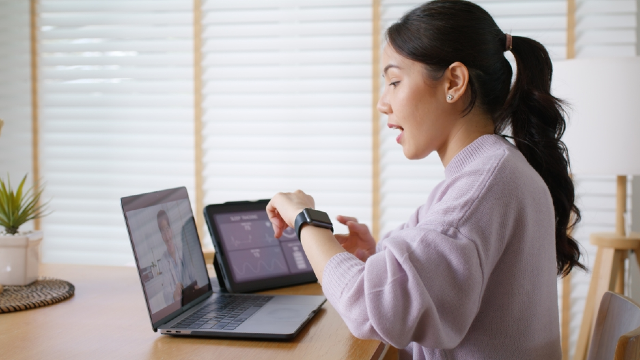
Cellier Clinic's online consultation runs through a written channel rather than a walk-in or a phone queue. The same inquiry page serves as the route for the online consultation process and as the main way patients in this market reach the clinic, so there is one address to remember and one thread to keep.
Writing has advantages that have nothing to do with convenience. A written thread is searchable later, it survives the moment you forget what was said, and it lets you compose a careful description of your concern instead of improvising one. It also removes the pressure of speaking a second language in real time on either side. English-speaking support covers consultation at Cellier Clinic, and the clinic states that its patient services carry no language limitations, so the exchange can be conducted in English from your first message onward.
The timing works in your favor too. Published hours run 10:00 to 20:00 Korea Standard Time Monday through Friday, with the clinic pausing for an hour at 14:00; Saturday ends at 16:00; Sunday and public holidays are closed. Every US time zone sits behind Korea, which means a note composed on a weekday evening at home generally lands in the middle of the next Korean working day. Rather than hunting for an hour that suits both calendars, you write when you can think clearly and read the reply over breakfast.
Why a remote exchange is worth doing at all
The point of contacting a clinic before you buy a ticket is to stop a trip from being built on assumptions. The CDC's Yellow Book chapter on medical tourism is direct about this: travelers who seek care abroad should establish the essentials of that care before departure rather than after arrival, because arrangements made under time pressure in an unfamiliar system tend to be the weakest part of the plan.
The same logic runs through the CDC's Yellow Book guidance on the pre-travel consultation, which treats the weeks before an international trip as the window when preparation actually happens — health questions raised, records assembled, timing thought through. A message to the clinic you intend to visit belongs in that window alongside the appointment with your own clinician.
Cellier Clinic's own guidance for patients coming from the United States asks them to confirm their appointment schedule and travel arrangements with the clinic before departure. That single instruction is the practical core of the whole exercise. A flight booked around an appointment that was never confirmed is a flight booked around a guess.
What you can usefully settle before flying
A remote exchange handles the parts of a consultation that do not depend on touch.
Your goal, described as a result. Start here, because it shapes everything else. Say what you want to look different and in what situation — how your jawline reads in photographs, how tired your lower face looks at the end of the day, how a particular fold has changed over the last few years. A description of a result gives the clinician room to propose a route. A description of a product name narrows the conversation before it starts, and it puts you in the position of prescribing for yourself. The American Academy of Dermatology's guidance on questions to ask before a cosmetic treatment makes a related point: the useful questions are about suitability, alternatives, and realistic outcomes, and they belong to the person who will carry out the treatment.
The areas that concern you. Cellier Clinic's lifting assessment is organized around specific regions — the forehead and eye area, cheeks and cheekbones, nasolabial folds, jawline, contour line, double chin, and neck. Naming your areas early is more useful than a general statement about aging, and it makes the later in-person assessment faster.
Your history, in outline. Send the summary version: the medications and supplements you take, your allergies, ongoing medical conditions, any implanted electronic or metal device, previous cosmetic treatments with approximate dates, and any past reaction to an injectable product or to sedation. Cellier Clinic asks for exactly these categories to be disclosed at consultation, and sending them ahead means they are on the record rather than dependent on recall in the room. A separate article on this site sets out the full pre-consultation checklist and the timeline for working through it.
Your dates and constraints. This is where a remote exchange earns its keep. Tell the clinic how long you will be in Seoul, which days are already committed, and when you fly home. For most non-surgical lifting treatments the clinic describes a stay of one to three days as generally sufficient, and treatment is typically completed in a single outpatient session — but several platforms are described as courses rather than one-offs, and knowing that in advance changes how you plan the trip rather than how you react to news on the day.
The practical instructions that precede an appointment. Cellier Clinic states that full preparation instructions are provided at booking. Getting them in writing weeks ahead is the difference between following them and discovering them. Preparation for aesthetic treatment includes items with real lead time, and a set of instructions that arrives after you have already spent three days outdoors in strong sun is a set of instructions you cannot act on.
Your questions. MedlinePlus, the patient information service run by the US National Library of Medicine, suggests drafting your questions at home and taking the list into any medical appointment, precisely because the moment itself is a poor time to remember them. Sending some of them in advance is a version of the same habit. It also tells you something: a thread that answers what you asked, in terms you can follow, is a reasonable early signal about how the appointment itself will go.
What cannot be settled until someone examines your skin

Be clear-eyed about the ceiling on any remote exchange. A consultation is a physical assessment, and several of the inputs that decide a lifting plan cannot cross a screen.
Skin thickness. Cellier Clinic's consultation process for its ultrasound and radiofrequency platforms explicitly includes skin thickness, and it is not a cosmetic detail. Thickness affects how energy behaves in tissue and therefore which depth and which setting make sense. It is assessed in person.
The degree and the location of laxity. Sagging is not one thing. The clinic's assessments distinguish the degree of laxity from where it sits, and separate both from volume and contour concerns, muscle-related concerns, and facial balance or asymmetry. Those distinctions are made by looking at a face from several angles in even light, watching it move, and assessing how tissue behaves — not by reading a photograph.
What lies under the surface. Some of the assessment happens below the skin entirely. For Ultherapy Prime, the clinic describes real-time ultrasound imaging being used so the layers beneath can be seen before energy is delivered. Imaging of this kind is possible because sound waves reflect differently off different tissues, as the FDA explains in its patient material on ultrasound imaging, and it produces information no camera captures.
Whether treatment should happen at all on the day. Cellier Clinic lists active skin infection or significant inflammation in the treatment area among the situations calling for evaluation before treatment, and describes uncontrolled medical conditions and certain bleeding or healing problems as reasons a treatment may not be suitable. Your skin on the day of the appointment is the skin being assessed, and it may not be the skin in the photographs you sent in June.
The settings themselves. Treatment depth, energy level, the areas that get covered, and how many sessions are proposed follow from the in-person assessment. The American Academy of Dermatology's material on firming sagging skin makes the broader point that non-invasive tightening produces gradual, individually variable change, and that what suits one person's skin is not a general recommendation.
None of this makes the remote stage optional. It makes it preparatory. The written exchange establishes direction, feasibility, and schedule; the in-person consultation converts that into a plan with numbers in it. A separate article on this site describes what that in-person appointment covers.
Photographs: what to send, and what they can and cannot do
If you send images, send ones worth looking at. Shoot in daylight near a window rather than under a bathroom fixture, with no makeup, hair pulled back, and a neutral expression. Take a straight-on frame and both three-quarter angles, plus one set showing your usual expressions, since lines that appear only in motion are a different problem from lines present at rest.
Keep the frame consistent — same distance, same light, same time of day — because a set of images that varies in every dimension tells a clinician more about your lighting than about your face. Avoid filters and avoid the beauty modes that many phones apply by default; they smooth exactly the texture and shadow the assessment is interested in.
What photographs do well is orient a conversation. They show the clinician roughly what you mean when you name an area, and they let an early reply be specific rather than generic. What they cannot do is substitute for the physical findings above, and it is worth holding that distinction firmly if you ever encounter a definitive treatment promise made from images alone. MedlinePlus guidance on evaluating health information is a useful habit here: weigh who is telling you something and on what basis, rather than on how confidently it is said.
Photographs of your face are personal information, so treat them accordingly. Send them through the clinic's own inquiry route rather than scattering them across social channels, and ask what happens to any images taken at the clinic itself. Consent for a clinical photograph and consent for a published one are separate questions, and you are entitled to answer them separately.
Turning the exchange into a booked appointment
Once the direction is clear, the booking itself is a short set of confirmations.
- Confirm the date and the start time in Korea Standard Time, then write the equivalent in your own time zone next to it.
- Check your chosen day against those hours, including the weekday pause, the shorter Saturday, and the days the clinic is closed.
- Place the appointment early in the trip, not on the morning you fly out. An early slot leaves room to treat, to rest, and to return with a question.
- Allow at least a day between landing and the consultation. A long flight leaves you dehydrated and short of sleep, which is not the face you want assessed.
- Ask for the preparation instructions in writing, and ask which of them apply to the approach being considered for you.
- Save the clinic's address offline before you travel — 5F, Rex Tower, 108 Dosan-daero, Gangnam-gu, Seoul — along with the nearest station, which is Sinsa on Subway Line 3 and the Shinbundang Line.
If you want a sense of the kind of change treatments of this type produce before you commit to anything, the clinic's published before and after gallery is a more grounded reference than a search engine's image results. The clinic's stated approach to individualized care is built on reading each person's skin layers, facial structure, and daily life, which is also a reasonable description of why the final decisions wait for the room.
The Bottom Line
- Cellier Clinic's online consultation for this market runs through its online inquiry page, which is also its primary contact channel, and English-speaking support covers consultation.
- A remote exchange can settle your goals, your areas of concern, your medical history, your schedule, and the preparation instructions, which the clinic provides at booking.
- Skin thickness, the degree and location of laxity, imaging of the layers beneath the surface, and the resulting depth and energy decisions require an in-person assessment.
- Send photographs taken in daylight without makeup or filters, at rest and in expression, and treat them as personal information routed through the clinic's own channel.
- Confirm your appointment in Korea Standard Time before booking flights, allow a day after landing, and place the consultation early in the trip rather than on departure day.
Frequently Asked Questions
How do I start an online consultation with Cellier Clinic from the United States?
Use the clinic's online inquiry page, which Cellier Clinic names as both its online consultation route and its primary contact channel for this market. Describe the result you want, the facial areas involved, a summary of your medical history, and the dates you are considering. English-speaking support covers consultation, so the exchange can run in English throughout.
Can I get a treatment plan confirmed before I fly?
You can establish direction, feasibility, and schedule in advance, which is what most travelers actually need before buying a ticket. The specific treatment depth, energy level, areas, and number of sessions follow from an in-person assessment that includes skin thickness and the degree and location of laxity. Cellier Clinic asks patients from this market to confirm their appointment schedule and travel arrangements with the clinic before departure.
What should I include in my first message?
Your goal described as a result rather than a product name, the areas that concern you, and a summary of your medications, supplements, allergies, medical conditions, implanted devices, and previous cosmetic procedures. Add your travel dates and any fixed commitments in Seoul. MedlinePlus recommends writing your questions down in advance of a medical appointment, and a written channel is a natural place to use that list.
When is the best time to send my inquiry?
Send it well before you book flights, since preparation for an aesthetic appointment includes items with weeks of lead time and the clinic provides full preparation instructions at booking. The CDC's Yellow Book treats the pre-travel period as the working window for exactly this kind of arrangement. Korea Standard Time runs ahead of the United States, so an evening message from home usually lands within the next Korean working day.
Are photographs required, and how should I take them?
Photographs are useful for orienting the conversation rather than for reaching a verdict. Take them in daylight near a window, without makeup, with hair back, straight on and from both three-quarter angles, plus one set with your usual expressions. Skip filters and automatic smoothing modes, which remove the texture and shadow an assessment cares about.
How long should I plan to stay in Seoul?
For most non-surgical lifting treatments Cellier Clinic describes one to three days as generally sufficient, and treatment is usually completed in a single outpatient session. Build the schedule so the consultation sits early in the trip, with at least one day between landing and the appointment. That order leaves room for treatment, a rest day, and a follow-up question before you fly.
What if my skin is not in good condition when I arrive?
Tell the clinic before the appointment rather than at it. Cellier Clinic lists active skin infection or significant inflammation in the treatment area among the situations requiring evaluation before treatment, and an early message gives everyone time to adjust the schedule. In many cases the consultation proceeds and the plan is sequenced around the area that needs to settle.
Who makes the clinical decisions after the online exchange?
Assessment and treatment decisions at Cellier Clinic belong to Dr. Youm Junghyun, and a separate article on this site addresses that question in full. The written channel is where scheduling, history, and questions are handled efficiently. The American Academy of Dermatology advises putting questions about a cosmetic treatment to the person who will perform it.
This article is for general informational purposes and does not constitute individualized medical advice. Candidacy, technique, and expected outcomes can only be determined through a consultation with a qualified physician, and this article is not a self-diagnosis tool.
More Articles
Continue reading clinical insights and anti-aging guides from Cellier Clinic.
Can I Combine Botox, Filler and Skin Boosters in One Visit?
Combining Botox, filler and skin boosters in one visit to Korea is possible and planned together at Cellier Clinic. Here is what the appointment involves.
Learn More
Botox vs Dermal Filler: The Real Difference Explained
The difference between Botox and dermal filler is mechanism: one relaxes a muscle that creases skin, the other adds volume. Know which before your Seoul visit.
Learn More
Facial Contour Injection vs Dermal Filler: Jawline Guide
Facial contour injection reduces unwanted volume along the cheeks and jawline; dermal filler adds it. Compare candidacy, assessment, timelines and recovery.
Learn More