Cellier Clinic — Personalized Anti-Aging & Lifting Specialist Design Clinic in Gangnam, Seoul
Medical Guide
How Botox Works and How Long It Really Lasts Explained
Botox works by interrupting the nerve signal telling a muscle to contract. Cellier Clinic lists changes at one to two weeks and effects of three to six months.
Schedule a ConsultationUnderstanding Injectable Neuromodulators: How Botox Works and How Long It Really Lasts
Medically reviewed by Dr. Youm Junghyun, Specialist in General Surgery, Director of Cellier Clinic
Botox works by temporarily interrupting the chemical signal that travels from a nerve ending to a muscle fiber, so the treated muscle contracts with less force and stops folding the skin above it. It is not a filler, not a cream and not a permanent change — it is a drug with a defined onset, a defined peak and a defined fade. Cellier Clinic in Gangnam, Seoul states that changes are generally noticeable around one to two weeks after treatment and that the effect lasts approximately three to six months. This article explains the mechanism behind those numbers and what actually moves them.
What a neuromodulator is
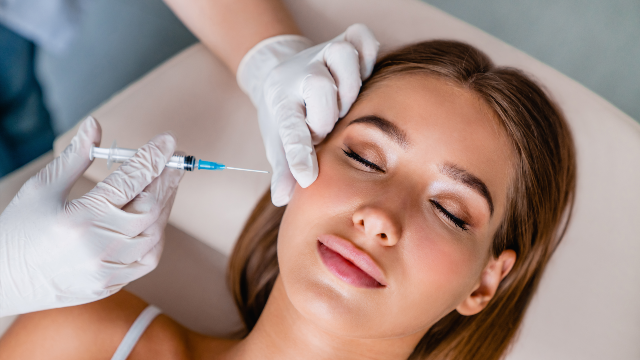
A neuromodulator is an injectable medication that changes how a nerve communicates with a muscle. That single sentence separates the category from everything else on an aesthetic menu.
The American Academy of Dermatology describes botulinum toxin therapy as a treatment that blocks the nerve signal responsible for making a muscle contract, which softens the lines that repeated contraction produces in the overlying skin. Because the mechanism is a signal, not a substance that fills space, a neuromodulator can only help with a problem that movement is causing. Dermal filler is a different tool for a different kind of problem, and that distinction is covered in its own article on this site.
"Botox" is the brand name most people use, but the underlying product is botulinum toxin, purified and prepared in extremely small quantities for medical injection. Cellier Clinic describes the treatment as working by reducing targeted muscle activity in order to improve the appearance of wrinkles and to refine areas where a prominent muscle is affecting facial contour.
What happens at the neuromuscular junction
The action takes place at the neuromuscular junction — the narrow gap where a motor nerve ending meets a muscle fiber and hands over the instruction to contract.
In an untreated muscle, the sequence is quick and mechanical. A signal travels down the nerve. At the nerve terminal, small packages of a chemical messenger called acetylcholine are released into the gap. The acetylcholine crosses, binds to receptors on the muscle fiber, and the fiber contracts. Repeat that thousands of times a day for years and the skin creased by that contraction eventually keeps the crease.
Botulinum toxin acts on the first half of that sequence. Taken up by the nerve terminal, it interferes with the machinery that releases acetylcholine into the gap, so less messenger crosses and the muscle fiber receives a weaker instruction. The nerve is not cut and the muscle is not damaged. The line of communication is simply turned down.
Three consequences follow directly from this, and each one answers a question patients ask constantly.
First, the effect is local. Only the muscles reached by the injected product are affected, which is why placement is a matter of anatomical precision rather than volume.
Second, the effect is not instant. Turning down a release mechanism at a nerve terminal is a biochemical process, not a mechanical one, and the visible change follows only once the affected muscles have actually begun contracting less over a series of days.
Third, the effect is temporary by design. Nerve terminals recover their ability to release acetylcholine, and full communication with the muscle is progressively restored. The treatment fades because the body repairs the very thing the drug interrupted.
What botulinum toxin treats
It treats lines caused by movement, and it treats contour problems caused by a muscle being too bulky. Both are muscle problems, which is the common thread.
Lines produced by expression are usually called dynamic lines. They deepen when you make the expression and soften when your face relaxes. The classic locations are the horizontal bands across the forehead, the vertical lines between the eyebrows, and the lines radiating from the outer corner of the eye. Cellier Clinic lists the forehead, the area between the eyebrows and the area around the eyes among the regions it treats, along with the chin and the square jaw.
The second application is less obvious to first-time patients. A muscle that is heavily developed adds bulk, and reducing its activity reduces that bulk over time. Cellier lists muscle-volume improvement alongside wrinkle improvement among its approved claims for the treatment, and applies the same principle on the body: the clinic's Body Botox treatment is described as a customized injection approach for reducing excessive muscle volume, relieving muscular tension and refining body lines, planned from an assessment of body proportions, muscle tension and movement patterns.
The clinic describes suitable candidates for facial treatment as adults with expression lines, prominent muscles affecting their contours, or people wanting subtle, natural-looking improvement without surgery.
What botulinum toxin does not treat
It does not treat anything that is not driven by muscle activity, and knowing the boundary saves a great deal of disappointment.
It does not restore lost volume. A hollow area is missing tissue, and reducing muscle movement adds nothing back. It does not lift loose skin, because skin laxity is a structural problem in the dermis and the supporting layers rather than a signaling problem at the muscle. It does nothing for pigment — sun spots, melasma and uneven tone are unrelated to contraction. And it has limited effect on a crease that has become fixed in the skin at rest, because at that point the skin itself has changed, not just the muscle beneath it.
The American Academy of Dermatology's overview of treatment for aging skin reinforces the general version of this: different visible changes have different causes, and a procedure has to be matched to the cause rather than to the appearance. MedlinePlus, from the US National Library of Medicine, describes aging skin as thinning and losing elasticity while the fat and connective tissue beneath it diminish and sun exposure drives pigment change — a list of processes that a neuromodulator does not address.
When it starts working and when it peaks
Onset runs on a timetable, and the clinic states it plainly.
Cellier Clinic states that changes from Botox are generally noticeable around one to two weeks after treatment. The clinic also describes full muscle relaxation settling by roughly two to four weeks after the procedure. Nothing useful is visible on the day of injection; what you see in the mirror walking out is the treated skin, not the treated muscle.
That gap between injection and effect has a practical consequence for anyone traveling. Cellier suggests scheduling this treatment at the start of a longer trip to Korea so that early changes can be observed while you are still in the country, which is the opposite of the advice it gives for treatments whose main variable is swelling.
The procedure itself is brief. Cellier states that the Botox injection takes approximately three minutes, that topical numbing cream is used if needed, and that the sensation is typically a small pinch or brief sting. The clinic lists downtime as within three days, with mild swelling or minor bruising at injection points resolving naturally, and states that face washing and makeup can resume the following day.
How long it really lasts
Cellier Clinic lists an effect duration of approximately three to six months. That is the number to plan around, and it describes a fade rather than an expiry.
The important thing to understand about that range is what is happening inside it. The effect does not hold steady for months and then stop. Nerve terminals gradually re-establish their ability to release acetylcholine, so muscle activity returns by degrees. In practice this means the treated area looks its smoothest somewhere in the first part of that window, then slowly moves back toward its untreated behavior. Most people notice the return of movement before they notice the return of the line.
The American Academy of Dermatology is clear in its patient FAQs that results from botulinum toxin therapy are temporary and that repeat treatment is what maintains them. That is a structural fact about the category, not a limitation of any particular product or clinic.
What influences how long it lasts for you
Several things shift where an individual falls inside that three-to-six-month window, and most of them are decided before the needle goes in.
Which muscle was treated. A large, strong muscle that you use constantly recovers its function on a different schedule from a small one that you use rarely. Duration is therefore an area-specific answer, not a single number that applies across your whole face.
How active that muscle is in you specifically. Two people with the same anatomy can have very different habits of expression. Cellier states that its planning is customized according to muscle thickness, activity and facial balance, precisely because activity varies between individuals.
How the treatment was planned. Cellier describes a detailed individual structural evaluation covering muscle volume, activity level, proportions and movement patterns, from which the plan specifies the toxin type, concentration, injection depth and angle. The clinic states that Dr. Youm Junghyun analyzes muscle movement and facial structure individually, and that dose, depth and injection points are customized to preserve natural expression. A plan built on this kind of assessment is aiming at an appropriate effect for you rather than a maximum one.
Your own biology. Individual response varies, and no clinic can predict precisely where a given patient will land. This is why the clinic's figure is stated as a range and why realistic expectation-setting is part of the consultation rather than an afterthought.
Treatment history. A muscle that has been repeatedly treated over years has had long stretches of reduced activity, and patients often report that the pattern of their results changes over time. This is a good thing to discuss with the physician who is planning your treatment, because it shapes the interval that suits you.
What does not extend duration is anything you can buy or apply at home. There is no aftercare step that prolongs a neuromodulator; the clinic's aftercare instructions — avoid saunas, alcohol and strenuous exercise for one week, do not massage the treated areas, use sunscreen consistently — exist to support recovery and protect the result, not to stretch it.
What repeat treatment looks like
Repeat treatment is the normal shape of this category, and it means a returning appointment rather than an escalating one.
Because the effect fades progressively, the practical question at each visit is timing rather than whether to continue. Cellier states that sessions are performed as recommended, with the plan set individually. Some patients return as movement begins to come back; others prefer to wait until the line itself reappears. Both are reasonable, and the right interval is a clinical conversation informed by how your previous treatment behaved.
Two habits make those conversations far more productive. The first is keeping a record of what was treated and when — which areas, on which date, and how long the effect held. MedlinePlus advises writing down your questions and bringing relevant history to a medical appointment so the most important items are addressed rather than forgotten. For a repeat treatment, your own observed duration is the single most useful piece of history you can supply.
The second is photographing your own face at rest and in expression before each round. Cellier publishes a documented results gallery, and the same principle applies to your own record: a comparison taken at a consistent angle tells you more than memory does.
For patients traveling from the United States, repeat treatment also has a geography problem worth raising early. If your maintenance interval is a matter of months and your trips to Seoul are not, ask at the consultation how the plan is meant to continue between visits — and ask before you book, not after you are home.
Safety, screening and who should postpone
Screening comes before dosing, and the list is short enough to review before you travel.
Cellier Clinic rules out treatment where there is an active skin infection at the intended injection point. It also rules it out for patients with a severe neuromuscular disorder, for anyone with a known hypersensitivity to the components of botulinum neurotoxin, and during pregnancy and nursing. Separately, the clinic names three frequent grounds for postponement: inflammatory skin disease that is currently active, a systemic illness that is not well controlled, and surgery performed recently on the area to be injected. Suitability is assessed individually against current health status and goals.
Known side effects are mostly local and short-lived. Cellier lists mild localized swelling and temporary bruising at injection points, resolving over a few days. For botulinum toxin injection generally, the clinic acknowledges that risks can include temporary pain, bruising, swelling, weakness or asymmetry, and that excess or misplaced product can produce unwanted muscle weakness — which is precisely why placement and planning matter.
Preparation is straightforward. Cellier asks patients to disclose their full medical background, to clear active skin breakouts at the treatment area, and to avoid blood-thinning agents, anti-inflammatory medications and alcohol for three days beforehand to reduce bruising. Anything you take regularly belongs on the disclosure list rather than on a list of things to quietly drop. The American Academy of Dermatology's preparation guidance makes the same request from the other side: tell the physician about every medication and supplement you take, including over-the-counter products.
Finally, one point about the class itself. Botulinum toxin products are prescription medications, not cosmetics and not devices, and the American Academy of Dermatology's safety guidance is direct that injection should be carried out by a qualified physician who knows facial anatomy and who has assessed whether the treatment suits you. Cellier states that its injectable treatments are performed by Dr. Youm Junghyun, and that English-speaking support is available; you can book a consultation to have your own areas assessed.
The Bottom Line
- Botulinum toxin works at the neuromuscular junction by reducing the release of acetylcholine, the messenger that tells a muscle fiber to contract, so the treated muscle pulls with less force.
- It treats lines caused by movement and contour concerns caused by muscle bulk. It does not restore volume, lift loose skin, or change pigment.
- Cellier Clinic states that changes are generally noticeable at one to two weeks, with full relaxation settling by roughly two to four weeks, and lists an effect duration of approximately three to six months.
- Duration varies by which muscle was treated, how active it is in you, how the plan was built, and individual biology — so the answer is area-specific rather than a single number for the whole face.
- The effect fades because nerve terminals recover, which makes this a repeat treatment by nature; the American Academy of Dermatology notes that maintaining results means returning for further treatment.
Frequently Asked Questions
How does botulinum toxin actually stop a wrinkle from forming?
It reduces the amount of acetylcholine released at the junction between the nerve ending and the muscle fiber, so the muscle receives a weaker instruction to contract. A muscle that contracts with less force folds the skin above it less, and the line produced by that folding softens. The American Academy of Dermatology describes the treatment in the same terms — as blocking the nerve signal that drives the contraction.
How soon after treatment will I see a change?
Cellier Clinic states that changes are generally noticeable around one to two weeks after treatment, with full muscle relaxation settling by roughly two to four weeks. Nothing meaningful is visible on the day of the injection. If you are combining this treatment with travel, the clinic suggests scheduling it early in a trip so early changes can be observed before you fly.
How long does the effect last?
Cellier Clinic lists an effect duration of approximately three to six months. Within that window the result fades gradually rather than ending abruptly, because nerve terminals progressively recover their ability to signal the muscle. Most people notice movement returning before they notice the line returning.
Why does it last longer for some people than others?
Duration depends on which muscle was treated, how strong and how active that muscle is in you, how the plan was constructed, and individual biological response. Cellier states that its treatment is customized according to muscle thickness, activity and facial balance, which is why the answer is specific to an area and a person. Your own observed duration from a previous round is the most useful guide to your next interval.
Can anything make the effect last longer?
There is no aftercare step or product that extends a neuromodulator, because the fade is driven by nerve recovery. Cellier's aftercare instructions — avoiding saunas, alcohol and strenuous exercise for one week, not massaging the treated areas, and using sunscreen consistently — support recovery and protect the surrounding skin rather than prolonging the drug. The realistic lever is the treatment plan itself, decided at consultation.
What does the injection appointment involve?
Cellier Clinic states that the injection takes approximately three minutes and that topical numbing cream is used if needed. The clinic describes the sensation as a small pinch or brief sting, lists downtime as within three days, and states that face washing and makeup can resume the following day. Mild swelling or minor bruising at the injection points resolves naturally.
Which concerns is this treatment not the right answer for?
Anything not driven by muscle activity. It does not restore lost volume, does not tighten loose skin, and does not change pigmentation or sun damage. It also has limited effect on a deep crease that remains fully visible when your face is completely relaxed, because at that stage the skin structure itself has changed rather than only the muscle underneath.
Who should avoid or postpone treatment?
Cellier Clinic excludes anyone with an active infection of the skin where the needle would go, anyone with a severe disorder of the neuromuscular system, anyone hypersensitive to the components of botulinum neurotoxin, and anyone pregnant or nursing. Postponement is advised for currently active inflammatory skin disease, for systemic illness that is not well controlled, and where the intended area has recently undergone surgery. Suitability is assessed individually before treatment is offered.
This article is for general informational purposes and does not constitute individualized medical advice. Candidacy, technique, and expected outcomes can only be determined through a consultation with a qualified physician, and this article is not a self-diagnosis tool.
More Articles
Continue reading clinical insights and anti-aging guides from Cellier Clinic.

Can I Combine Botox, Filler and Skin Boosters in One Visit?
Combining Botox, filler and skin boosters in one visit to Korea is possible and planned together at Cellier Clinic. Here is what the appointment involves.
Learn More
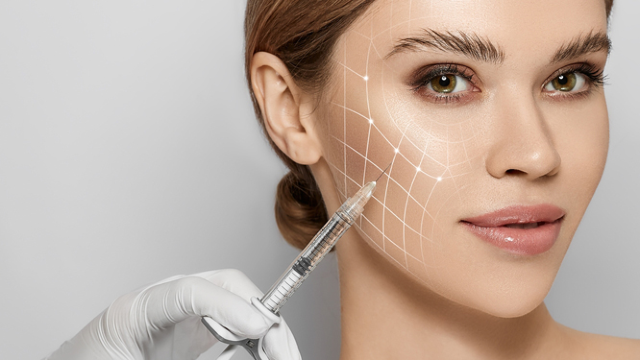
Botox vs Dermal Filler: The Real Difference Explained
The difference between Botox and dermal filler is mechanism: one relaxes a muscle that creases skin, the other adds volume. Know which before your Seoul visit.
Learn More
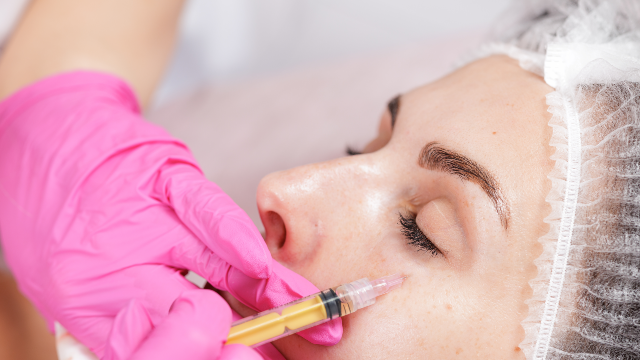
Facial Contour Injection vs Dermal Filler: Jawline Guide
Facial contour injection reduces unwanted volume along the cheeks and jawline; dermal filler adds it. Compare candidacy, assessment, timelines and recovery.
Learn More