Cellier Clinic — Personalized Anti-Aging & Lifting Specialist Design Clinic in Gangnam, Seoul


Medical Guide
DEEP SEE Ultrasound Imaging vs Standard HIFU Devices
DEEP SEE ultrasound imaging adds a live view of your own tissue layers during an Ultherapy Prime session, so energy is placed at a depth that was confirmed.
Schedule a ConsultationWhat Makes DEEP SEE Ultrasound Imaging Different From Standard HIFU Devices?
Medically reviewed by Dr. Youm Junghyun, Specialist in General Surgery, Director of Cellier Clinic
DEEP SEE ultrasound imaging is a viewing step, not a treating step. In the Ultherapy Prime protocol used at Cellier Clinic, a live ultrasound picture of the tissue under the applicator is produced during the session, and the focused ultrasound energy is then delivered into layers the clinician has just looked at rather than layers assumed to be there. That is the entire difference in one sentence, and the rest of this article explains why a viewing step is worth having when the target sits well below the surface of your skin.
Notice what the question is not. This is not an argument about which lifting device is better, and it is not a comparison of two products. It is a question about a capability — whether the workflow includes a way to see where the energy is going — and what that capability changes for precision, for safety, and for the way you should read a treatment menu.
What ultrasound imaging actually is
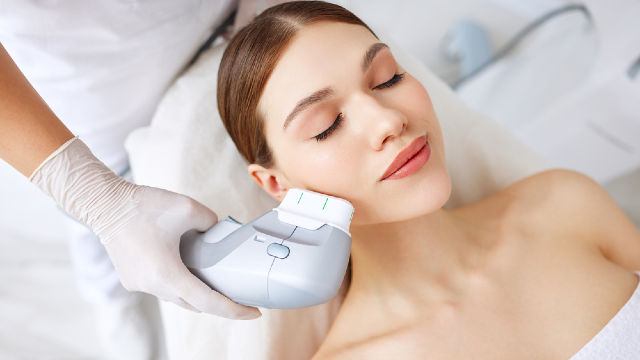
Ultrasound imaging is a way of building a picture out of sound, and it is the same family of technology used across routine medicine.
The US Food and Drug Administration describes ultrasound imaging as a technique that sends high-frequency sound waves into the body and constructs images from the echoes that return when those waves meet tissues of different densities. Because the images are generated continuously, the FDA notes that ultrasound shows structure and movement as they are happening. It also points out that ultrasound imaging does not use ionizing radiation, which is one reason it is used so widely and so casually — an imaging step can sit inside another appointment without adding the considerations that an X-ray-based technique would bring.
Two things follow from that description, and both matter here. First, sound can be used either to look or to act. A low-intensity beam scatters back and becomes a picture; a high-intensity beam that is focused to a point deposits energy where it converges. Second, because the picture is live, it reflects the anatomy of the person on the table at that moment, not a textbook average.
That is the physical basis for putting an imaging transducer and a treatment transducer into the same platform. One beam answers the question "what is under here," and a second beam answers the question "how much energy goes there."
Where the imaging step sits in the treatment
At Cellier Clinic, imaging is step two of a five-step sequence, which tells you what it is for.
The clinic documents the Ultherapy Prime procedure in this order: the treatment area and skin depth are assessed; DEEP SEE real-time ultrasound imaging is used; focused ultrasound energy is delivered through three transducers; the energy targets the fascia and SMAS layer along with the dermis; and collagen and elastin production is stimulated, producing gradual lifting and skin improvement over the following weeks.
Read the order carefully. Assessment happens first, imaging second, and energy delivery only third. The picture is not a readout produced after treatment or a screen the patient watches for reassurance. It is an input to a decision that has not been made yet — which depth to treat, and with which transducer. Cellier states that three transducers are available and that the selection is made according to individual skin characteristics so that energy reaches the intended plane. Imaging is what makes that selection an observation rather than an estimate.
The rest of the session is unremarkable by design. Cellier reports approximately twenty to thirty minutes for around 300 shots, daily activities resuming immediately afterward, and facial washing and makeup generally permitted from the next day.
Why the picture matters when energy goes deep
Depth is the whole problem in ultrasound-based lifting, because the structures being targeted are invisible and inconsistent.
Cellier describes Ultherapy Prime as aimed at the fascia and dermis, with lifting, contour improvement, elasticity, and texture as the intended outcomes. Those are not surface targets. The fascial layer that gives the lower face its support is a plane you cannot see or reliably feel through the skin, and its distance from the surface is not a fixed number across a population. Skin thickness varies between individuals, between the cheek and the jawline on the same individual, and with age. The clinic's own candidacy language acknowledges this directly: among the people it lists as suitable for Ultherapy Prime are those who have had weak lifting results associated with thick skin — a group defined entirely by an anatomical variable that a fixed setting cannot account for.
There are two coherent engineering answers to that variability. One is to remove the variable by treating at a depth that does not change, which is a legitimate design and is how some ultrasound platforms are built. The other is to measure the variable each time and then choose. DEEP SEE imaging is the second answer. Neither approach is a scandal, and a patient does not need to referee the physics — but a patient does need to know which of the two logics a given treatment is built on, because it determines what the operator can adjust in the room and what they cannot.
This is also why imaging is discussed as precision rather than as power. Seeing the layers does not make the ultrasound beam stronger. It makes the placement of a given amount of energy more deliberate, and in a treatment where the entire mechanism depends on energy converging in the correct plane, placement is most of the work.
What imaging contributes to safety
Visualization narrows the margin for misplaced energy, which is where most of the avoidable problems in energy-based treatment live.
Cellier's own description of how it reduces risk with this treatment names two elements: real-time visualization of the skin layers, and the use of three transducers for individualized treatment so that energy is delivered precisely at the intended depth. The clinic also states plainly what the risk profile looks like. Redness, swelling, and a tingling sensation are the common effects after treatment and usually settle on their own. The less common concerns it lists are the ones tied to energy application — temporary numbness, minor bruising, prolonged sensitivity, or superficial thermal irritation.
For the facial lifting category more broadly, the clinic's documented risk list includes burns, infection, scarring, nerve injury, skin irregularities, and unsatisfactory results. Those are category-level possibilities across lifting procedures generally, not predictions about any one session, and they are exactly the class of outcome that depends on energy landing where it was intended.
The American Academy of Dermatology makes the general point that safety in cosmetic procedures rests heavily on who is performing the treatment and on proper patient assessment, not on the equipment alone. That framing is useful here. Imaging is a tool that gives a trained operator better information; it does not operate the device, decide candidacy, or take a medical history. At Cellier Clinic, screening still excludes or postpones treatment for people who are pregnant or breastfeeding, who have an active skin infection or significant inflammation in the treatment area, or who have medical conditions that make ultrasound-based treatment unsuitable, and that assessment happens before any imaging is performed.
What imaging does not tell you
An imaging step is a useful capability, and it is not a guarantee, a diagnosis, or a regulatory statement.
It is not a diagnostic scan. The purpose of the view is to guide treatment placement in that session, and it is not a screening examination for anything else. Anything you want evaluated medically belongs with a physician in a diagnostic setting, not as a by-product of a cosmetic appointment.
It is not a promise about your result. Cellier describes the outcome of Ultherapy Prime as developing over time as collagen regenerates, with an immediate lifting sensation possible and more noticeable change expected at around four weeks, and results lasting roughly six to twelve months depending on individual skin condition. The Academy of Dermatology is consistent on this point across nonsurgical firming treatments: change is gradual, varies between people, and is more subtle than a surgical result. Precise energy placement improves the odds that a treatment does what it was designed to do. It does not change what that design can achieve.
And it is not a regulatory claim. The FDA explains that "FDA approved" is a specific statement about particular products and particular intended uses, and that the term is often used loosely in marketing. The agency's own consumer material on aesthetic devices exists precisely because device claims and device authorizations are frequently conflated. A feature such as real-time visualization is a description of how a workflow operates. It is a separate question from how any device is classified or authorized in any given country, and the two should not be read as evidence of each other.
Reading a treatment menu as a patient

The practical value of understanding imaging is that it gives you a better question to ask than "which device is strongest."
Focused ultrasound platforms differ in their workflows: in how depth is determined, in how many depths are available, in how the applicator is applied, and in how comfort is managed. When you are comparing options, the questions that actually separate them are procedural. How will the depth for my treatment be decided? Is there a step where my own tissue is viewed, or is the depth set by the applicator? Who chooses the settings, and who performs the treatment? What happens if my skin turns out to be thicker or thinner than expected?
The American Academy of Dermatology recommends going into a cosmetic consultation with prepared questions about the procedure, the provider, and what is realistic for your skin, rather than relying on marketing descriptions. MedlinePlus, the patient service of the US National Library of Medicine, makes a related point about medical conversations in general: writing your questions down in advance and asking for plain-language explanations produces better information than improvising in the room. Both apply well to a consultation about lifting.
At Cellier Clinic, the assessment that precedes any of this examines skin laxity, facial contours, skin thickness, the areas you want treated, and your goals, and the same physician conducts the consultation and performs the treatment. If you want to understand how the clinic approaches that planning before you commit to anything, the clinic's own pages set out its treatment philosophy, and a consultation can be arranged through the contact page.
What it means on the day of treatment
For the patient in the chair, the imaging step is quiet and quick.
You will not feel the imaging itself; producing a picture from sound waves is not a sensation. What you may notice is that the operator spends time on assessment and positioning before any energy is delivered, and that the applicator may be repositioned as the treatment moves across the face. Cellier lists topical anesthetic cream, nerve block, and sedation as the comfort options available for this treatment, and describes Ultherapy Prime as designed for a reduced pain burden compared with earlier generations of the technology.
Afterward the routine is the ordinary one for this class of treatment at the clinic: keep the treated area clean, use sunscreen consistently, resume washing and makeup the following day, and avoid saunas, alcohol, and strenuous exercise for a week. Temporary redness, swelling, or tingling may appear and generally resolve without intervention.
The imaging did its work before any of that. By the time you are back in the waiting room, the only trace of it is that the energy went where somebody looked first.
The Bottom Line
- DEEP SEE ultrasound imaging is a real-time viewing step within the Ultherapy Prime workflow at Cellier Clinic, used before and during energy delivery rather than as a separate scan.
- The FDA describes ultrasound imaging as building live images from reflected sound waves without ionizing radiation, which is what makes an in-session view practical.
- The value of the view is depth: the fascia, SMAS, and dermis cannot be seen or felt from the surface, and skin thickness differs between people and between areas of the same face.
- Cellier documents imaging plus selection among three transducers as how energy is kept at the intended plane, and the clinic's stated risks are tied to energy placement.
- Imaging is a precision capability, not a diagnostic scan, not a guarantee of results, and not a statement about any device's regulatory status in any country.
Frequently Asked Questions
What does DEEP SEE imaging actually show?
It produces a live ultrasound view of the tissue layers beneath the applicator during the session. Cellier Clinic uses that view alongside its assessment of the treatment area and skin depth to decide where the focused ultrasound energy should be delivered. It is a treatment-guidance view, not a diagnostic examination.
Does the imaging step hurt or add time?
The imaging itself produces no sensation, since it works by sending and receiving sound waves. Cellier Clinic reports a total session of approximately twenty to thirty minutes for around 300 shots, which includes the assessment and imaging steps. Comfort during the energy delivery is managed with topical anesthetic cream, nerve block, or sedation, depending on what is appropriate for you.
Why does seeing the layer matter if the device is already precise?
Because precision means placing energy at a depth, and that depth is not identical in every face. Skin thickness varies between individuals and across areas of the same face, and Cellier specifically lists people with weak lifting results associated with thick skin among the candidates for this treatment. Viewing the layers turns depth selection into an observation rather than an assumption.
Is ultrasound imaging safe to have during a cosmetic treatment?
The FDA notes that ultrasound imaging uses sound waves rather than ionizing radiation, which is why it is used so broadly in medicine. The imaging component is a low-intensity viewing beam and is distinct from the focused, high-intensity beam that performs the treatment. Your overall suitability for the treatment is determined during consultation.
Do all focused ultrasound treatments work the same way?
No. Platforms differ in how depth is determined — some treat at a set depth by design, while others select the depth for each patient — as well as in applicator design, session length, and comfort measures. Cellier documents DEEP SEE real-time imaging and three transducers as part of its Ultherapy Prime protocol. The useful question in a consultation is how depth will be decided for your treatment.
Does imaging guarantee a better result?
No treatment can be guaranteed. Cellier describes results developing gradually through collagen regeneration, with more noticeable change at around four weeks and effects lasting roughly six to twelve months depending on skin condition. The American Academy of Dermatology likewise describes nonsurgical firming results as gradual and variable between individuals.
What should I ask about imaging at my consultation?
Ask how the treatment depth will be chosen for your face, whether your tissue will be viewed during the session, who selects the settings, and who performs the treatment. The American Academy of Dermatology recommends preparing questions like these in advance, and MedlinePlus suggests writing them down and asking for plain-language answers.
This article is for general informational purposes and does not constitute individualized medical advice. Candidacy, technique, and expected outcomes can only be determined through a consultation with a qualified physician, and this article is not a self-diagnosis tool.
More Articles
Continue reading clinical insights and anti-aging guides from Cellier Clinic.

Can I Combine Botox, Filler and Skin Boosters in One Visit?
Combining Botox, filler and skin boosters in one visit to Korea is possible and planned together at Cellier Clinic. Here is what the appointment involves.
Learn More
Botox vs Dermal Filler: The Real Difference Explained
The difference between Botox and dermal filler is mechanism: one relaxes a muscle that creases skin, the other adds volume. Know which before your Seoul visit.
Learn More
Facial Contour Injection vs Dermal Filler: Jawline Guide
Facial contour injection reduces unwanted volume along the cheeks and jawline; dermal filler adds it. Compare candidacy, assessment, timelines and recovery.
Learn More