Cellier Clinic — Personalized Anti-Aging & Lifting Specialist Design Clinic in Gangnam, Seoul

Medical Guide
Anesthesia Options for HIFU and RF: Cream, Block or Sedation
How to choose between numbing cream, a nerve block and sedation for HIFU and RF treatments: which treatments offer each, what each involves, and how to decide.
Schedule a ConsultationAnesthesia Options for HIFU and RF: Cream, Block or Sedation
Medically reviewed by Dr. Youm Junghyun, Specialist in General Surgery, Director of Cellier Clinic
Choosing between the anesthesia options for HIFU and RF treatments is a narrower decision than it first appears, because the treatment you have chosen has usually already reduced the field. Cellier Clinic documents three pain-control methods across its treatments — anesthetic cream, a nerve block, and sedation — and lists all three only for its two flagship lifting platforms. This article is about how the selection is actually made: which option attaches to which treatment, what each one involves on the day, what each costs you in time, and what the physician and the patient each contribute to the decision.

The three options, in plain terms
Before the selection logic, the vocabulary. MedlinePlus, the consumer health service of the US National Library of Medicine, groups anesthesia into three broad categories, and the clinic's three options map onto the first two of them.
Anesthetic cream is a topical numbing agent applied to the surface of the skin and left to absorb. It reduces sensation in the skin itself while you remain completely awake and aware. It is the most frequently used of the three at Cellier Clinic and appears in more treatment profiles than the other two combined.
A nerve block is a local anesthetic delivered by injection near a nerve, so that the area supplied by that nerve loses sensation. It works deeper than a cream and is used when the discomfort comes from below the skin surface rather than at it. You are awake for this too.
Sedation is different in kind rather than in degree. It uses medication to make you relaxed, sleepy and less aware of the procedure. The clinic describes the depth of sedation as ranging from minimal or moderate to deep, depending on the procedure and the patient's needs. It changes not just the treatment but the whole day around it.
One point worth settling early, because it is the reason many people ask about anesthesia at all: the sensation of these treatments is generally described as warmth and brief pulses rather than sharp pain, and how each platform feels is covered in its own article on this site. This article assumes you already know that and are deciding what, if anything, to add.
Step one: the treatment narrows the field before you do
The most useful thing to understand about this decision is that you are rarely choosing from three options. You are usually choosing from one or two, because the clinic attaches pain control to the treatment rather than offering a universal menu.
Where no anesthesia is used at all
Several of Cellier Clinic's lifting platforms are performed without any anesthesia. CoolSoniq, Coolphase, Density Lifting and Emface all fall into this group. That is a design outcome rather than an omission: Coolphase is described as cooled radiofrequency that minimizes irritation and pain, CoolSoniq cools the skin-contact area while ultrasound energy travels deeper, and Density Lifting uses a five-step cooling-gas injection method to protect the outer skin. ONDA Face sits nearby — the clinic states it is generally performed without general anesthesia, with cooling or other comfort measures used according to the device settings and the treatment area.
Body treatments follow the same pattern. Body ONDA is listed with no anesthesia, as is hyperbaric oxygen therapy among the clinic's wellness services.
If your plan consists only of treatments from this group, the anesthesia conversation is short, and the levers available to you are the platform choice and the energy setting rather than the numbing method.
Where anesthetic cream is the listed option
Cream is the workhorse. Cellier Clinic lists topical anesthetic cream for Sofwave and for Titanium Lifting among the lifting platforms, and across most of its needle-based and laser treatments: Potenza pore and scar treatment, Botox, PicoSure Pro toning, Clarity II, body Botox, fat-dissolving injection and facial contour injection. For its stem cell injection the clinic lists anesthetic cream or a nerve block, while the fluid form uses none.
The clinic's Titanium Lifting procedure sequence places the cream at step three, after cleansing and before the applicator work begins, which is a useful reminder that numbing is a scheduled stage of the appointment rather than an optional extra squeezed in at the end.
Where a nerve block joins the list
A nerve block appears where injections go deeper or where the treatment area is more sensitive. Cellier Clinic lists cream anesthesia and nerve anesthesia together for skin booster injections, noting that either may be used to reduce discomfort during the injections, and its skin booster procedure sequence describes topical anesthesia or a nerve block being applied when needed after the skin is cleansed and prepared. Facial contour injection is listed with both. For dermal filler, the clinic's position is that cream or nerve anesthesia may be used depending on the treatment. Its abdominal care and neck and décolleté programs list topical cream anesthesia or local injection anesthesia, with the exact choice depending on which components of the program are selected.
The pattern is consistent: where a needle is placed at depth or across a sensitive region, a second option opens up.
Where all three are available
Sedation enters the picture for two platforms. Cellier Clinic lists topical cream, nerve block and sedation as possible options for Ultherapy Prime and for Thermage FLX, and identifies those three methods together as the pain-control set for its HIFU and RF lifting work. These are the clinic's two most established lifting platforms and the two most likely to involve a longer session over a larger area, which is the situation in which the third option starts to make sense.
What anesthetic cream involves on the day
Cream is the least disruptive option and the one with the most predictable effect on your schedule, but it is not free. It has to sit on the skin long enough to take effect, and that waiting period is added to your appointment rather than absorbed into it. The sequence runs: assessment, cleansing, cream applied, a wait, then the treatment itself.
Cream numbs the skin, not the tissue underneath it. For focused ultrasound delivered to a deep plane, or for radiofrequency heating well below the surface, some sensation is expected to remain, and the clinic's own descriptions reflect that — Sofwave is positioned as a low-pain treatment where warmth or mild discomfort may still occur. A patient who expects cream to eliminate all sensation will be disappointed by a product that is working exactly as intended.
The upside is everything else. You leave when the session ends, you can travel independently, and nothing about the rest of your day needs rearranging. For most people having most treatments at this clinic, that combination is why cream is the default.
What a nerve block involves
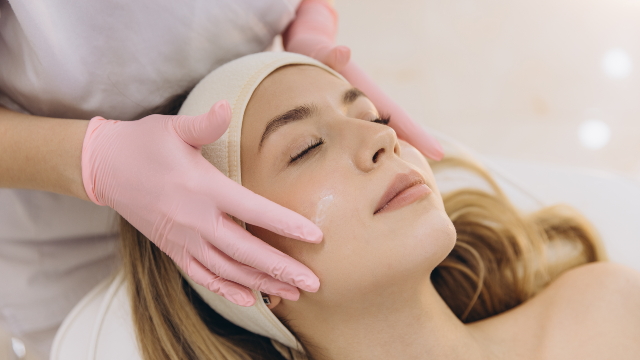
A nerve block is itself an injection, which is the first thing to know. A small amount of local anesthetic is placed near a nerve, and the region that nerve serves goes numb. The effect is deeper and more complete within its territory than a topical cream can achieve, which is why it appears alongside cream for injectable work rather than for applicator-based lifting.
Two practical consequences follow. The numbness lasts beyond the appointment, wearing off gradually over the following hours, so be careful with hot drinks and with biting your lip or cheek while an area of the face is still numb. And the block is placed by the treating physician as part of the procedure, so it adds a step rather than a separate appointment. It is also worth raising if you have had one before: the clinic's preparation guidance asks patients to disclose allergies and previous reactions, and a previous reaction to local anesthetic belongs squarely in that category.
What sedation involves, and the assessment that precedes it
Sedation is the option with the largest footprint, and the clinic treats it as a service in its own right rather than as an add-on. It is worth understanding what selecting it commits you to.
It begins with a separate suitability assessment. Before sedation is judged appropriate, the clinic's documented process goes through your health background, everything you currently take, any allergies, how you have responded to anesthesia or sedation in the past, and the treatment being planned; vital signs and other relevant health information may be checked as well. Its stated candidate profile is people who experience significant anxiety about medical procedures, have difficulty remaining still, have a strong gag reflex, or are undergoing procedures where sedation would improve comfort — and the clinic notes that some patients request it for procedural anxiety or a low tolerance for discomfort.
It is not suitable for everyone. The clinic states that sedation may not be appropriate for patients with certain medical conditions, medication interactions, allergies to sedative drugs, or uncontrolled breathing or cardiovascular problems, and that a medical professional should assess individual suitability. That assessment is one reason sedation cannot be decided on the morning of treatment.
Preparation is more involved as well. The clinic asks patients to follow its instructions on fasting, medications, alcohol, smoking and arrival time, and to inform the medical team about all medications, supplements, allergies, medical conditions and previous problems with anesthesia or sedation. MedlinePlus material on anesthesia makes the same point in general terms: the pre-anesthesia conversation about your health history is part of the procedure, not a formality preceding it.
Afterward, the visit does not end when the treatment does. The clinic describes a recovery and observation period following the procedure, with monitoring continuing until discharge criteria are met, and states that total visit duration depends on the procedure, the type of sedation, the medication used and individual recovery. Its aftercare instruction is to avoid driving, operating machinery, drinking alcohol or making important decisions while the effects remain, with an accompanying adult required depending on the sedation used.
The clinic also documents what sedation itself can cause: temporary drowsiness, dizziness, nausea, headache, reduced coordination, changes in blood pressure or heart rate, and temporary breathing difficulties, with more serious complications possible though rare, particularly at deeper levels. Those are the considerations you weigh against the comfort benefit, and a consultation should put both sides on the table.
How the decision is actually made
Once the treatment has narrowed the field, three questions decide the rest. They are the questions the physician is weighing, and you hold the answer to two of them.
How you respond to procedures. This is yours to report, and it is the most important input. Not how much pain you can theoretically tolerate, but what actually happens: whether you have found dental work difficult, whether you tense up, whether you have stopped a procedure partway through before, whether staying still for thirty minutes is realistic for you. The clinic's candidate profile for sedation is written in exactly these terms — anxiety, difficulty remaining still, a strong gag reflex — rather than in terms of pain thresholds.
What your medical history allows. This is the physician's domain, and it can remove options rather than add them. Sedation carries its own exclusions. Allergy to a local anesthetic removes a nerve block. Current medications and previous reactions to anesthesia both belong in this assessment, and the clinic reviews all of them before sedation is judged appropriate.
What your day and your trip look like. This is where international patients differ from local ones. Cream leaves your schedule intact. A nerve block leaves an area numb for a few hours. Sedation requires recovery time at the clinic, supervision afterward, and someone to travel back with you. If you are in Seoul alone, that last requirement is not a detail — it is a planning constraint, and it is far easier to solve before you arrive than on the day.
A fourth factor sits behind all three: the treatment plan itself can be adjusted. The clinic's consultation for its lifting platforms assesses the skin, the areas of concern and your goals before settings are selected, so the energy level and the platform are also variables. For some patients the better answer to "this will be uncomfortable" is a different platform rather than a stronger anesthetic.
What each option costs you in time
Comparing the three by comfort alone misses the practical difference, which is time.
Cream adds a fixed absorption wait before the session and nothing after it. A nerve block adds a few minutes during the procedure and leaves residual numbness for a few hours, which affects eating and drinking more than anything else. Sedation adds a preparation protocol beforehand, an observation period afterward that continues until discharge criteria are met, and several hours of reduced coordination once you leave.
Translated into trip planning: a cream appointment fits inside a half day with other plans afterward. A sedation appointment should own the day. MedlinePlus guidance on the period after a procedure makes the general point that arrangements for getting home and for the hours afterward should be settled in advance, and that advice applies with more force when home is a hotel in a city you do not know. The CDC's Yellow Book chapter on medical tourism gives the same instruction in its own register: settle the logistics of care abroad before you depart rather than on arrival.
Who administers it, and what to confirm
You are entitled to know who is giving you anything and who is watching you afterward. Cellier Clinic has a single treating physician: its Director, Dr. Youm Junghyun, whose specialist qualification is in General Surgery. Where sedation is used, the clinic's stated arrangement is that the qualified medical team administers the medication, with monitoring maintained through the recovery period.
The American Academy of Dermatology's guidance on cosmetic treatment safety recommends establishing the qualifications of whoever performs a procedure and asking what will be done to keep you comfortable, directing both questions to the person who will actually be holding the device. That is the right conversation for this topic, and the right time for it is the consultation rather than the treatment room.
Raising it at consultation
Say what you need early and concretely. "I have a low pain tolerance" is less useful than "I could not finish a dental appointment last year", because the second tells the physician something actionable about how you respond.
Bring three pieces of information: any previous reaction to anesthesia or sedation, your full current medication and supplement list, and what your day looks like after the appointment. The clinic's consultation reviews medical history, medications and allergies before a plan is finalized, and its international inquiry channel means none of this has to wait until you are in Seoul — you can set the plan before you travel and know in advance whether you need to arrange company for the day.
Two more questions are worth asking directly: how long the numbing stage will add to the appointment, and whether the session can be paused if the sensation is stronger than you expected. MedlinePlus guidance on talking with your doctor suggests writing questions down beforehand and confirming what you understood afterward, which matters more, not less, in a consultation conducted partly in a second language.
What anesthesia does not change
Two things stay the same whichever option you choose. The first is the result: pain control affects the experience of the session, not what the energy does to the tissue. The Academy of Dermatology describes non-surgical skin firming as working by heating tissue to prompt gradual collagen change over the following months, and that process is indifferent to what was on your skin at the time. A comfortable session is not a weaker one, and the clinic's documented results developed on that timeline regardless of the pain-control method used.
The second is aftercare. Redness, mild swelling and a tingling sensation are described by the clinic as possible after energy-based lifting and as generally settling naturally, and the instruction to contact the clinic about unusual or persistent symptoms applies the same way whether you had cream, a block or sedation. The only aftercare that changes with the anesthesia choice is the set of restrictions attached to sedation itself.
The Bottom Line
- Cellier Clinic documents three pain-control methods — anesthetic cream, a nerve block and sedation — and the treatment usually narrows the choice before the patient does.
- All three are listed for Ultherapy Prime and Thermage FLX; cream is the listed method for Sofwave, Titanium Lifting, Potenza, Botox and the clinic's laser treatments; CoolSoniq, Coolphase, Density Lifting and Emface use none.
- Cream numbs the skin surface and adds absorption time to your appointment, a nerve block reaches deeper and leaves an area numb for a few hours, and sedation reshapes the whole day.
- Sedation requires its own suitability assessment covering medical history, medications, allergies and previous anesthesia experiences, plus a recovery period, restrictions afterward and possibly an accompanying adult.
- Report how you have actually responded to procedures rather than how much pain you think you can take, and settle the choice before you fly so that any companion requirement can be arranged.
Frequently Asked Questions
Which anesthesia options does Cellier Clinic offer for HIFU and RF treatments?
The clinic lists three methods: topical anesthetic cream, a nerve block, and sedation. All three are listed as possible options for Ultherapy Prime and Thermage FLX, while other lifting platforms use cream or no anesthesia at all. Which applies to your plan depends on the treatment selected at consultation.
Is numbing cream enough for a HIFU lifting treatment?
For many patients it is, and cream is the most commonly used option across the clinic's treatments. It numbs the skin surface rather than the deeper tissue where focused ultrasound deposits its energy, so some sensation is expected to remain. If you know you respond strongly to procedures, say so at consultation, because the platform and the energy setting can also be adjusted.
What is the difference between a nerve block and numbing cream?
Cream is applied to the skin and absorbs into the surface; a nerve block is a local anesthetic injected near a nerve so that the whole area that nerve supplies loses sensation. The block reaches deeper and lasts longer, which is why the clinic lists it alongside cream for skin booster injections, facial contour injection and dermal filler rather than for applicator-based lifting.
Who is sedation appropriate for?
Cellier Clinic describes suitable candidates as people with significant anxiety about medical procedures, difficulty remaining still, a strong gag reflex, or a procedure where sedation would improve comfort. Suitability is confirmed through a medical evaluation covering history, medications, allergies and previous experiences with anesthesia. It is not suitable for everyone, and the assessment comes first.
Will I need someone to come with me if I choose sedation?
Possibly. The clinic states that an accompanying adult may be required depending on the sedation used, and that patients should avoid driving, operating machinery, drinking alcohol or making important decisions while the effects remain. Drowsiness and reduced coordination can last several hours, so plan the day around it and arrange company before you travel if sedation is on your plan.
Does the anesthesia choice affect my result?
No. Pain control changes the experience of the session, not what the energy does to the tissue, and the Academy of Dermatology describes non-surgical firming as producing gradual collagen change over the following months regardless. A session that felt comfortable has not delivered less.
Can I change my mind about the anesthesia on the treatment day?
Raise it as early as possible, because the options are not equally flexible. Cream can be applied at short notice; sedation requires a suitability assessment plus preparation instructions on fasting, medications and arrival time, which cannot be compressed into the morning of a treatment. Discuss the possibility at consultation even if you expect not to need it.
How much extra time does numbing add to the appointment?
Enough to matter, since the cream has to sit on the skin before the treatment begins and device time is often the shorter part of the visit. Ask when you book how much total time to allow, especially if you have plans afterward. For sedation the additional time is larger still, because a recovery and observation period follows the procedure.
This article is for general informational purposes and does not constitute individualized medical advice. Candidacy, technique, and expected outcomes can only be determined through a consultation with a qualified physician, and this article is not a self-diagnosis tool.
More Articles
Continue reading clinical insights and anti-aging guides from Cellier Clinic.

Can I Combine Botox, Filler and Skin Boosters in One Visit?
Combining Botox, filler and skin boosters in one visit to Korea is possible and planned together at Cellier Clinic. Here is what the appointment involves.
Learn More

Botox vs Dermal Filler: The Real Difference Explained
The difference between Botox and dermal filler is mechanism: one relaxes a muscle that creases skin, the other adds volume. Know which before your Seoul visit.
Learn More
Facial Contour Injection vs Dermal Filler: Jawline Guide
Facial contour injection reduces unwanted volume along the cheeks and jawline; dermal filler adds it. Compare candidacy, assessment, timelines and recovery.
Learn More