Cellier Clinic — Personalized Anti-Aging & Lifting Specialist Design Clinic in Gangnam, Seoul

Medical Guide
Acne Scar Treatment in Korea: Potenza and Skin Texture
Acne scar treatment in Korea starts with scar type: how radiofrequency microneedling remodels skin texture, and what a realistic course of sessions delivers.
Schedule a ConsultationAcne Scarring 101: How Potenza and Pore Treatments Rebuild Skin Texture
Medically reviewed by Dr. Youm Junghyun, Specialist in General Surgery, Director of Cellier Clinic
Acne scar treatment Korea clinics offer is a tissue-remodeling project, not a clearing-up project. Once acne has damaged the structure beneath the skin surface, the problem you see in raking light is architectural: collagen was lost or laid down badly while the skin healed. Cellier Clinic in Seoul addresses that with its Pore & Scar Treatment using Potenza, a microneedle radiofrequency device the clinic describes as stimulating the skin's own regenerative process at customizable depths and intensities. This guide covers the scar types, what remodeling actually means, and what a realistic course of treatment produces.
Why texture damage is a different problem from active acne
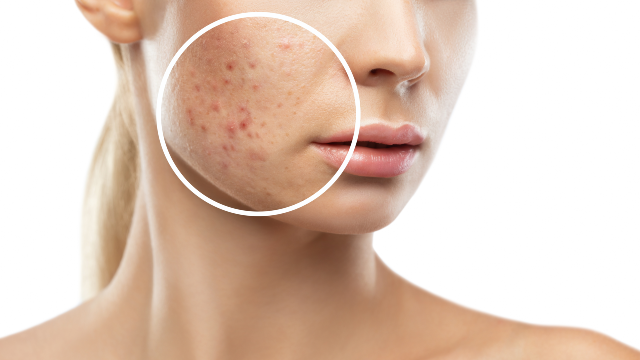
Active acne and acne scarring are two separate conditions that happen to share a cause, and they need separate plans.
Active acne is an inflammatory process still in progress. Cellier Clinic describes its Acne Care service as aimed at clearing existing acne, preventing new breakouts, and limiting the risk of permanent scarring and post-inflammatory pigmentation, with the treatment depending on whether the lesions are comedonal, inflammatory, nodular or cystic, or another acne-like type. The clinic is candid that this work is slow: patients generally need at least six to eight weeks before they see fewer breakouts, though individual response varies. It also states that acne treatment does not guarantee permanent clearance or the complete removal of acne scars.
Scarring is what remains after that inflammation has burned out. MedlinePlus, the consumer health service of the US National Library of Medicine, explains that a scar is the natural result of the body repairing a wound, that the replacement tissue differs from the skin it stands in for, and that treatments aim at appearance rather than erasure. That is the honest frame for everything below.
There is a sequencing consequence. Remodeling treatments work on healed tissue, so a face with widespread active inflammation is usually stabilized first. Cellier lists active skin infections, significant inflammation, and open wounds among the reasons its Pore & Scar Treatment may not be suitable, and asks that inflammatory skin conditions in the treatment area be resolved before proceeding.
The scar types, and why the label matters
Acne leaves behind several distinct kinds of damage, and they do not all respond to the same approach. Naming yours is the first useful step.
Depressed scars are the ones most people mean when they say acne scars. They form where the healing process failed to replace lost tissue, leaving the surface sitting lower than the skin around it. Within this group, clinicians commonly distinguish narrow, deep pits with sharp edges from wider depressions with sloping or angular walls — a distinction that matters because the shape of the base decides how much of it a needle-and-energy treatment can reach.
Raised scars are the opposite failure: too much collagen was laid down, so the repair stands proud of the surface. These are more common on the chest, shoulders, and back than on the face. They are a different management problem, and they carry a specific caution — Cellier notes that a history of keloid scarring may call for additional assessment before treatment.
Enlarged pores and general roughness are not scars in the strict sense but belong in the same conversation, because they are the textural complaints that sit alongside true scarring and they respond to the same category of treatment. Cellier's Pore & Scar Treatment is aimed at both groups at once, listing pores, scars, fine lines, skin elasticity, skin tone, and overall skin texture as its targets.
Discoloration without texture change is a fourth thing entirely. Flat brown or red marks left where a spot healed are pigment or vascular findings, not structural ones, and the skin surface is level when you feel it. These follow a pigmentation pathway rather than a remodeling one, and Cellier treats post-inflammatory pigmentation within its separate Redness and Pigmentation Laser Care service.
Most faces carry a mixture, which is why the assessment step decides the plan. Cellier states that the clinician evaluates skin condition, treatment concerns, skin type, and treatment areas before selecting Potenza settings and parameters.
How radiofrequency microneedling remodels tissue
Radiofrequency microneedling combines two stimuli in one pass, and understanding the combination explains why it is used for texture rather than for tone.
Cellier describes Potenza as a microneedle radiofrequency treatment that stimulates the skin's natural regenerative process, with customizable penetration depth and radiofrequency intensity. The mechanism has two halves. Very fine needles create controlled micro-injuries at a chosen depth, which is the signal the skin reads as damage requiring repair. Radiofrequency energy is then delivered from those needle tips into the surrounding tissue, adding a thermal stimulus at the same depth. The repair response to both is new collagen — the clinic describes the treatment as stimulating collagen production and lists skin regeneration and collagen induction among its claims.
For a depressed scar, this is the relevant lever. The deficit is structural, so filling it means persuading the skin to build tissue where tissue is missing. The American Academy of Dermatology, writing about microneedling for scars, describes the principle in the same terms: the controlled injury prompts the body to produce collagen, results develop gradually as that new collagen forms, and a series of sessions is normally needed rather than one. The Academy also notes that improvement continues to appear in the weeks after treatment, which is why the result you see in the mirror a week later understates the session.
The adjustability is the clinically interesting part. Because both needle depth and energy level are set per patient, the same platform can be dialed for a shallow textural pass or for deeper work, and Cellier states that radiofrequency intensity and penetration depth are personalized according to skin condition. Depth selection is how a single device addresses scars sitting at different levels on the same face.
It is worth being precise about how this category is regulated. The FDA's page on microneedling devices sets out when an instrument that pierces the skin for aesthetic reasons falls under US medical-device regulation, and explains that the intended use claimed for a product is what decides which regulatory route applies to it. The agency also explains, in its material on what the phrase "FDA approved" actually means, that approval, clearance, and registration are distinct legal categories that marketing language often blurs. Korean certification and US regulatory status are separate systems under separate laws. The Ministry of Health and Welfare has certified Cellier Clinic as a Registered Medical Institution for Attracting Foreign Patients.
What Cellier states about its Pore & Scar Treatment
The clinic's own description of the service is specific, and it is the right basis for setting expectations.
Cellier lists the treatment's intended benefits as pore improvement, scar improvement, fine-line improvement, skin regeneration, elasticity improvement, and lifting. Its candidate list covers people concerned about pores, scars, reduced elasticity, fine lines, or uneven skin tone, and those seeking skin regeneration and overall skin care. Crucially, the clinic names its realistic aim directly: better skin texture and better firmness, not scars and pores that have been wiped out. That aim should anchor every expectation you carry into the treatment room.
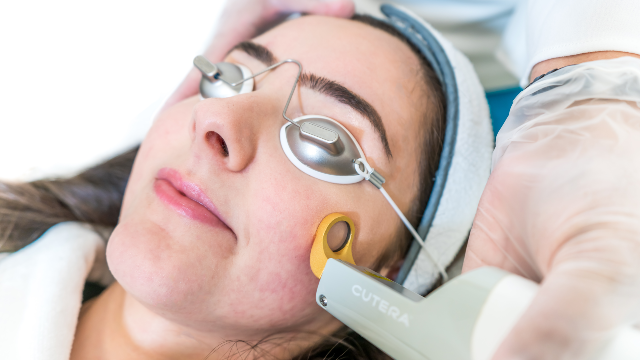
The session itself is short. After cleansing and preparation of the skin, topical numbing cream goes on, and the Potenza handpiece then works across the chosen areas, delivering microneedle radiofrequency energy at the depths and intensities selected for you. Cellier puts the treatment at approximately ten minutes, with topical numbing cream as the pain-control method, and describes the sensation during treatment as mild to moderate discomfort — warmth, prickling, or stinging. Recovery is brief; the clinic states downtime of approximately three days with cleansing and makeup generally resuming from the next day, and that side of the question is covered in detail in its own article rather than here.
Cellier also sets out who should wait. Pregnancy and breastfeeding are reasons to postpone elective aesthetic work. Infection, an open wound, or inflammatory disease anywhere in the area being treated has to settle before a session goes ahead. Further assessment may be warranted for an autoimmune condition, for a keloid scarring pattern, or where isotretinoin featured in the previous six months — and anyone taking a blood thinner is asked to work out timing with the clinic rather than adjust anything alone.
What a course of treatment actually looks like
One session is a step, not a treatment. Cellier expects change to be felt from the third treatment onward, with sessions set seven to fourteen days apart, and reports that the effect holds for something in the region of three to six months, varying by individual.
Lay those intervals end to end and an initial course occupies four to six weeks — longer than most trips to Seoul, which makes it the single most important planning fact for a US patient. A one-week visit accommodates one session, possibly two if the spacing allows, so the rest of the plan needs settling in advance: an extended stay, a return visit, or continuing care at home. That is a better conversation to have at the outset than afterward, and the clinic's consultation and booking page is where that conversation starts.
The cumulative pattern is biological rather than commercial. New collagen forms over weeks, so each session feeds a total that builds quietly between visits. The American Academy of Dermatology makes the same point about microneedling generally, and its guidance on preparing for laser treatment of a scar adds that scar work aims at making a scar less noticeable rather than removing it, and that newer scars behave differently from mature ones.
What does improvement look like at the end of a course? Realistically: a surface that catches light more evenly, shallower depressions rather than absent ones, pores that read as less prominent, and smoothing that is more obvious in person than in a photograph taken under harsh directional light. Deep, sharply walled pits are the most resistant presentation. Cellier's before and after gallery is a useful calibration tool because it shows degrees of change rather than transformations.
Where other treatments fit around it
Radiofrequency microneedling is one instrument in a larger set, and scar plans often combine approaches.
Cellier's Peeling Treatments are described as controlled exfoliation, in which a chemical solution removes damaged surface cells and stimulates renewal, used for uneven pigmentation, dull complexion, rough texture, acne, fine lines, sun damage, and some types of acne scarring. The American Academy of Dermatology's overview of chemical peels notes that the depth of a peel determines both what it can address and how long skin takes to settle.
Cellier's PicoSure Pro Toning, although it sits in the pigmentation category, also lists scars or marks and uneven skin texture among the concerns it addresses — which is the practical route to the flat discoloration left behind by healed acne, since that is a pigment problem rather than a structural one. The clinic's Stem Cell Program is likewise recommended for people wanting to improve rough skin texture and acne scars or skin damage, alongside elasticity and wrinkles.
Sequencing across these is a clinical decision, not a menu choice, and Cellier's approach to planning treatment across time is described on its treatment philosophy page. The American Academy of Dermatology's list of questions to ask before any cosmetic treatment is the right script for the consultation: ask who performs the treatment, what this specific approach can achieve on your scars, how many sessions are anticipated, and what happens if your skin responds unexpectedly.
Preparing, and protecting the result
Some of the outcome is decided before the handpiece is switched on.
Cellier asks patients to arrive without makeup, to avoid active topical ingredients before treatment, and to inform the doctor of all medications, supplements, and prior procedures. It also recommends avoiding irritating skincare products and protecting the skin from excessive sun exposure beforehand. Retinoids and exfoliating acids leave skin more reactive, so pausing them on the clinic's schedule makes the session both easier and safer.
Afterward, the instructions are short: clean skin, sunscreen every day, and a week without saunas, alcohol, or hard exercise. Sun protection carries real weight in scar work — pigmentary change is among the general risks of radiofrequency microneedling, and freshly treated skin is temporarily more reactive to light. MedlinePlus notes in its scars material that protecting healing skin from the sun helps a scar settle to a less noticeable appearance.
Cellier states that temporary swelling, redness, and itching can occur after treatment and generally resolve on their own. The broader risks of the category include tenderness, pinpoint bleeding or crusting, pigmentary changes, infection, and rarely scarring or burns — the items to raise with the doctor beforehand, and the reason suitable settings and professional treatment matter. The clinic's Director, Dr. Youm Junghyun, carries out treatment personally; he is a specialist in General Surgery and trained at Kyung Hee University Hospital at Gangdong.
The Bottom Line
- Acne scarring is structural damage left after inflammation has resolved, and it is treated separately from active acne — Cellier's Acne Care aims at clearing breakouts and limiting future scarring, while the Pore & Scar Treatment works on texture that already exists.
- Scar type drives the plan: depressed scars, raised scars, enlarged pores and roughness, and flat post-acne discoloration each follow a different route, and most faces show a mixture.
- Cellier describes Potenza as microneedle radiofrequency that stimulates the skin's regenerative process and collagen production, with penetration depth and radiofrequency intensity personalized to your skin.
- Change is expected from the third treatment onward, with sessions set seven to fourteen days apart and an effect holding in the region of three to six months — an initial course spans four to six weeks, so plan the trip around that.
- Cellier names its realistic aim as better texture and better firmness, not scars and pores wiped out — which matches how MedlinePlus describes scar treatment generally.
Frequently Asked Questions
Does Potenza remove acne scars completely?
No treatment removes acne scars completely. Cellier Clinic describes the realistic aim as better texture and firmness rather than scars and pores that are gone entirely. MedlinePlus describes scar treatment in the same way, as work aimed at appearance rather than erasure. The reasonable expectation is a smoother, more even surface rather than skin that never had acne.
How many sessions will I need for acne scarring?
Cellier Clinic expects change to be felt from the third treatment onward, with visits set seven to fourteen days apart, and reports an effect holding in the region of three to six months, varying by individual. A single session runs about ten minutes. The exact number for your scars is determined at consultation after the clinician assesses skin condition, concerns, skin type, and treatment areas.
How does radiofrequency microneedling actually improve a scar?
Fine needles create controlled micro-injuries at a selected depth and deliver radiofrequency energy into the surrounding tissue, and the skin responds by producing new collagen. The American Academy of Dermatology describes this collagen-building response as the basis of microneedling for scars, with results appearing gradually over weeks. Cellier describes the treatment as stimulating collagen production, with depth and intensity set according to your skin.
Can I have this treatment while I still have active breakouts?
Active inflammation usually needs to be settled first. Cellier lists active skin infections, significant inflammation, and open wounds among the reasons the treatment may not be suitable, and asks that inflammatory skin conditions in the treatment area resolve before proceeding. The clinic's separate Acne Care service addresses active acne, and it notes that patients generally need at least six to eight weeks before seeing fewer breakouts.
Is the treatment painful?
Cellier applies topical numbing cream before the session, and describes the sensation during treatment as mild to moderate discomfort in the form of warmth, prickling, or stinging. The session itself runs approximately ten minutes. Tell the clinician if a particular area is uncomfortable, since intensity and depth are adjustable rather than fixed.
What about the flat brown or red marks acne leaves behind?
Those are pigment or vascular findings rather than structural ones, and they follow a different route. Cellier addresses post-inflammatory pigmentation within its Redness and Pigmentation Laser Care service, and its PicoSure Pro Toning also lists scars or marks and uneven skin texture among the concerns it targets. Which route applies to your face is decided during assessment, since many patients have both types at once.
Who should have additional assessment before booking?
Cellier asks patients who are pregnant or breastfeeding to postpone elective aesthetic procedures. Further assessment may be warranted for an autoimmune condition, a keloid scarring pattern, or isotretinoin taken during the previous six months, and anyone using a blood thinner is asked to settle timing with the clinic first. Never stop a prescribed medication without advice from the prescribing doctor.
This article is for general informational purposes and does not constitute individualized medical advice. Candidacy, technique, and expected outcomes can only be determined through a consultation with a qualified physician, and this article is not a self-diagnosis tool.
More Articles
Continue reading clinical insights and anti-aging guides from Cellier Clinic.

Can I Combine Botox, Filler and Skin Boosters in One Visit?
Combining Botox, filler and skin boosters in one visit to Korea is possible and planned together at Cellier Clinic. Here is what the appointment involves.
Learn More
Botox vs Dermal Filler: The Real Difference Explained
The difference between Botox and dermal filler is mechanism: one relaxes a muscle that creases skin, the other adds volume. Know which before your Seoul visit.
Learn More
Facial Contour Injection vs Dermal Filler: Jawline Guide
Facial contour injection reduces unwanted volume along the cheeks and jawline; dermal filler adds it. Compare candidacy, assessment, timelines and recovery.
Learn More