Cellier Clinic — Personalized Anti-Aging & Lifting Specialist Design Clinic in Gangnam, Seoul


Medical Guide
Abdominal Care and Non-Surgical Body Contouring Expectations
Abdominal care treatment at Cellier Clinic targets firmness, stretch marks, swelling, and circulation rather than weight. Here is what it can and cannot change.
Schedule a ConsultationAbdominal Care and Non-Surgical Body Contouring: Realistic Expectations for US Patients
Medically reviewed by Dr. Youm Junghyun, Specialist in General Surgery, Director of Cellier Clinic
Abdominal care treatment at Cellier Clinic is a program aimed at the condition of the abdominal wall's skin and tissue — firmness, stretch marks, fine wrinkles, swelling, and circulation — rather than at your weight. That distinction decides whether a US patient will be satisfied or disappointed, because the change a non-surgical program produces is a change in tissue quality and contour definition, not a reduction in body size or a removal of skin. This article sets out what the clinic's Abdominal Care program is for, what it can and cannot alter, and how a realistic plan is framed before anyone books travel.
What Cellier's Abdominal Care program is
It is a combined program rather than a single device or injection, assembled after an assessment of the abdomen.
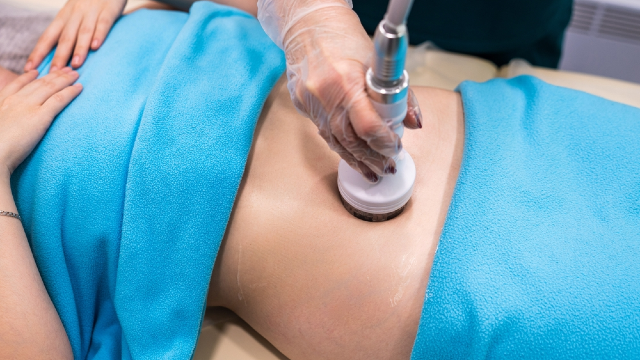
Cellier describes Abdominal Care as a comprehensive program addressing reduced skin elasticity, dermal changes, swelling, circulation concerns, stretch marks, fine wrinkles, and abdominal contour. The clinic states that rather than focusing primarily on weight loss, it focuses on restoring firmness and refining the abdominal line, and that the program can combine radiofrequency, ultrasound, and micro-regenerative injections together with circulation activation and swelling care.
The published sequence follows that logic in order: the abdominal skin and contour are assessed; elasticity, stretch marks, fine wrinkles, swelling, and circulation concerns are identified; the appropriate radiofrequency, ultrasound, or micro-regenerative injection components are selected; the abdominal area is treated; circulation and swelling care is incorporated; and post-treatment care is given. Anesthesia, where it is used, is topical cream or a local injection, depending on which components the plan contains.
How the clinic frames the abdomen
The framing is the most useful thing to understand before you form an expectation, because it explains why the program contains what it contains.
Four findings are named together in the clinic's description of the abdominal assessment — loss of elasticity, damage within the dermis, swelling, and circulation that has slowed — and the clinic is explicit that this is not a fat question alone. The area is examined as one continuous structure, surface to fascia. In other words, the assessment is not asking only how much tissue is present; it is asking about the quality of the skin over it, the marks left in the dermis, and how much of the day-to-day appearance is fluid rather than fat.
This is why the program is not interchangeable with a fat-reduction treatment. A patient whose main finding is a discrete pocket of localized fat is describing a different problem from a patient whose skin has lost firmness and shows stretch marks, and the clinic's body category contains separate services for those different findings. How a microwave-based fat-focused device compares with a fat-dissolving injection is covered in its own article on this site; Body Botox addresses muscle-related bulk elsewhere on the body rather than abdominal skin quality.
The postpartum context the clinic documents
Cellier documents Abdominal Care as designed particularly for postpartum abdominal changes while remaining available for general abdominal management.
Its candidate list is written around five situations: an abdominal line that has sagged since a birth, firmness that has dropped away, stubborn fat or excess tissue over the area, stretch marks or fine wrinkling the patient wants softened, and a wish for a tighter, better-defined contour. The stated outcomes mirror that list — better firmness, improvement in stretch marks and fine wrinkles, better skin condition, and support for circulation and swelling, with the abdomen described as feeling lighter and reading as firmer.
Timing is the part that needs a physician rather than a calendar. For a patient who has recently given birth, Cellier states that how long to wait after the delivery, or after surgery, is a judgment the treating physician makes. Pregnancy itself rules treatment out, as does an abdomen that has not finished healing from an operation, or pain and swelling in the area that has not been explained. If you are still in the early months after a birth, the honest answer at consultation may be that the assessment is worth having and the treatment is worth deferring.
What the program can change, and what it cannot
It can improve the quality and firmness of the tissue and refine the line of the abdomen. It cannot reduce the amount of skin you have, and it is not a weight-loss treatment.
Take those limits one at a time. On weight, the American Academy of Dermatology is direct in its guidance on non-invasive fat reduction: these treatments are intended for stubborn areas in people at or near a stable weight, they produce modest rather than dramatic change, and they are not a substitute for diet, exercise, or weight-loss treatment. Cellier's own framing matches this, describing body contouring results as tissue-quality and contour improvement rather than a substitute for substantial weight loss, and describing the body category generally as intended for contouring rather than significant weight reduction.
On loose skin, the limit is anatomical. Energy delivered into the skin improves its density and firmness; it does not remove surface area. The American Academy of Dermatology describes non-invasive firming as producing gradual, generally subtle change suited to mild or moderate laxity, and points toward a surgical consultation when the looseness is substantial. Where that line sits for skin left behind by a large weight change is discussed in its own article here.
On stretch marks, the realistic word is improvement. Stretch marks are marks formed in the dermis while it was stretched, and Cellier lists stretch-mark improvement — not removal — among the program's outcomes. A less noticeable mark is an achievable goal; an absent one is not.
What remains after those subtractions is still meaningful: firmer, better-conditioned skin, improvement in fine wrinkling, reduced swelling, and a contour that reads as tighter. MedlinePlus, the patient information service of the US National Library of Medicine, notes that skin loses elasticity and that the layer beneath it thins with age, which is the background process any firming program is working against rather than reversing.
What a realistic course looks like
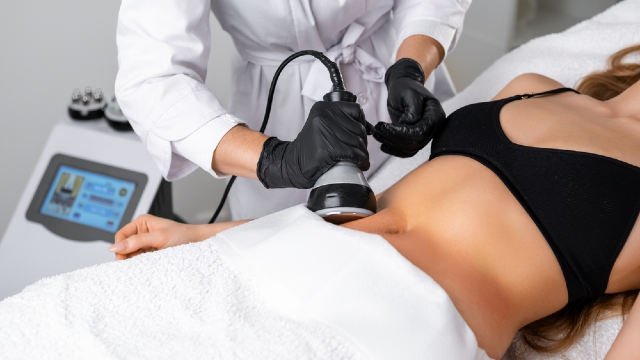
A realistic plan is a course of sessions spread over weeks, with a short recovery attached to each one.
Each Abdominal Care session is listed at roughly twenty to thirty minutes. The course Cellier describes runs to three sessions or more, placed three to four weeks apart, with visible change expected across the series rather than after the first appointment and an effect of approximately six to twelve months depending on individual condition. Downtime is listed at roughly three days, with temporary swelling or bruising possible, cleansing and makeup permitted from the following day, and saunas, alcohol, and strenuous exercise set aside for a week.
Do the arithmetic and the travel implication is obvious. Three sessions at three-to-four-week intervals spans roughly two months, which is longer than most US patients spend in Seoul. One trip realistically begins a course; completing it means a longer stay, a return visit, or a plan agreed in advance for how the remaining sessions will be handled. This is worth settling at the consultation rather than discovering afterward — the broader orientation for American patients comparing the Korean and US body-contouring markets is covered separately on this site.
Results also arrive gradually rather than on treatment day. Cellier describes non-surgical body contouring results in general as developing over weeks rather than immediately, with several weeks to a few months before a final assessment is fair. If you want a reference point for the kind of change being described, the clinic's before and after gallery is more informative than any adjective.
Who should postpone, and what to disclose
Screening for a body program is not lighter than screening for a facial one, and several exclusions are specific to the abdomen.
Treatment should not go ahead during pregnancy, while there is infection or significant inflammation over the area, while abdominal pain or swelling remains unexplained, before an abdominal operation has healed properly, or where a medical condition makes radiofrequency, ultrasound, or an injection unsuitable in the first place. More generally, the clinic's body category notes that implanted electronic or metallic devices and certain medical conditions may make a particular technology unsuitable.
Preparation is straightforward. Arrive with clean skin in the treatment area, free of makeup or products, and give the clinic an account of your medications, supplements, prior aesthetic procedures, allergies, and any recent surgery. Alcohol and blood-thinning medication may need to be paused for a day or two beforehand if you are advised to do so — advice being the operative word, since no prescribed medication should be stopped on your own initiative.
Risks are those of the components used. Cellier states that temporary swelling or bruising may occur and generally resolves naturally, and notes that energy-based treatment carries a possibility of burns or irritation while injectable components carry a possibility of infection or inflammatory reactions. The American Academy of Dermatology's safety guidance applies here as it does to any cosmetic procedure: the person treating you should be a qualified physician, your health background and current medications should have been read first, and the judgment that this treatment fits you should be made before it starts. Cellier states that Dr. Youm Junghyun designs the abdominal program individually.
How to frame the plan before you travel
The most productive thing a US patient can do is arrive with a described goal rather than a desired number.
"I want my stomach to look firmer and the skin to look better" is a goal this program is built to answer. "I want to be two sizes smaller" is not, and the consultation will say so. MedlinePlus material on plastic and cosmetic surgery makes the same point about elective procedures generally: understanding what a procedure is intended to accomplish, and what results are reasonable, is part of deciding whether to have it. The American Academy of Dermatology publishes a set of questions worth taking into any cosmetic appointment; adapted to this one, they are: what result is realistic for my particular findings, how many sessions do you anticipate, what recovery follows each, and what else could address this.
Bring your own history too: recent weight changes and whether your weight has settled, pregnancies and deliveries, abdominal surgeries and how long ago, and any implanted device. Those facts change both candidacy and timing. When you are ready to have the abdomen assessed against your own goals, you can arrange a consultation with English-language support before committing to travel dates.
The Bottom Line
- Cellier Clinic's Abdominal Care program targets reduced elasticity, dermal change, stretch marks, fine wrinkles, swelling, and circulation, combining radiofrequency, ultrasound, and micro-regenerative injections with circulation and swelling care.
- The clinic assesses the abdomen as an integrated structure from skin toward fascia rather than as a fat problem, which is why the program is not interchangeable with a fat-reduction treatment.
- It is documented particularly for postpartum abdominal changes, with the appropriate interval after delivery or abdominal surgery set by the treating physician rather than by a fixed rule.
- Expect improvement rather than removal: firmer skin, less noticeable stretch marks, reduced swelling, and a refined contour — not a smaller body and not less skin, which the American Academy of Dermatology places on the surgical side.
- The documented course is three or more sessions at three-to-four-week intervals with about three days of downtime each and an effect of roughly six to twelve months, so one trip to Seoul begins a plan rather than finishing it.
Frequently Asked Questions
Is Abdominal Care a weight-loss treatment?
No. Cellier states that the program focuses on restoring firmness and refining the abdominal line rather than on weight loss. The American Academy of Dermatology similarly describes non-invasive body treatments as suited to stubborn areas in people near a stable weight and as no substitute for diet, exercise, or weight-loss treatment. The most reliable results follow a settled weight rather than precede one.
Will it tighten loose skin on my stomach?
It can improve the firmness and quality of skin with mild to moderate laxity, which often reads as a tighter contour. It does not reduce how much skin covers the abdomen. The American Academy of Dermatology describes non-invasive firming as gradual and generally subtle, and directs patients with substantial loose skin toward a surgical consultation instead.
How many sessions does the program take?
Cellier describes three or more sessions at three-to-four-week intervals, with each session running roughly twenty to thirty minutes. The listed effect duration is approximately six to twelve months depending on individual condition. The number appropriate for you is decided after the abdominal assessment rather than in advance.
How soon after childbirth can I have this treatment?
That interval is set by the treating physician, not by a general rule. Cellier documents the program as designed particularly for postpartum abdominal changes while stating that the appropriate timing after delivery or after abdominal surgery is determined individually. Pregnancy itself, and recent abdominal surgery before adequate healing, are reasons to wait.
What does recovery involve?
Cellier lists approximately three days of downtime, with temporary swelling or bruising that generally resolves on its own. Cleansing and makeup are permitted from the following day, and the clinic asks that saunas, alcohol, and strenuous exercise be set aside for one week. The area should be kept clean, and sunscreen belongs on any skin the sun will reach.
Can stretch marks be removed?
They can be made less noticeable rather than removed. Cellier lists stretch-mark improvement among the program's outcomes, which is the accurate word: a stretch mark is a change formed in the dermis, and treatment softens its appearance rather than erasing it. Setting that expectation before the first session is the difference between a satisfying result and a disappointing one.
Can I complete the whole course during one trip to Seoul?
Usually not. Three sessions spaced three to four weeks apart cover roughly two months, which is longer than most visits. Many patients complete the first session during a trip and agree a plan for the remainder — a longer stay, a return visit, or a revised schedule — at the consultation rather than afterward.
Who should not have this treatment?
Pregnancy is a clear exclusion, as is infection or inflamed skin over the abdomen, pain or swelling there that has not been explained, and an abdominal operation that has not yet healed. Any condition that makes radiofrequency, ultrasound, or an injection unsuitable rules out the corresponding component. Implanted electronic or metallic devices need to be disclosed as well, since they may exclude particular technologies.
This article is for general informational purposes and does not constitute individualized medical advice. Candidacy, technique, and expected outcomes can only be determined through a consultation with a qualified physician, and this article is not a self-diagnosis tool.
More Articles
Continue reading clinical insights and anti-aging guides from Cellier Clinic.

Can I Combine Botox, Filler and Skin Boosters in One Visit?
Combining Botox, filler and skin boosters in one visit to Korea is possible and planned together at Cellier Clinic. Here is what the appointment involves.
Learn More
Botox vs Dermal Filler: The Real Difference Explained
The difference between Botox and dermal filler is mechanism: one relaxes a muscle that creases skin, the other adds volume. Know which before your Seoul visit.
Learn More
Facial Contour Injection vs Dermal Filler: Jawline Guide
Facial contour injection reduces unwanted volume along the cheeks and jawline; dermal filler adds it. Compare candidacy, assessment, timelines and recovery.
Learn More